
The Rise of AI-Publishers: A New Era in Book Production
Artificial intelligence (AI) is revolutionizing the publishing industry, with a new breed of “super publisher” producing over 9,000 books annually and more than 20 books daily. This rapid production has sparked debates about authenticity, quality, and ethical concerns in the literary world. As e-books continue to dominate the market due to their low production costs, AI authors are becoming increasingly prevalent, often without clear disclosure.
AI Publishers: Producing More Than Major Publishers
One such publisher, registered on Kyobo Internet Bookstore, has released an astonishing 9,175 books from August 2024 up to the 5th of this month. This equates to an average of 21 books per day across various genres, from youth math books to stock investment guides and psychology. In contrast, major publishing groups like Minumsa typically publish only 20 books a month at most. The publisher’s website claims that it utilizes ‘AI tools’ to assist ‘writer members’ in choosing themes, structuring stories, and optimizing titles for search engines.
The company also features a “super author” named “Choi ○○,” who authored 137 books over four months, sometimes publishing as many as 12 books in a single day. These works span diverse fields, including philosophy, art, college entrance exams, medicine, engineering, and economics. However, none of the book introductions or author details mention that AI was involved in their creation. Publisher A has not responded to inquiries regarding their use of AI and any ethical considerations.
Profitability and Market Strategy
Despite the high volume of publications, no books have achieved significant sales success. According to a publishing industry source, “Even if they can’t create bestsellers, producing books prolifically at low cost allows them to accumulate profits by selling even just one or two copies.” This approach positions them as a “wide seller” publisher, focusing on broad distribution rather than high sales per title.
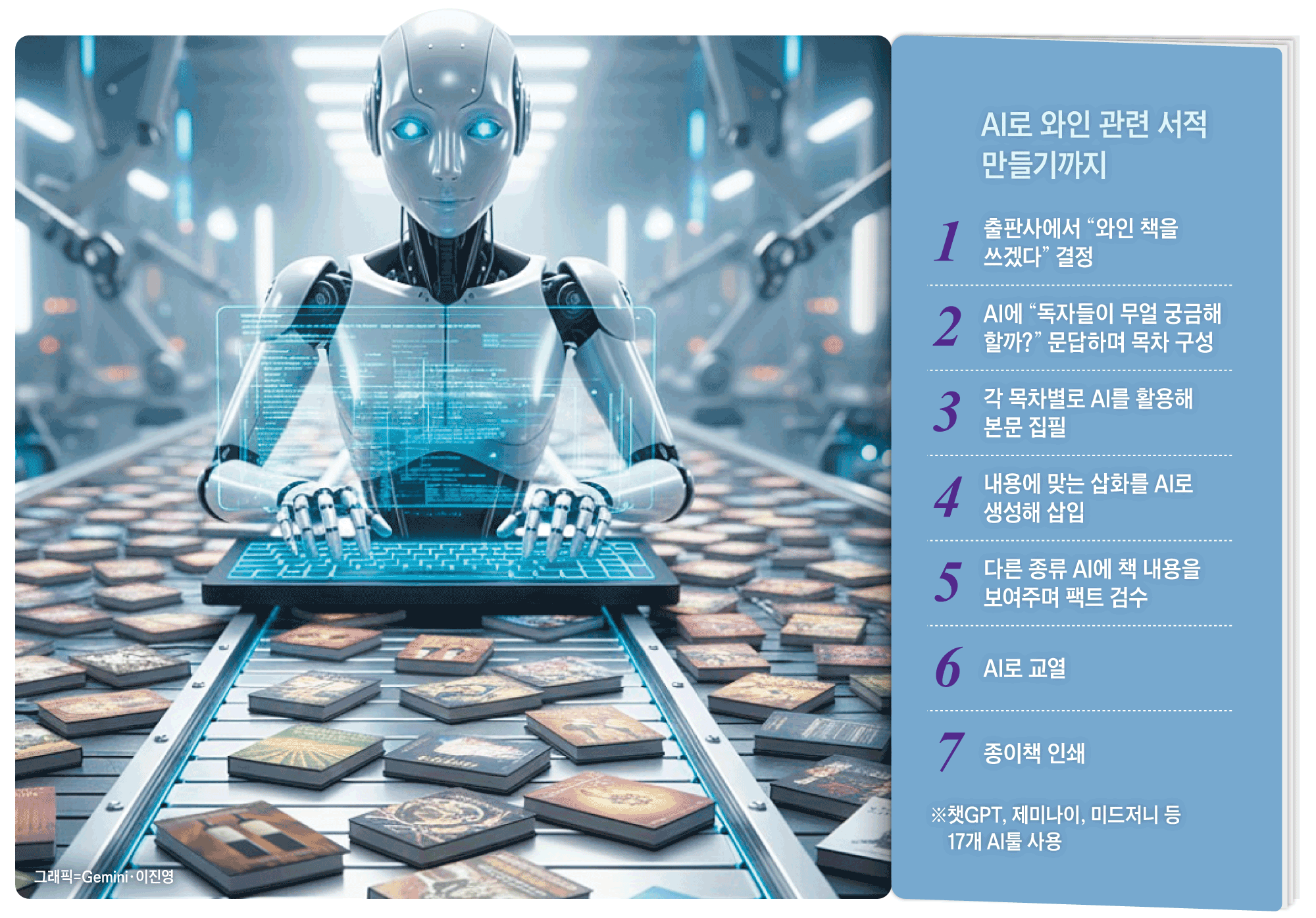
A confectionery company, Fortune Cookie, used AI to publish a wine primer titled Everything About Wine as Told by AI. Instead of listing an author, the book credits a “producer.” The company used 17 AI tools, including ChatGPT, Gemini, and Midjourney, to create the content. The process involved asking the AI what readers might wonder about wine, generating a table of contents, and then using AI to write each section. Illustrations were also created by AI, and proofreading was done by another AI tool.
AI in Public Sector Publishing
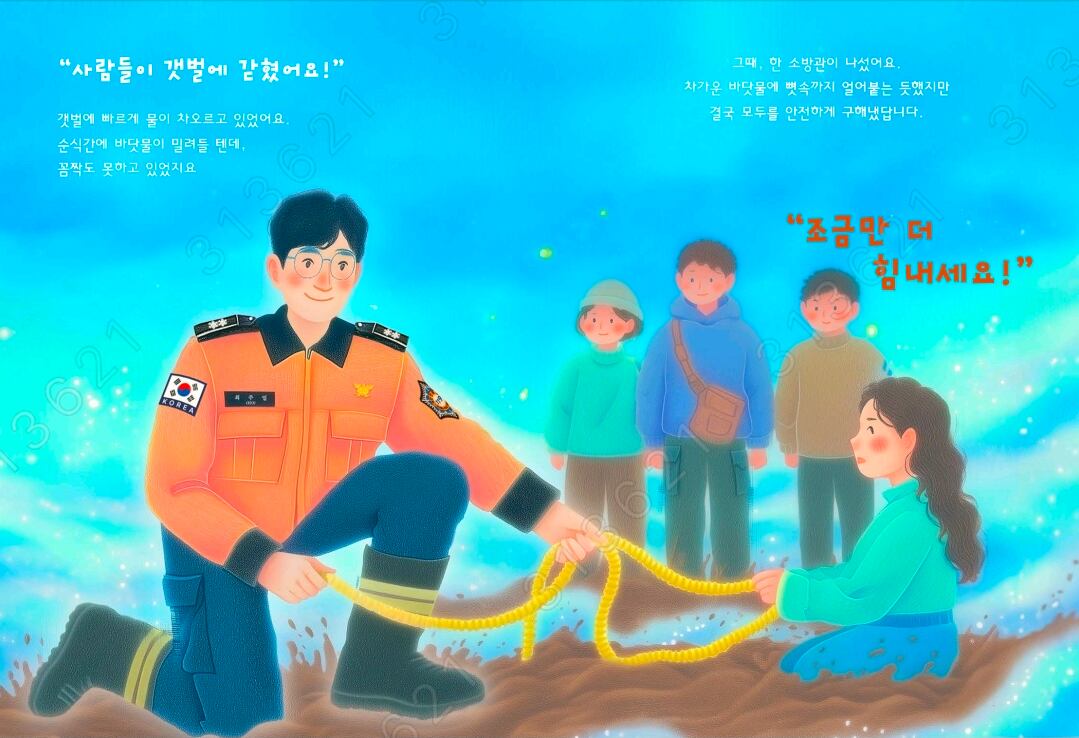
AI is not limited to commercial publishers; it is also being utilized in the public sector. The Ministry of Patriots and Veterans Affairs recently collaborated with Yes24 to produce 50 types of picture books in the My Hero Book series, featuring characters like soldiers and firefighters. The project, which would normally take two years, was completed in less than four months using AI.

Expert Perspectives: Quality and Concerns
Experts have mixed opinions on the quality of AI-published works. A civil engineering academic terminology book published by Publisher A was evaluated by Cho Won-cheol, an emeritus professor at Yonsei University. Initially skeptical, he found the book to be of high quality, comparable to the work of multiple professors. However, he noted that the writing lacked human touch, appearing dry and impersonal.
Kim Yoon-cheol, an emeritus professor at Korea National University of Arts, reviewed a theater direction primer and found it to be conservatively written with no controversial points. However, he pointed out frequent errors in proper nouns, such as misspelling Belgian director Ivo van Hove as “Ino van Hove” and mistranslating Eugene O’Neill’s Hairy Ape as “털 없는 원숭이” (The Naked Ape).
Jeong Ha-bong, a senior vice president of the Korea International Sommelier Association, praised the structure of the AI-written wine primer but noted that its lack of originality could hinder sales.


Challenges in Identifying AI-Written Books
The biggest challenge lies in identifying how many AI-written books exist. Readers cannot easily tell if a book was written by AI, and even bookstores are unaware of the extent of AI publishing. While Kyobo Bookstore and Yes24 recommend classifying AI-written books separately, there is no effective way to verify compliance. Publisher A’s books were categorized as human-authored, and Kyobo Bookstore has initiated an internal audit but cannot impose sanctions like sales bans.
Yes24 is exploring ways to establish standards for marking AI authors. Currently, only 25 books on Yes24 list “ChatGPT” as a co-author, and they aim to increase this number. They are discussing plans to clearly define marking standards based on AI’s contribution level and list them in the author field.


