The Most Competitive F1 Driver Field in History?
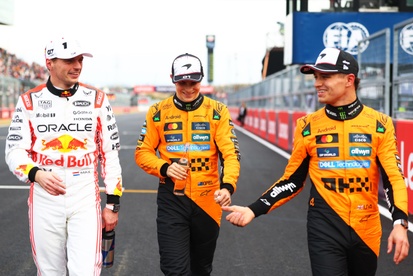
McLaren team principal Andrea Stella has made a bold claim, stating that the 2025 Formula 1 driver field is the most competitive of all time. His drivers, Lando Norris and Oscar Piastri, are at the center of this year’s title race, while the grid includes multiple world champions such as Lewis Hamilton, Max Verstappen, and Fernando Alonso, along with 10 grand prix winners and 15 podium finishers. But is there merit to Stella’s assertion, or is there a stronger case to be made for another era?
Drivers Are Getting Better – Ben Vinel
It is notoriously difficult to compare Formula 1 drivers from different eras, but one thing is clear: they just keep getting better. This trend is evident in most sports, partly due to advancements in sports science. In track and field, records continue to be broken. High-level association football matches from 30 years ago look primitive compared to today’s fixtures, both in terms of technique and athleticism.
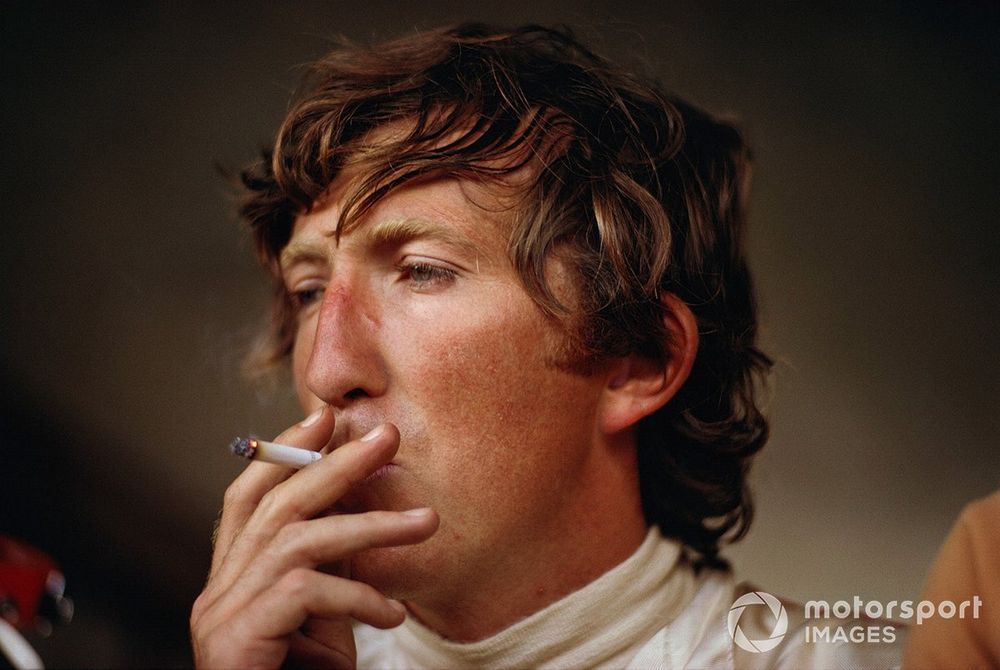
Likewise, current F1 drivers are more skilled than their predecessors. Modern cars are faster and more complex to handle than ever before. Physical training is now far more demanding than it used to be, with Michael Schumacher setting new standards in his time—no more regular smokers like Keke Rosberg or James Hunt!
Over time, budget mattered less and less when forming an F1 driver lineup, with post-2015 superlicence points requirements reducing the likelihood of drivers reaching the world championship solely through financial backing. Additionally, there are more talented drivers in junior series, meaning no one who reaches F1 looks out of place. The tightly contested results of today are evidence of that.
In the 1990s, it was not uncommon for Riccardo Patrese to be outqualified by Williams teammate Nigel Mansell by one or two seconds, with the likes of Heinz-Harald Frentzen and Eddie Irvine similarly struggling against Jacques Villeneuve and Michael Schumacher. All three were multiple grand prix winners; Frentzen and Irvine even contended for the title in 1999.
Nowadays, the gap between teammates in qualifying almost never exceeds six tenths (except at Red Bull). That’s how good everyone is. While it’s impossible to say whether a Franco Colapinto would have lapped Juan Manuel Fangio in his time, I’ll still argue that a 1950s-spec Fangio would be out of his depth in 2025 Formula 1.
This Generation Has the Potential, But 2012 Shades It – Haydn Cobb
Comparing eras in sport is an impossible task, but it doesn’t stop us from doing it and provides hours of debate. While Andrea Stella’s comments weren’t meant to compare the current crop of F1 drivers to any others in particular, they have got us wondering where the 2025 grid would stand against years gone by.
It is definitely fair to say the current F1 grid is the most prepared for the challenges of grand prix racing through the junior single-seater ladder, and the majority have titles and wins to prove their worth when they arrive.
This year’s grid has three F1 world champions—Alonso, Hamilton, and Verstappen—with plenty others containing the potential to become future world champions: Norris, Piastri, Russell, Leclerc, Antonelli, and probably one or two more. That easily supports Stella’s estimation: “The new generation of drivers, they’re just so good, and now you have seven, eight drivers which are at world championship level. Like I say, I’m not sure this has happened before.”
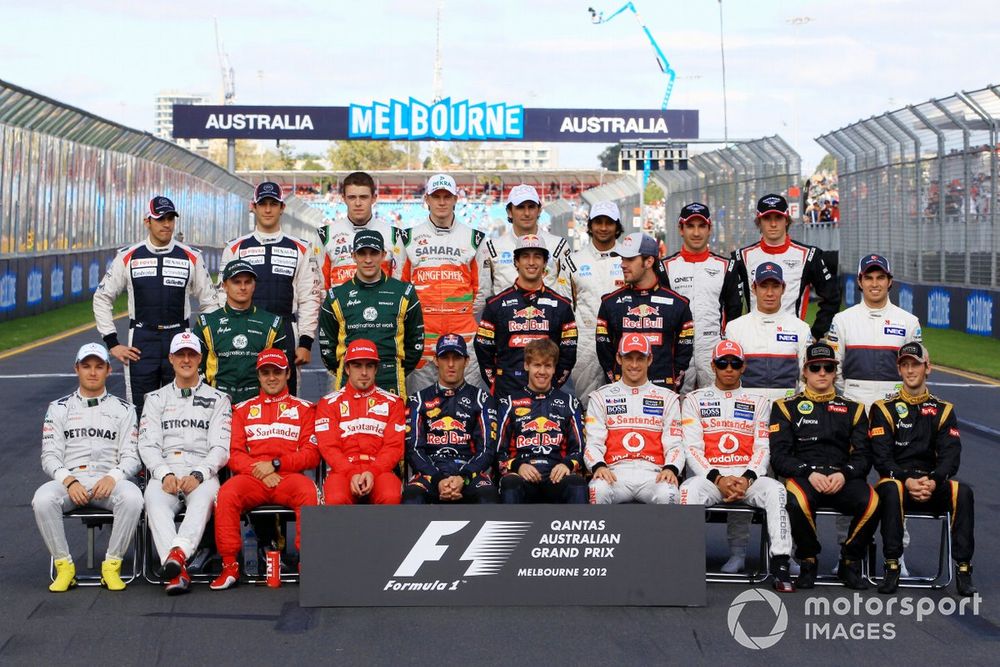
Well, 2012 had a record six F1 world champions: Michael Schumacher, Kimi Raikkonen, Jenson Button, and Sebastian Vettel joined Alonso and Hamilton on that star-studded grid. Add to that future world champion Nico Rosberg, plus multiple race winners in Mark Webber, Felipe Massa, Sergio Perez, Daniel Ricciardo, Heikki Kovalainen—even Pastor Maldonado—and you’ve got a grid packed with talent and success.
So 2012 may edge it, but the potential for 2025 is there: half the grid are grand prix winners already, and a handful definitely look set to join that list at some point in the future as a minimum. Can future years break the 2012 record? The potential is there.
Nothing Is Quite Senna vs Prost – Ed Hardy
It can be debated what Andrea Stella exactly meant when he used the term “competitiveness.” Did he mean that current drivers are all better than their predecessors, or is the McLaren boss referring more to how close he thinks the 2025 grid is?
That’s an important technicality to consider, as a season could be one of the most competitive in history but still fall short on quality. One could argue that’s been this year’s title fight, because as level-pegging as Lando Norris and Oscar Piastri have been, neither can be considered the best driver. Such an honor falls to Max Verstappen, who arguably would have already won the championship had his Red Bull car been as good as McLaren’s since the opener.
So F1 may be pretty blessed with its current crop, but there is still one driver who is levels above the rest.
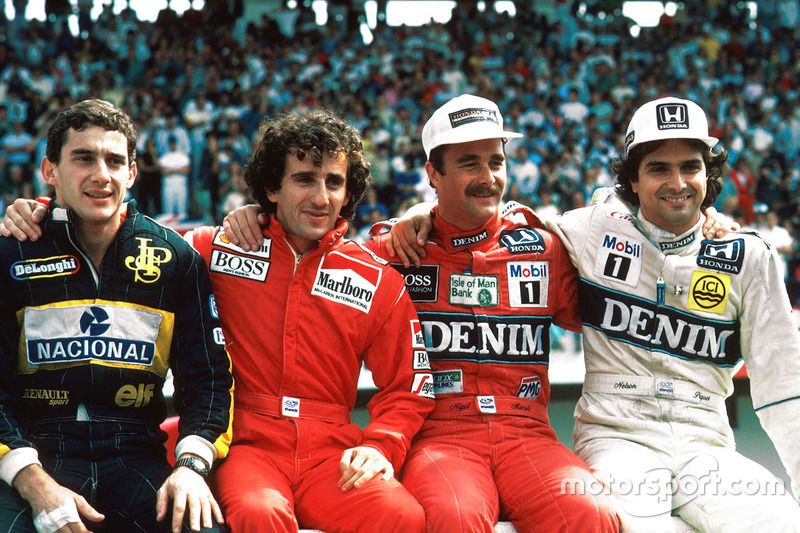
One generation, however, that was just as high on quality as it was with competitiveness was the late 1980s. It already boasts the most legendary rivalry in Ayrton Senna versus Alain Prost, but they weren’t the only stars of the show. There was also triple world champion Nelson Piquet, plus Nigel Mansell who in another life wouldn’t have waited until 1992 for his crowning moment. Then there’s Gerhard Berger, Thierry Boutsen, Michele Alboreto, Riccardo Patrese, Johnny Herbert, and Jean Alesi—who all won a grand prix.
So the quality was high throughout, but particularly at the front, which featured four drivers—Senna, Prost, Piquet, and Mansell—that were already F1 greats while still in their prime. Can the same be said about now?
There’s perhaps three current drivers who are certain to go down as legends—Verstappen, Lewis Hamilton, and Fernando Alonso—but only one is in his prime. I’m struggling to think of a fourth who is certain to join that. Of course, some have the potential to do so, but we cannot know for sure, unlike the late ‘80s—which one could also argue remains the most iconic and popular era in F1 history.
Thanks, Andrea, but 1965 Gets My Vote – Stuart Codling
It’s fatuous to compare eras, but fun nonetheless, so let’s go there. We are indeed fortunate to have a grid in 2025 composed of several world champions, plus a handful who are easily good enough to merit a drivers’ title. Even those who might not be world-champion-grade megas are quick and competent for the most part.
I like Haydn’s suggestion of 2012, but I’m going to dial back further in time to 1965. Then, as now, there was one driver who was clearly head and shoulders above the best (because, let’s face it: if Max Verstappen had consistently the fastest car in 2025, he would have waltzed away with the title).
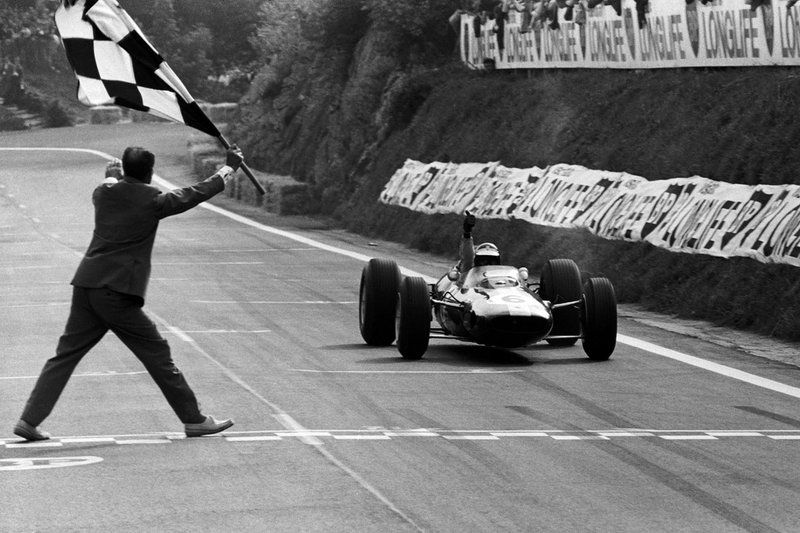
In 1965, the peerless Jim Clark won the world championship with three rounds to go, despite absenting himself from the Monaco GP to contest the Indy 500—which he won.
Ranged against him was a veritable pantheon of champions past and future, plus several whose talent merited better results in an era in which the pace and reliability of grand prix cars was usually much more greatly differentiated.
Graham Hill, Jack Brabham, and John Surtees were those who had already claimed the drivers’ title—and Surtees, of course, was a serial champ on two wheels. Future three-time champion Jackie Stewart was rookie of the year, third in the standings; Denny Hulme made his grand prix debut in a part-time campaign. Jochen Rindt had his first full year of F1 racing, albeit in a Cooper drifting from competitiveness.
Elsewhere on the grid, you would find past and future grand prix winners including the brave and multi-talented Dan Gurney, Bruce McLaren, Pedro Rodriguez, Lorenzo Bandini, Jo Siffert, Innes Ireland, and Richie Ginther.
Essaying a part-campaign was a man believed by many to be the finest driver never to win a grand prix: the perennially luckless Chris Amon, of whom it was said (by Mario Andretti) that if he were to take up the undertaking trade, people would stop dying.
Yes, 60 years ago the field was shot through with quality—it’s just that one driver stood out even among the very best.