
Political Tensions in Nepali Congress
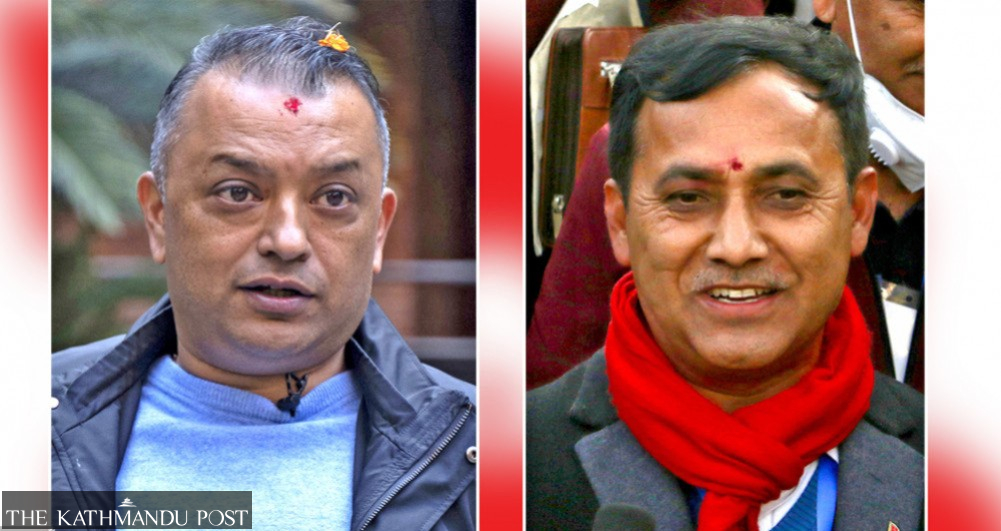
Kathmandu, Jan. 3 – A day after the Nepali Congress Central Work Execution Committee decided to hold the party’s general convention on May 11-14, tensions have emerged within the party as objections from the party’s general secretaries Gagan Thapa and Bishwa Prakash Sharma continue to surface. Party leaders have been engaged in multiple meetings to find a way forward amid these disagreements.
Shekhar Koirala, a prominent party leader who previously supported the idea of a special convention, now refuses to back Thapa and Sharma. This has created additional challenges for the general secretaries. Following the emergence of two lines supporting both the special convention and the general convention, Congress leaders and cadres expressed fears that such a rift could lead to a split in the party.
Thapa and Sharma, who remain firm in their decision to organize a Special Convention rather than the 15th general convention after the March elections, consulted legal experts on Saturday. Koirala, who initially wanted the Congress central working committee to announce a special convention, also held consultations with some of the leaders close to him.
Previously seen as siding with Thapa and Sharma, Koirala’s team this time has chosen a middle path between the two general secretaries’ January 11-12 special convention in Kathmandu and the party establishment’s May general convention announcement. However, Thapa and Sharma have stated they will not backtrack on their decision to hold a special convention.
The establishment side, led by party chief Sher Bahadur Deuba, is against holding a convention before the March 5 election. The Deuba faction managed to push through a decision with its majority backing in the central work execution committee to announce the 15th general convention in May.
Five central work execution committee members, including Thapa and Sharma, wrote a note of dissent against the decision endorsed by Friday’s meeting. Legal experts advised both Thapa and Sharma to proceed with the special convention, stating that the party general secretary has the power to organize it.
During a consultation where one-and-a-half dozen legal experts were present, it was confirmed that Thapa and Sharma’s call for the special convention is legal and in line with the party charter, according to a senior advocate.
As many as 54 percent of elected representatives to the general convention submitted a memorandum at the party headquarters on October 14, demanding a special convention in the changed political context after the September Gen Z revolt. However, a central working committee meeting on December 1 decided to hold the 15th general convention from January 10 to 12 in Kathmandu. Due to schedule disturbances and technical reasons, the two general secretaries revived the special convention demand and announced to hold it in the third week of January.
Legal experts emphasized that not organizing a special convention, which is mandatory under the party charter for being a demand of a majority of members, constitutes a violation of the statute. It would also be the central leadership’s failure to carry out its duties and go against both the party charter and the law governing political parties.
“We will definitely honor the signatures of 54 percent elected representatives and the agendas forwarded by them will not go in vain,” Thapa and Sharma said at the meeting in one voice, according to a leader.
“At a time when other parties are gearing up for the elections, we are engulfed in an internal dispute, creating deep anguish and frustration in the entire party rank and file,” said Ramhari Khatiwada, a central member.
During the consultation, leaders from the Koirala camp stated they, in principle, back the demand for a special convention but it would not be fair to call it ahead of the House elections. “Our priority is to keep the party united,” said Congress Vice-president Dhanraj Gurung, “irrespective of whether someone supports the special convention or not.”
Gurung argued that it is not good to prolong the dispute and that leaders are exploring ways to maintain party unity. With the Koirala faction not backing the special convention call, Thapa and Sharma are unlikely to keep their 54 percent support intact. When the signature campaign was launched for a special convention, it was backed by Thapa, Sharma, and Koirala. Leaders close to Koirala now only say they respect the opinion of the majority of the elected representatives to the general convention.
A leader close to Deuba mentioned that because Thapa and Sharma will not have the backing of 40 percent elected representatives, the special convention will turn into a special gathering. “We are waiting and watching the move of the two general secretaries,” the leader said.


