
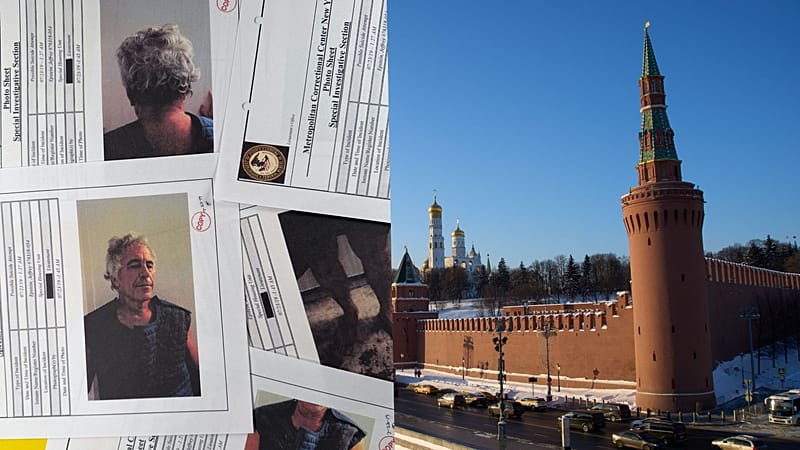
The Epstein Files and the Question of Intelligence Ties
The latest release of documents related to the late financier Jeffrey Epstein has sparked renewed interest in his potential connections with intelligence agencies, particularly those of the United States, Israel, and Russia. These files have prompted online discussions about whether Epstein had links to the CIA, Mossad, or Russian intelligence services. While no definitive evidence has emerged from these records, the nature of Epstein’s activities and relationships continues to fuel speculation.
Poland’s Prime Minister Donald Tusk recently announced a broad investigation into Epstein, including an examination of his possible ties to Russian intelligence. The documents reveal that Epstein maintained contact with high-level Russian figures, some of whom are associated with intelligence operations. However, there is no direct proof that he worked for a foreign government. His behavior, such as installing surveillance cameras in his home to capture compromising situations, has drawn comparisons to methods used by Russian intelligence.
This has led to theories that Epstein may have been collecting “kompromat,” or blackmail material, on influential individuals. Euronews’ fact-checking team, The Cube, has analyzed the files to uncover what they reveal about Epstein’s connections to politicians and officials.
Russia Emails: What the Files Show
One of the most notable aspects of the files is Epstein’s attempts to build relationships with influential Russian figures. Sergei Belyakov, a graduate of Russia’s Federal Security Service (FSB) Academy and a former deputy economy minister, is one such individual. In 2014, Belyakov became chairman of the St Petersburg International Economic Forum, often referred to as “Russia’s Davos” due to its prominence in global business discussions.
Journalist Craig Unger, who has extensively studied the links between Russia and certain U.S. figures, described the forum as “the Super Bowl of honey traps.” He suggested that it was a place where many billionaires and world leaders would gather, alongside young women involved in “honey trap” operations. Epstein was reportedly tied to this network.
While there is little evidence that Epstein attended the forum during Belyakov’s tenure, a 2015 email shows former Israeli Prime Minister Ehud Barak detailing his meetings at the event, including with Russian Foreign Affairs Minister Sergei Lavrov. A follow-up email indicates that Barak thanked Epstein for facilitating the arrangements.
In another exchange, Epstein asked Belyakov to investigate a Russian woman he claimed was trying to blackmail a prominent U.S. businessman. Belyakov provided details about her background, highlighting her involvement in “sex and escort” activities and suggesting that her financial troubles might be behind the blackmail attempt. In a draft response, Epstein warned the woman that he had consulted “some friends in the FSB,” who allegedly told him she would face “extremely harshly” if she continued threatening U.S. businessmen.
Epstein also encouraged Belyakov to hire “pretty women” as English-speaking editors for his business proposals in 2016. Additionally, Epstein introduced Belyakov to influential U.S. figures like Peter Thiel and Thomas Pritzker.
Other Russian Connections
Epstein also had contact with Vitaly Churkin, a former Russian diplomat and U.N. representative, and arranged an internship for Churkin’s son. According to Unger, Epstein also targeted women linked to Russia, including Maria Bucher, a Russian publicist who worked for him after joining the U.S. She was previously associated with Putin’s Youth Movement, Nashi.
Unger noted that Putin has emphasized the importance of artificial intelligence, and Epstein reached out to key figures in that field, such as Elon Musk and Peter Thiel, through intermediaries like Bucher.
Despite these connections, there is no evidence that Bucher was a Russian spy.
In Pursuit of Putin
The files show that Epstein repeatedly tried to connect with the Russian government and Vladimir Putin, whose name appears over 1,000 times in the documents. Epstein used various contacts, including Norway’s former Prime Minister Thorbjørn Jagland, to try to arrange a meeting with Putin. In May 2013, Epstein told Barak that Jagland was “going to see Putin in Sochi.” Epstein claimed he had never met Putin but said he had been asked to explain how Russia could structure deals to encourage Western investment.
Jagland later informed Epstein that he would introduce him to Putin. In 2018, Jagland emailed Epstein about arranging a stay at his Moscow residence, where he planned to meet Putin and Lavrov. Epstein expressed disappointment at not being able to attend.
Despite these efforts, there is no evidence that Epstein ever met Putin in person.
Asset, Not Spy
While there is no proof that Epstein was a spy, some believe he was a Russian asset. Craig Unger stated that while an agent is typically employed by an intelligence agency, an asset is someone with mutual interests. He suggested that Epstein had ties to both Russian and Israeli intelligence but was primarily serving himself.
Israeli Prime Minister Benjamin Netanyahu has denied claims that Epstein worked for the Mossad, instead accusing him of undermining Israeli democracy. This came after the files revealed that Barak consulted Epstein during his 2019 election campaign.
Speculation about Epstein’s intelligence ties is not new. It has been fueled by questions about his 2008 plea deal, his wealth accumulation, and his connection to Ghislaine Maxwell, whose father, Robert Maxwell, has been linked to Israeli intelligence.


