
A Tragic Case of Love, Betrayal, and Divided Family
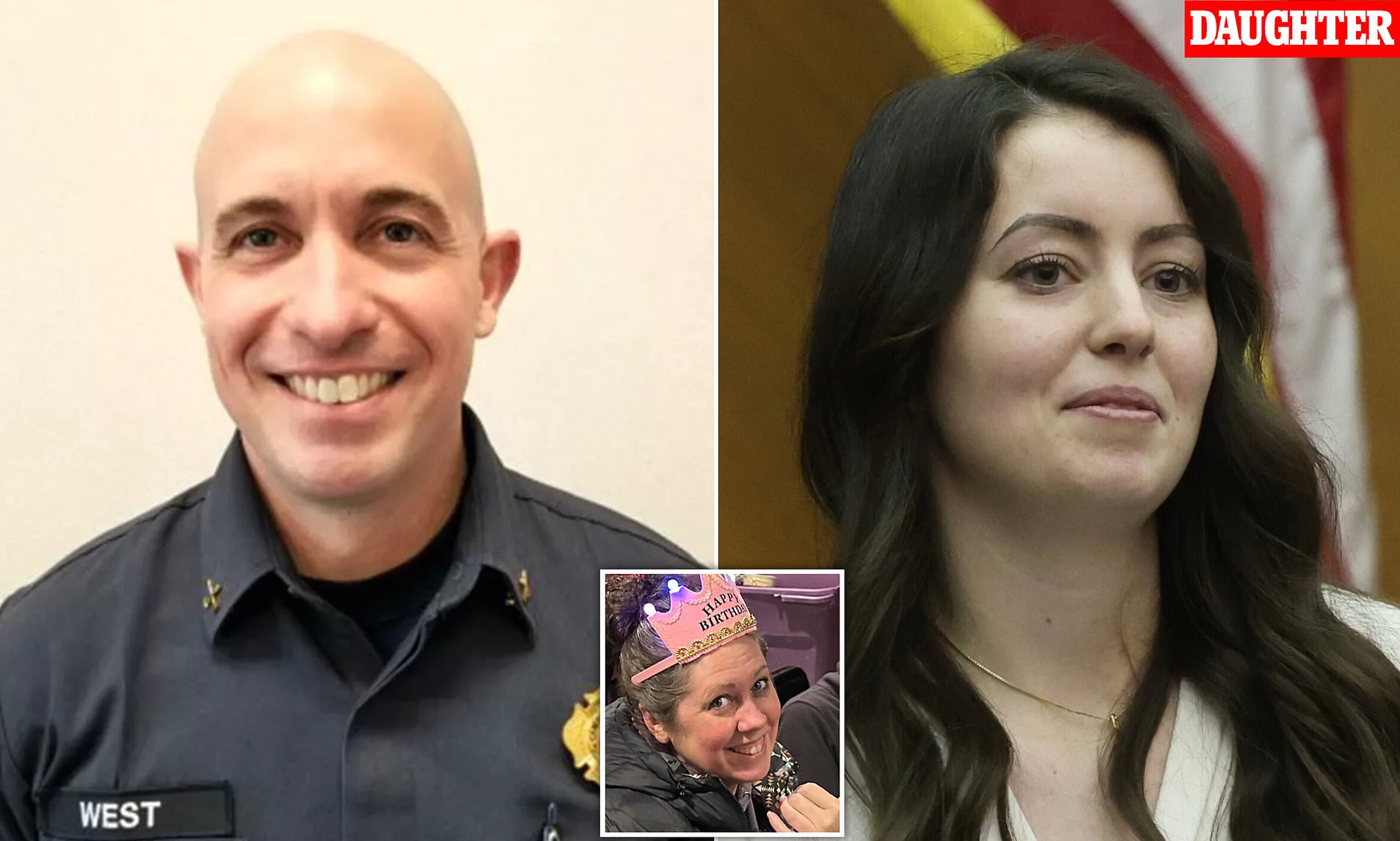
A former fire chief has been sentenced to 25 years in prison for the murder of his wife, Marcy West, in a case that has deeply divided their family. Kevin West, now 52, was found guilty of strangling his wife, Marcelle “Marcy” West, on January 8, 2024, at their $723,000 home in Washington state. The medical examiner determined that Marcy, who was 47 at the time, died from asphyxiation caused by blunt neck trauma, ruling her death a homicide.
West initially claimed that his wife had died from a seizure that left her body “vibrating.” However, this claim was later dismissed as he faced mounting evidence against him. The case has not only led to his conviction but also created a rift between his two children, Megan and Ted West.
Family Divided by Tragedy
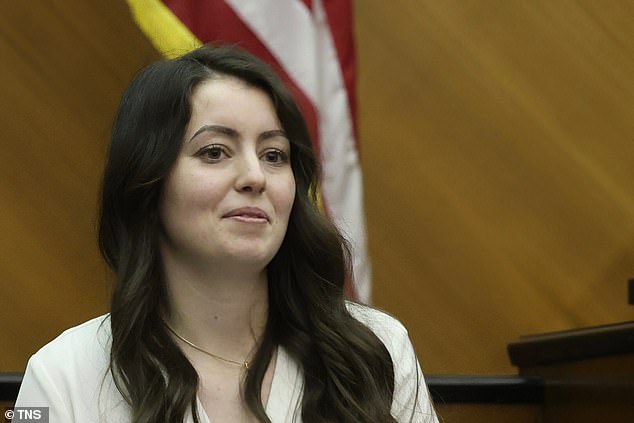
Megan West, 20, the younger of the couple’s two children, spoke in court about how her father’s actions affected her. She said that her father had expected the family to accept his mistress, Cynthia Ward, as a replacement for her mother. Her emotional testimony drew applause from part of the courtroom before the judge warned the gallery to stop.
“I’m still trying to process what my father did,” she said. “My father’s actions not only took my mom’s life, they took my future with her—moments, memories, and milestones that will never exist… Then you had the nerve to look me in the eyes and ask if I was relieved she was dead.”
Meanwhile, Ted West, 22, described his father as “kind and selfless,” highlighting that he worked long hours to support his children’s interests. Despite the jury finding his father guilty, Ted still believed in his innocence, stating that his father had given him many reasons to trust him through both words and actions.
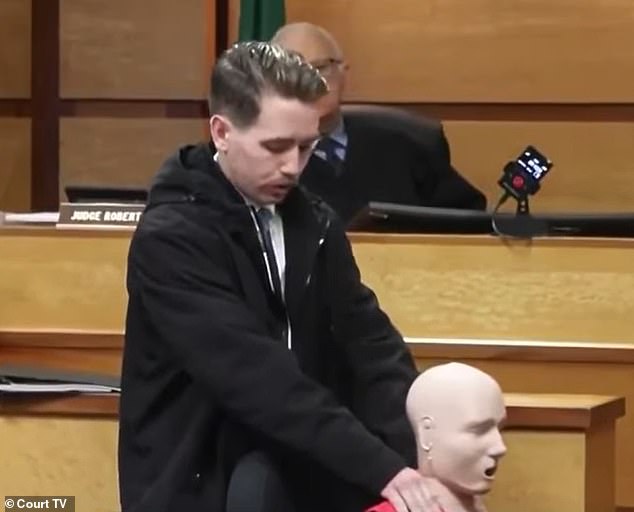
However, prosecutors reminded the court that Ted had previously suggested a “vigorous massage” he gave his mother might explain her injuries, contradicting his earlier statement to detectives that he had only used a light touch.
Legal Proceedings and Evidence
Clark County Superior Court Judge Robert Lewis imposed a sentence of 300 months (25 years) after the jury found West guilty of first- and second-degree murder. During the sentencing, West apologized for his affair but maintained his innocence, insisting that it was his only wrongdoing.
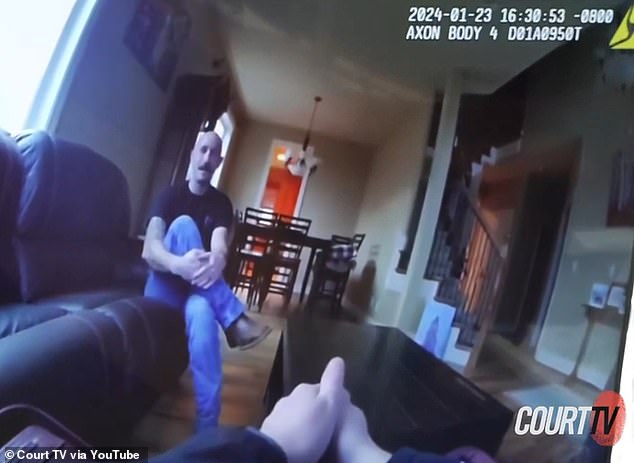
On the night of Marcy’s death, West called 911 just before 4:30 am, claiming that his wife was having a seizure and had stopped breathing. First responders, including some of West’s colleagues from Camas-Washougal Fire, tried to save her, but she was pronounced dead at 5:11 am.
West told investigators that they had enjoyed a normal evening of takeout, movies, and even sex before going to bed. However, the medical story changed as the case unfolded.
After initial findings were inconclusive and Marcy’s body was released to a funeral home, investigators learned that West had been seen out bowling with another woman. Authorities retrieved the body, and a second autopsy revealed bloody tissue in the throat and neck injuries consistent with strangulation. The cause of death was ruled asphyxia due to blunt neck trauma, and the manner of death was classified as a homicide.
Smartphone and health-app data contradicted West’s claim that he slept through the night, showing hours of movement resembling pacing in the lead-up to the 911 call.
Motive and Evidence
Prosecutors argued that West had become obsessed with Cynthia Ward, a woman he first met in 2004 when she volunteered with the department and reconnected with in 2023. Evidence included texts and letters where West vowed “2024 will be our year,” as well as messages indicating he planned to move out on January 8 and finalize divorce papers the next day.
Financial stress was also cited as a possible motive. Despite a roughly $160,000 salary, the couple carried a heavy mortgage and debts. West had calculated that he could end up paying thousands in monthly alimony if he divorced.
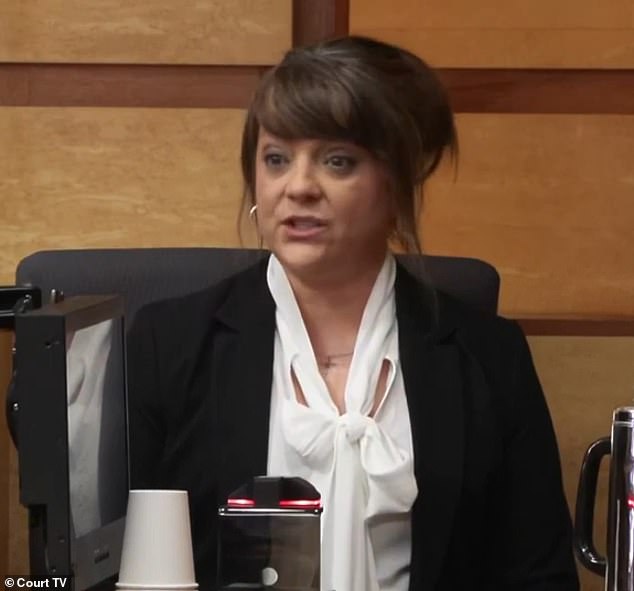
Several of West’s closest friends and coworkers, who were the first to arrive after his 911 call, said they were stunned by his demeanor in the hours and days following Marcy’s death. Jurors heard testimony that he took down photos, asked if it was “too soon” to throw out her belongings, and even expressed relief—comments prosecutors framed as proof he was “ready to move on.”





Emotional Impact on the Family
Megan spoke about the close bond she shared with her mother, describing how her physical and mental health deteriorated after the killing. She said that her father kept his distance, only to call her later, drunk, to apologize without ever explaining what he was sorry for.
“You had the audacity to call me when you were drunk, apologizing and dumping your emotions like I was your parent,” she said. “You never said what you were sorry for, but in that moment, I knew you were guilty.”
The case highlights the tragic consequences of betrayal, obsession, and the devastating impact on a family. As West serves his sentence, the wounds left behind continue to affect those who loved Marcy.


