
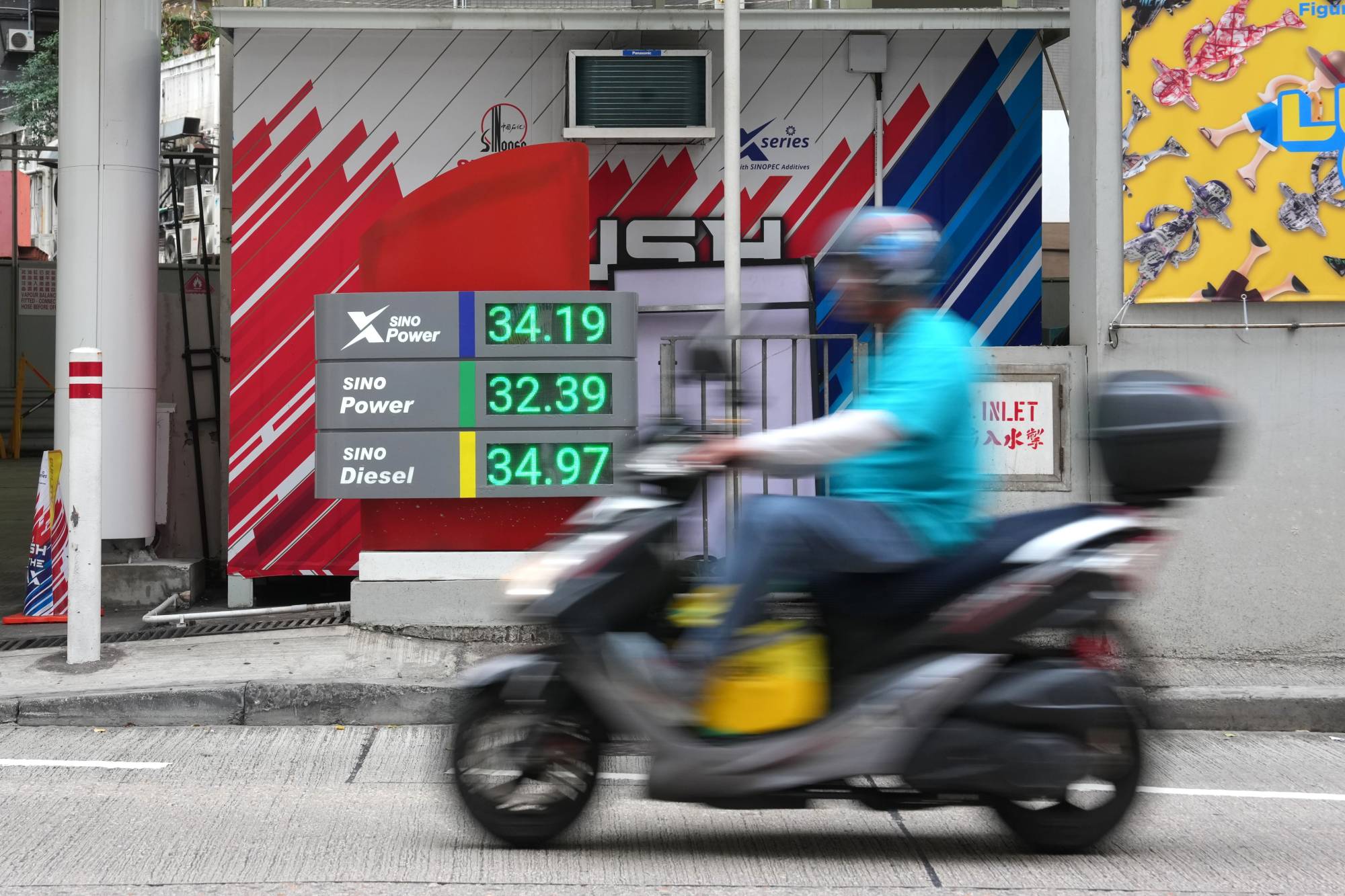
Rising Inflationary Pressures Due to Middle East Oil Crisis
The ongoing conflict in the Middle East has triggered a significant oil shock, leading to heightened inflationary pressures across Hong Kong. Analysts warn that this situation will have widespread effects on various industries and consumer goods. With petrol and diesel prices at their highest globally, businesses are struggling to cope with rising costs, which could lead to increased prices for everyday items such as toilet paper, laundry services, and even asphalt.
Economists and business leaders predict that the impact of the oil crisis will be felt more immediately in terms of inflation rather than economic growth. Some experts suggest that these repercussions may become more evident in the third and fourth quarters of the year. The threat of soaring inflation could also affect major projects like the Northern Metropolis megaproject, potentially pushing more Hongkongers to seek cheaper alternatives in mainland China.
Adrienne Lui, an economist at Citigroup Global Markets Asia, maintains her 2026 real GDP forecast for Hong Kong at 3.2 per cent. She notes that while the energy disruption is likely to be inflationary, it may not severely damage economic growth. Her team has adjusted its average consumer price index (CPI) forecast for 2026 by 0.3 percentage points to 1.9 per cent year on year, reflecting the impact of elevated energy costs over several months.
Electricity constitutes 2.8 per cent of the CPI basket in Hong Kong, according to Lui. She explains that monthly fuel cost adjustments, albeit delayed, will eventually be reflected in residential electricity bills, adding to the energy burden caused by the Middle East disruption.
The government has acknowledged that the impact of the Middle East situation on Hong Kong’s economy depends on whether the conflict continues, expands, or escalates. Its economic forecast for 2025 was released shortly before the US and Israel attacked Iran on February 28.
In response to the crisis, the government has implemented short-term measures such as diesel subsidies and reduced tunnel fees for the commercial transport sector. A government task force has been established to monitor fuel price movements, conduct dynamic assessments, coordinate departments, and prepare contingency plans.
Retail and wholesale lawmaker Peter Shiu Ka-fai warned that the crisis would soon affect everyday consumer goods, particularly bulky items like toilet paper and petroleum by-products such as waterproof materials and asphalt. He noted that while large companies may have more resources to adapt, small companies may struggle to absorb the increased costs.
Financial Secretary Paul Chan Mo-po, in his budget released just days before the Middle East crisis unfolded, anticipated that inflation this year would be moderately higher than in 2025. The government forecasted an underlying inflation rate of 1.7 per cent and a headline inflation rate of 1.8 per cent for this year. Chan also projected a GDP growth of 2.5 to 3.5 per cent year on year.
A Bloomberg survey of 29 analysts conducted in early March similarly projected a median real GDP growth of 2.9 per cent for 2026, closely aligning with the government’s official range. However, Lui warned that continuing uncertainty would intensify inflationary pressures.
She explained that even with weak pricing power, energy-driven inflation pass-through to consumer products and services would become more noticeable as the energy uncertainty persists. Examples include surcharges by logistic companies and potential requests for public transport fare increases. The sharp surge in jet fuel prices has led to rapidly rising fuel surcharges on flight tickets, alongside higher probabilities of travel disruptions, affecting air travel considerations, especially for longer-haul routes.
Lui also mentioned that safe-haven capital flows could be attracted to Hong Kong as a secure financial hub amid geopolitical instability, benefiting China-related assets.
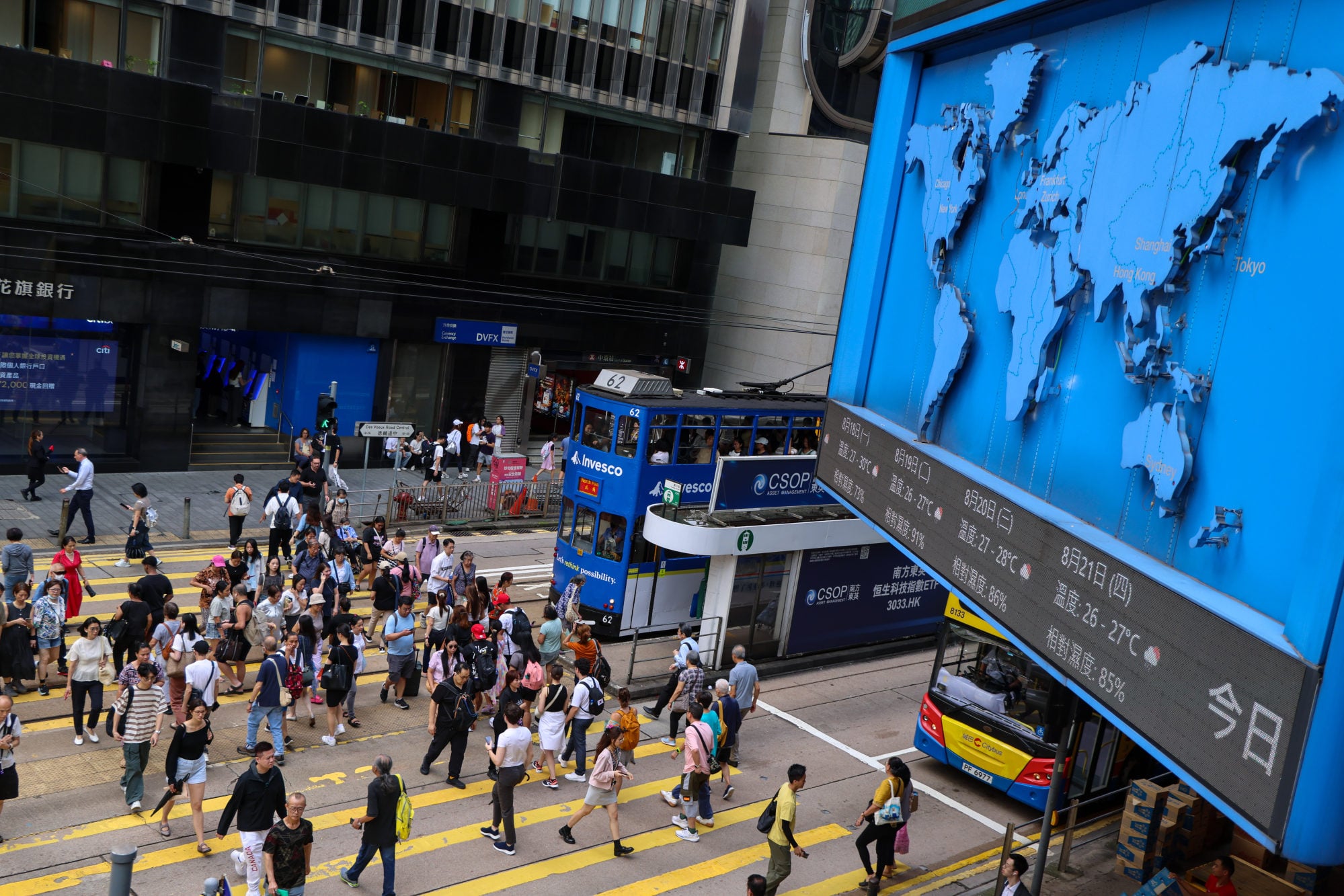

Despite this macroeconomic optimism, severe operational strains are evident across various sectors. Industrial sector lawmaker Ray Wong Wing-wai highlighted that surging industrial diesel prices have pushed energy costs for commercial laundries from 8 per cent to about 15 per cent of their total expenses, wiping out profit margins that traditionally sat below 10 per cent.
Wong pointed out structural challenges, noting that local laundry operators cannot offshore their energy-intensive operations due to a mainland Chinese ban on cross-border laundry processing enacted after the pandemic.
Joseph Chan, associate director of the Centre for Innovation and Entrepreneurship at the University of Hong Kong, warned that higher costs would push more residents to seek cheaper alternatives across the border. This shift could further strain the city’s retail and food and drink sectors, as locals increasingly travel to Shenzhen for dining and shopping or to Japan for favorable exchange rates.
Although Hong Kong is highly import-reliant, experts note that it is relatively shielded from the physical shortages affecting other nations. Both Lui and Chan emphasized that the city benefits from a stable supply of consumer goods, oil, and natural gas from the mainland.
While Lui believes that the megaproject and the five-year plan for the Greater Bay Area are unlikely to be derailed, the crisis highlights the need for coordinated strategic backup plans within the region. Conversely, Chan warned that if the crisis continues, government spending may be further cut, potentially affecting the Northern Metropolis due to higher costs.
Chan suggested that the massive development could instead be accelerated to capitalize on green innovation and overseas investments. The unprecedented fuel shock has served as a wake-up call for Hong Kong’s green transition.
Lui noted that with imported liquefied natural gas used to generate 50 to 60 per cent of the city’s electricity, authorities should comprehensively review their 2035 goals of having renewables reach 7.5 to 10 per cent of the fuel mix to improve energy independence.
Chan called for a proactive local energy strategy aligned with the national framework, pushing for electric vehicle applications and sustainable aviation fuel.


