
The Global Fight Against Breast Cancer: A Story of Inequality
October is here again, and with it comes Breast Cancer Awareness Month, a time when cities around the world are painted in pink and social media fills with ribbons and messages of hope. But behind the vibrant displays of solidarity lies a harsh reality that many people don’t talk about.
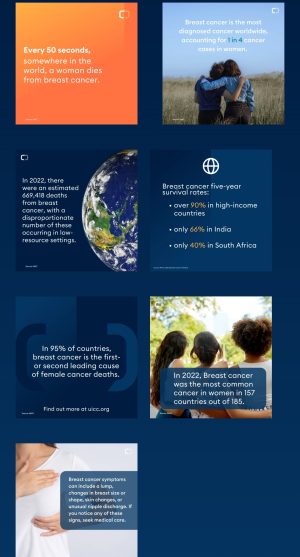
Every 50 seconds, a woman dies from breast cancer somewhere in the world. In 2022 alone, over two million women were diagnosed globally, and one in four cancer cases in women worldwide is breast cancer. These numbers are staggering, but they only tell part of the story.
What these global statistics fail to reveal is the stark difference in survival rates between women in high-income countries and those in low-resource settings. For example, a woman in Ghana has a much lower chance of surviving breast cancer compared to her counterpart in London. If she lives in rural Ghana, the odds are even worse. The truth is that breast cancer doesn’t affect everyone equally—it’s a disease that seems to read your passport, check your bank balance, and calculate your chances based on where you live.
In high-income countries, women have over 90% five-year survival rates, while in Ghana, we’re still fighting for basic access to effective treatment. This isn’t just a matter of awareness; it’s a matter of systemic inequality in healthcare.
I used to believe in the power of awareness. I stood on platforms during October campaigns, sharing statistics with the confidence that knowledge alone could save lives. I worked with brands to weave breast cancer conversations into TV shows and radio programs, believing that if we reached enough people, we could beat this disease. But then cancer came for the women I loved, and I learned that awareness without action is another form of cruelty.
My friend found her lump on what should have been an ordinary Tuesday. I watched cancer strip her dignity away piece by piece over 36 brutal months. The statistic “one in twelve women” suddenly had a name, a laugh I’d never hear again, a chair at my dining table that stays empty.
But it was my mother’s journey that shattered every comfortable lie I told myself about our healthcare system. When the doctor said “carcinoma” after her surgery, the word hung in the air like a death sentence. We were shuffled to oncology with forms to fill and hope still flickering, believing in the treatments I’d spent years promoting on television and radio.
Then we discovered the radiation machine had broken down. For six weeks, we sat in waiting rooms watching my mother’s tumor return with a vengeance while engineers tried to fix equipment that should never have been allowed to fail. Each day felt like borrowed time slipping away, and I signed forms for stronger pain medication while rage burned in my chest.
When we finally moved her to OKomfo Anokye Teaching Hospital in Kumasi, the radiation treatments weren’t the precise, clinical procedures I’d imagined. They were daily sessions of watching my mother’s skin burn, watching her body rebel against the very treatment meant to save her. The woman who raised me became a stranger in her own flesh, marked by therapy that felt more like torture than healing.
At the hospital, there’s a bell that survivors ring when they become cancer-free. I dreamed of my mother ringing that bell so many times I could hear the sound in my sleep. I planned the celebration, imagined her smile, pictured myself crying tears of relief instead of grief. But the only bells that rang were the ones at funeral homes, and some dreams die harder than the people who dream them.
The global statistics tell us that 23% of breast cancer cases are preventable through lifestyle changes. Maintain a healthy weight, stay active, limit alcohol, quit smoking. Sound advice that rings hollow when you’re dealing with a healthcare system where a broken radiation machine can steal six crucial weeks from a woman’s fight for her life.
In Ghana, 70% of breast cancer cases are diagnosed at advanced stages, compared to thirty percent globally. This isn’t because Ghanaian women are less aware of their bodies or don’t care about their health. It’s because awareness campaigns don’t fix broken equipment, and early detection means nothing when treatment comes too late.
There’s a woman I know at Makola Market who sells beautiful jewelry with hands that shake slightly when she talks about her friend. Her friend found out she had breast cancer while pregnant and refused surgery, choosing death over losing her breast. She left behind a baby who will grow up motherless because she’d been taught that her worth lay in keeping her body whole rather than keeping herself alive. These stories aren’t anomalies—they’re the reality behind the pink ribbon campaigns and the cheerful social media posts about “fighting together.” We’re not all fighting the same fight. Some of us are fighting with broken weapons in battles that were lost before they began.
The global burden of breast cancer is expected to rise to over three million new cases annually by 2040. In sub-Saharan Africa, that number will double. Yet while high-income countries have seen a forty percent reduction in breast cancer deaths since the 1980s, we’re still waiting for our turn at survival.
This October, as we display our pink ribbons and brooches from New York to London, remember that behind every global statistic about breast cancer is a woman whose location determined her fate. Behind every percentage is a family like mine, learning that healthcare in our part of the world is more about luck than medicine, more about your ability to wait than your right to live.
The awareness campaigns will continue, the ribbons will be worn, and the statistics will be shared. But until we address the gap between knowing about breast cancer and actually treating it effectively, we’re just painting the world pink while women die waiting for machines to be fixed and treatments to arrive.
Every woman deserves to ring that bell. Every mother should get to see her children grow up. Every friend should stay in their seat at our dining tables. But wanting it isn’t enough, and awareness alone won’t save us. We need action that matches our advocacy, and healthcare systems that value women’s lives as much as they value the statistics that measure them.
The global fight against breast cancer is real, but so is the global inequality that determines who wins and who loses. This October, let’s talk about both.


