
Hong Kong’s Government-Backed Fund Targets Commercial Property to Boost Industrial Ambitions
Hong Kong’s government-backed investment fund is being redirected to support the city’s struggling commercial property sector. This move highlights the authorities’ increasing use of public funds as a policy tool to stabilize office valuations and align real estate investments with Hong Kong’s broader industrial ambitions.
However, attracting foreign institutions may prove challenging. Elevated vacancy rates, upcoming new developments, and uncertain rental recovery have kept global investors cautious. Analysts note that high acquisition costs, combined with the capital expenditures required for property conversions, could compress returns on investment.
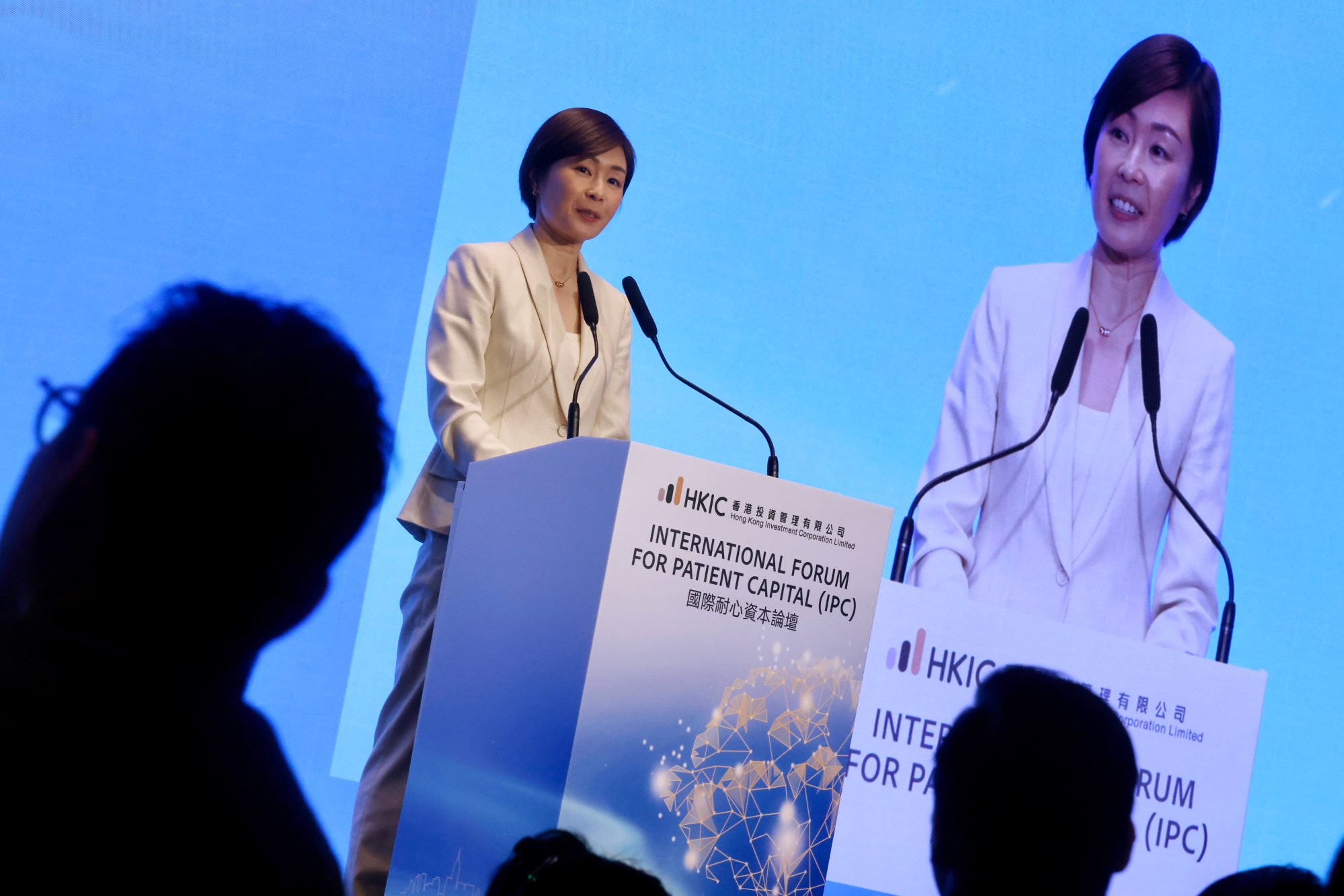
In his latest budget, Financial Secretary Paul Chan Mo-po announced that the Hong Kong Investment Corporation (HKIC) would collaborate with regional and international “long-term capital” to channel funds into “high-quality commercial projects.” This initiative aims to create a deeper synergy between industry and space, directing long-term capital into commercial assets while supporting enterprise development and delivering medium- to long-term returns.
Despite a recovery in market sentiment last year and a return to activity in the leasing market, the overall vacancy rate for grade A office space remains high at 17.5 per cent, with nearly 15 million square feet of vacant area. Fiona Ngan, head of occupier services at Colliers, notes that the market still needs time to absorb the new supply from recent years.
Established in 2022 as a wholly government-owned investment vehicle, HKIC was created when parts of Western institutional capital were pulling back from Hong Kong amid heightened geopolitical tensions. Its initial focus was on strategic sectors such as hard technology, life sciences, and green energy, aiming to anchor future industries in the city.
The redeployment of HKIC’s funds confirmed an earlier report by the South China Morning Post. It signaled a vote of confidence in the HKIC and an expansion of its remit, while remaining strictly within the investment sphere rather than property ownership or management.
Gary Ng, a senior economist at French bank Natixis, said, “The government wants to co-invest in commercial property projects that can help develop Hong Kong’s industrial and technological positioning.” He added that HKIC is increasingly functioning as a policy transmission tool.
Hong Kong’s equity market rebounded in 2025, allowing the city to reclaim its position among the world’s top venues for initial public offerings (IPOs). Alongside this recovery, HKIC’s portfolio matured and generated HK$2.3 billion (US$294 million) in investment income last year.
HKIC’s move into commercial real estate marks a notable expansion of its mandate at a time when Hong Kong’s IPO market has attracted strong liquidity, even as the office sector struggles for capital.
Cathie Chung, senior director of research at JLL in Hong Kong, said, “The new measures may introduce additional demand into the commercial investment sector and could encourage some investment funds to re-enter the market.”
Weak leasing demand and uncertain rental prospects have discouraged major funds from deploying significant capital. For example, Boston-based pan-Asia property manager AEW has not made a new Hong Kong acquisition since 2022, citing difficult market conditions.
Athena Tse, head of Greater China at AEW, welcomed the HKIC initiative as a “positive signal,” noting that domestic capital had begun reallocating into real estate after years of post-pandemic suppression. However, she cautioned that prices for high-quality grade A assets had remained relatively resilient.
“Higher acquisition costs—combined with the capex required for conversion—may compress returns and make large-scale conversion strategies less compelling,” Tse said. More attractive opportunities involved acquiring under-managed assets at distressed levels and repositioning them into living products, she added.
“Currenly, the market only has limited investors, with most of the potential buyers actively seeking acquisition opportunities in Hong Kong’s commercial investment market being end users,” JLL’s Chung said.
Mainland investors with long-term plans in Hong Kong have been snapping up prime offices since last year. These included high-profile transactions by Alibaba Group Holding and fintech affiliate Ant Group, as well as JD.com. Alibaba owns the SCMP.
“I would not be surprised if more mainland capital steps up, as a gesture to support the Hong Kong government’s policy,” Ng of Natixis said.


