

The Lee Jae Myung-Sanae Takaichi Leadership Combination
The leadership combination of Lee Jae Myung and Sanae Takaichi in South Korea-Japan relations marks the second such pairing since the 2010s, following the Park Geun-hye-Shinzo Abe collaboration. With the Liberal Democratic Party’s (LDP) significant victory in the House of Representatives election, Takaichi is expected to remain as prime minister until at least the July 2028 House of Councillors election. This suggests that the Lee Jae Myung-Takaichi partnership could endure for an extended period.
Historically, bilateral relations formed during political upheavals have had a profound impact on both nations’ futures, drawing considerable attention. In this context, revisiting why the Park Geun-hye-Abe relationship faltered from the start and how distrust accumulated may offer valuable lessons for the current Lee Jae Myung-Takaichi dynamic.
Abe’s Diplomatic Blunder in December 2012
A bizarre incident occurred shortly after Park Geun-hye’s presidential election victory in December 2012. Shinzo Abe, then newly appointed LDP president and prime minister-designate, announced plans to send a special envoy to President-elect Park Geun-hye but abruptly canceled them.
At 9:30 a.m. on December 21, 2012, Abe stated at a press conference, “I will send Fukushiro Nukaga, former finance minister, as a special envoy to South Korea to convey my thoughts on improving Japan-South Korea relations. He will carry my personal letter.” However, this was a unilateral announcement without prior consultation with Park’s transition team. Her camp immediately expressed regret, stating, “Abe’s office unilaterally announced the envoy dispatch without any agreement.”
By 2:00 p.m., Kyodo News cited a member of the Japan-Korea Parliamentarians’ Union, reporting, “The envoy’s visit has been postponed to the following week due to scheduling conflicts with South Korea (Park’s transition team).” By 5:00 p.m., Abe revised his statement at a press briefing, claiming, “The envoy was dispatched not by the LDP but by the Japan-Korea Parliamentarians’ Union.” Announcing and then canceling an envoy dispatch amid the inauguration of new governments in both countries was an unusual breach of diplomatic protocol. This incident symbolized the rocky path ahead for South Korea-Japan relations.

Ominous Signs for Bilateral Ties
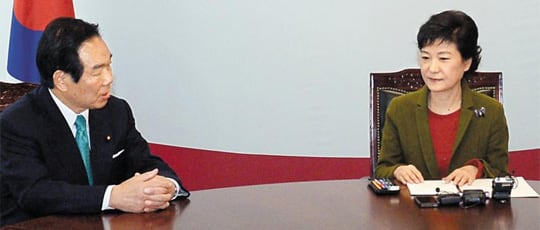
Abe’s attempt to dispatch an envoy without Park’s consent was criticized as a serious diplomatic faux pas. His hasty announcement and subsequent cancellation were seen as further complicating relations. The sequence of events unfolded as follows: On December 20, 2012, Abe conveyed his intent to send an envoy through Ambassador to South Korea Gorō Betto, who visited Park’s Saenuri Party office to congratulate her. Abe also probed the idea via members of the Japan-Korea Parliamentarians’ Union and the Korean Residents Union in Japan.
However, Abe treated this as a fait accompli, prompting Sankei Shimbun to report on December 21 that Nukaga would arrive in Seoul that evening and meet Park the next day to deliver the letter. Asahi Shimbun and others noted the letter would emphasize shared strategic interests and Abe’s desire to deepen personal trust with Park, akin to his grandfather Kishi Nobusuke and father Abe Shin塔로’s relationship with Park Chung-hee.
Park’s transition team strongly objected, stating, “Abe’s office unilaterally announced a schedule without any prior consultation.” A team member remarked, “We only responded with a general ‘we’ll consider it’ when Abe’s office proposed the envoy, but it appears the LDP used this as a ‘media play’ to test us.” A Ministry of Foreign Affairs official explained, “When Abe’s office expressed interest in sending an envoy, we suggested coordinating timing, but the LDP unilaterally announced the dispatch.”
Park’s Caution Amid ‘Daughter of a Pro-Japanese Collaborator’ Attacks
Park’s team firmly rejected the envoy, stating, “Now is not the time to meet a Japanese envoy.” They viewed Abe’s government as likely to strain relations and saw no urgency in an early meeting. Politically, Abe’s emphasis on his family’s historical ties to Park Chung-hee risked reinforcing opposition narratives labeling Park as the “daughter of a pro-Japanese collaborator.”
During the 2012 presidential campaign, Park faced attacks from the Democratic United Party and civic groups over her father’s wartime service in Manchuria, demanding clarity on historical perceptions. Her camp rebutted these as “ideological smear campaigns,” diverting significant energy. Highlighting Abe’s familial ties to Park Chung-hee could politically damage Park, who sought to distance herself from her father’s legacy.

‘Takeshima Day’ Controversy Resurfaces
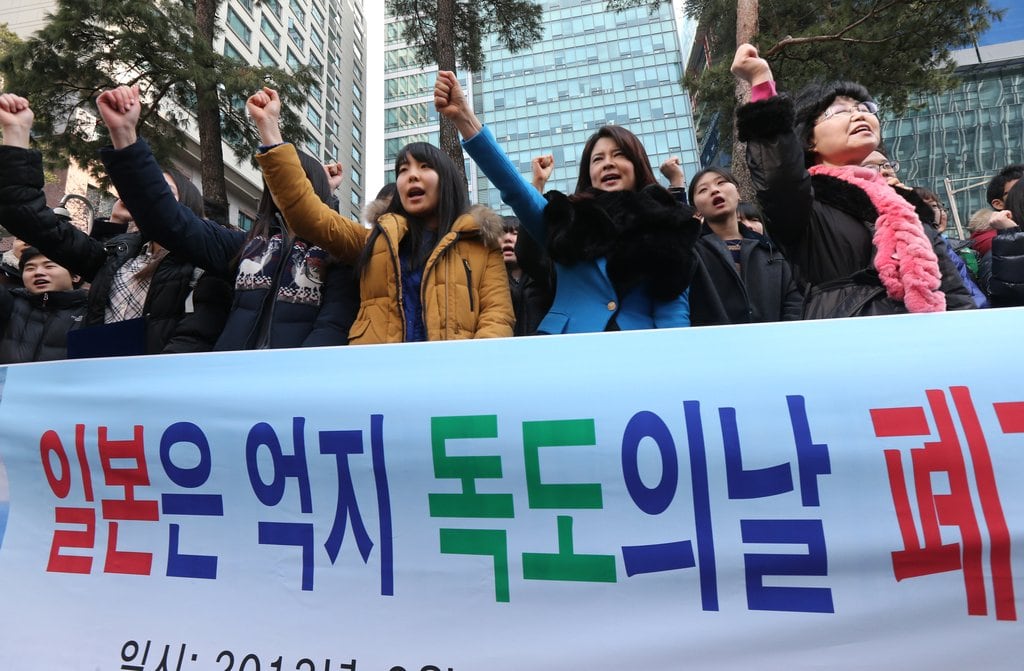
Beyond this, the “February 22 Takeshima Day” dispute reemerged. At his December 26 press conference announcing the envoy, Abe addressed his campaign pledge to elevate the event to a government-hosted ceremony, stating, “It is separate from the party’s pledge. We will consider it based on comprehensive diplomatic circumstances.”
A source criticized, “Even if Abe refrains from hosting it at the government level, merely expressing openness to reconsideration shows no sincerity. Premature engagement with Abe’s envoy could inflict fatal damage on Park’s government before its inauguration.” Skepticism also arose over Abe’s far-right campaign pledges. After the envoy’s rejection, Abe shifted tone, asserting, “Japan’s stance that Takeshima is its territory is unchangeable and internationally recognized.”
Park’s Envoy Meeting: ‘Trust as the Foundation’
After initially rejecting Abe’s envoy, Park finally met the delegation on January 4, 2013. At the Financial Supervisory Service training center, she stated, “With the inauguration of new governments, we should build trust aligned with public sentiment and strengthen friendly ties.” She added, “Establishing amicable relations early is crucial. We must confront history, pursue reconciliation, and steadily build trust.”
This was interpreted as a veiled warning against Abe’s potential revision of the Kono Statement and government sponsorship of “Takeshima Day.” When asked about her electoral success, Park replied, “The key is ‘trust’ (무신불립). Consistency and trust with the public are vital.” She extended this to bilateral relations: “Trust between South Korea and Japan is equally important. Without it, even minor issues can destabilize politics and unsettle citizens.”

Abe’s Provocation on ‘Takeshima Day’
Less than two months after the envoy’s visit, Abe fulfilled his pledge by sending a vice-ministerial official to the Shimane Prefecture-hosted “Takeshima Day” event on February 22, 2005. This provoked outrage. Ministry of Foreign Affairs spokesperson Cho Tae-yong condemned, “Japan must immediately abolish the ‘Takeshima Day’ ordinance and cease unjust territorial claims.” The ministry summoned Takashi Kurai, the head of the Japanese embassy, to lodge a formal protest.
North Gyeongsang Province Governor Kim Kwan-yong denounced the move as a “grave criminal act,” while protests erupted nationwide. Park never forgot this incident, occurring three days before her inauguration. She viewed Abe’s envoy blunder and “Takeshima Day” provocation as personal affronts, and the chill in relations persisted until the December 2015 comfort women agreement, brokered under U.S. President Barack Obama’s mediation.
Takaichi’s Choice in a Week
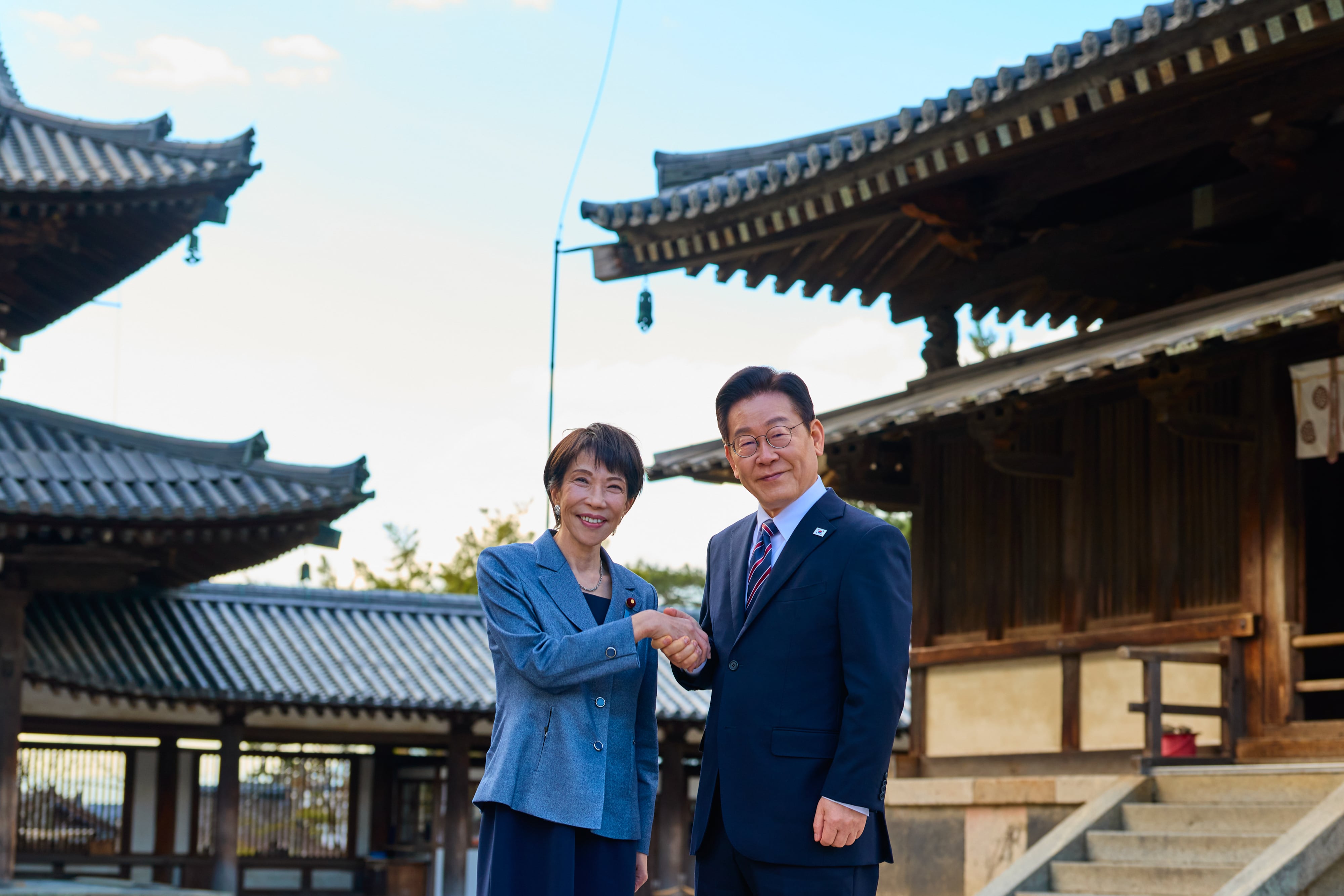
Fourteen years later, the Lee Jae Myung-Takaichi relationship appears smooth. While Lee criticized Japan’s Fukushima wastewater release as a “second Pacific War” during his Democratic Party leadership, he accepted Yoon Suk-yeol’s third-party compensation solution for forced laborers, prioritizing diplomatic continuity and national interest. Under this framework, Lee held three summits with Takaichi—at the Gyeongju APEC, G20, and Nara meetings—emphasizing shuttle diplomacy and future-oriented cooperation.
However, trust between Lee and Takaichi, a right-wing hardliner known for visiting Yasukuni Shrine, remains unproven. The upcoming “Takeshima Day” on February 22 is a litmus test. During her LDP leadership campaign, Takaichi stated, “Cabinet members should attend ‘Takeshima Day’ with pride.”
Fortunately, Kyodo News reported Japan is considering postponing ministerial attendance, with territorial affairs officials likely absent. Analysts suggest Japan may avoid clashes amid escalating Sino-Japanese tensions.
From South Korea’s perspective, neither “Takeshima Day” nor high-level Japanese attendance is acceptable. Elevating the envoy’s rank could further inflame tensions. It is hoped Takaichi makes a prudent choice, ensuring the Lee Jae Myung-Takaichi relationship diverges from the Park Geun-hye-Abe precedent.
월 5900원 멤버십, 신문 독자에게는 2900원, 조선멤버십
55000원 상당의 신문-잡지 8종 마음껏 보기, 조선멤버십
현금처럼 쓸 7000포인트 받아 알뜰한 쇼핑, 조선멤버십


