
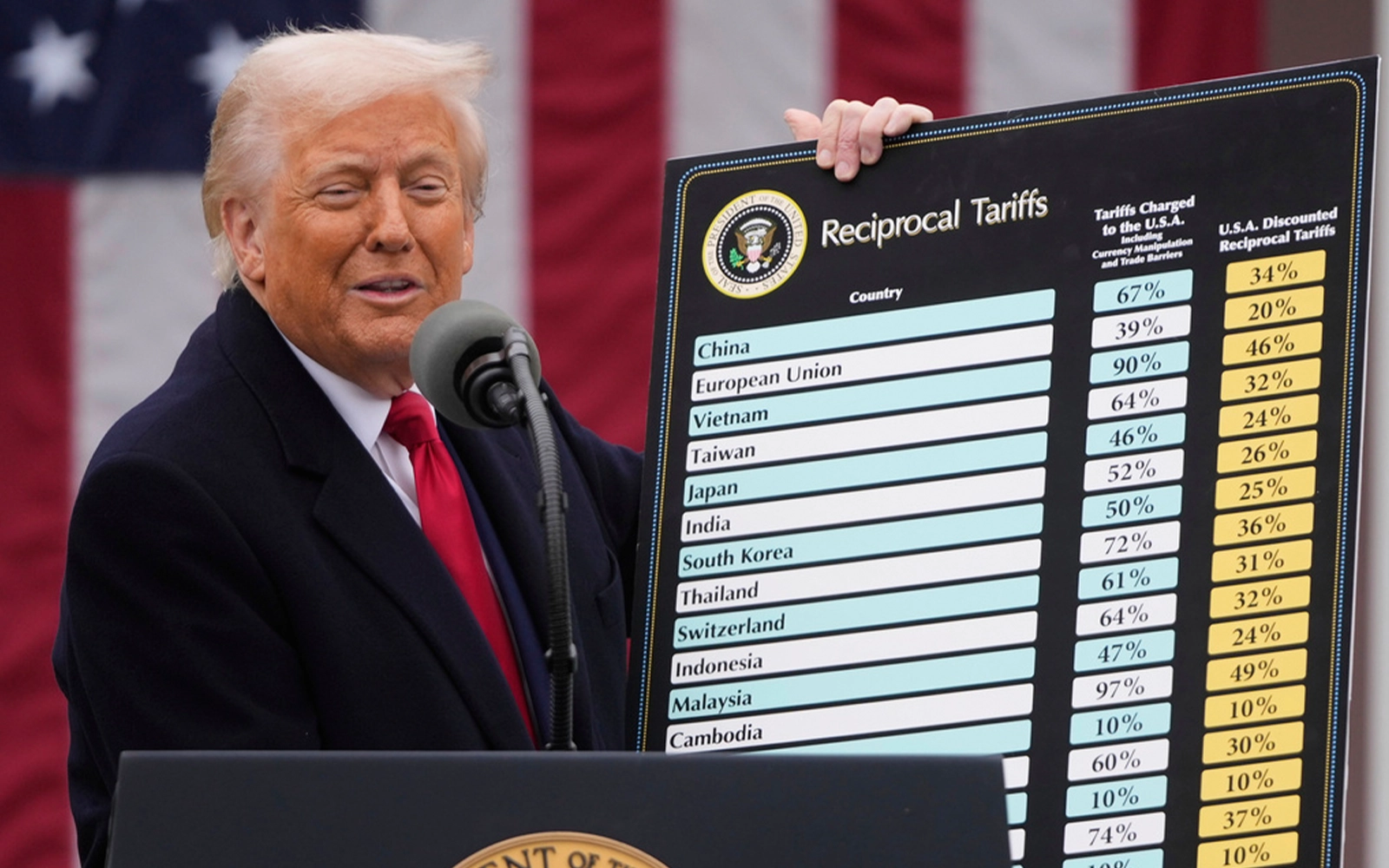
PETALLING JAYA: A previous member of parliament has urged Malaysia to bolster local investments and boost internal consumption to mitigate possible economic deceleration due to impending US tariffs on imported goods.


“This may be a more pragmatic solution compared to getting Asean member states to agree on a single policy,” Charles Santiago told FMT, pointing to the differing trade ties member states have with the US.
The ex-MP of Klang who served for three terms stated that investing in green technologies, such as developing the solar panel industry and increasing food production, might be crucial for safeguarding the nation from tariffs and guaranteeing long-term economic strength.
“He stated that by investing in and growing the local economy, the government could more effectively handle or shield the country from international economic disruptions.”
He additionally mentioned that this could spur employment opportunities in emerging industries, as the tariffs might cause layoffs and company shutdowns.
Even though migrants are anticipated to face the major impact of job reductions,locals will ultimately be affected as well, he stated.
Santiago, a political economist, warned that governments need to maintain low unemployment levels to guarantee administrative stability, noting that unrest could worsen an economic downturn.
Concentrating on increasing food production and stimulating local consumption could aid in decreasing dependence on other nations, such as China, he mentioned.
Santiago stated that he believed the reaction from the Ministry of Investment, Trade, and Industry regarding the 24% tariffs imposed by U.S. President Donald Trump on Malaysia was insufficient.
He mentioned that the approach suggested by the ministry seemed to focus excessively on free trade agreements (FTA).
On Monday, Miti announced plans to enhance the utilization of current Free Trade Agreements (FTAs) in the nation. This includes fully implementing an extensive economic partnership accord reached with the UAE aimed at boosting bilateral commerce and investments. The initiative anticipates a substantial surge in trade volumes, projecting a 60 percent growth over the next half-decade.
Miti plans to restart free trade agreement talks with the European Union and South Korea, and aims to upgrade the ASEAN Trade in Goods Agreement.
Santiago mentioned that the US tariffs aim to push Asian markets into eliminating non-tariff barriers in various sectors including government procurement, intellectual property rights, local insurance, and digital services—areas where American firms could see advantages.
He mentioned that this move aims to interrupt China’s predominant position within the supply chain system.
This is an aspect that Miti neglects; hence, concentrating on trade agreements might not be the most effective method to mitigate the impact.
Local demand alone ‘just a piece of the puzzle,’ states economist

At the same time, Harald Sippel, known for his previous writings on tariffs and sanctions, concurs that boosting internal consumption might help certain sectors of the economy withstand external impacts such as trade barriers.
He mentioned that multiple European Union nations enforced this measure during the peak of the Covid-19 pandemic.
However, invigorating the local economy is not a comprehensive answer.
He mentioned that Malaysia is a country heavily reliant on exports, particularly in areas such as electrical and electronic goods, palm oil, and precise manufacturing.
If US tariffs disturb worldwide trading patterns or impact significant markets such as the European Union, relying solely on internal demand will not be sufficient to mitigate these ripple effects, he stated.
Sippel mentioned that the items Malaysia produces for export are not significantly consumed domestically. “It’s impossible for these billion-dollar exports to be abruptly bought locally,” he stated.
Enhancing local demand might assist certain sectors such as food and beverages or construction, yet the more effective strategy would be to broaden the range of supply chains.
Local consumption is a piece of the puzzle, however, international placement and effective risk strategy are where genuine answers reside.
