

Neil Sedaka, a vibrant and energetic singer, pianist, and songwriter, made a significant impact on the music world. Known for his catchy pop hits like “Oh! Carol” and “Calendar Girl,” he initially pursued a classical music career in the 1950s before transitioning to pop. His later success with soft-rock standards such as “Laughter in the Rain” and “Love Will Keep Us Together” in the 1970s solidified his legacy. Neil Sedaka passed away at the age of 86.
A Career Marked by Versatility
Sedaka’s career was marked by a unique blend of pop and classical influences. Unlike many of his contemporaries who embraced a more rebellious image, Sedaka exuded an avuncular charm that endeared him to audiences. During performances, he often moved across the stage, executing graceful dance moves while singing his early hits in his energetic tenor voice. Songs like “Happy Birthday, Sweet Sixteen,” “Little Devil,” and “Breaking Up Is Hard To Do” showcased his talent and charisma.
By 1963, Sedaka had sold over 25 million records, which accounted for about half of his lifetime sales of more than 50 million. His songs were also popular among other artists, with recordings by Connie Francis, LaVern Baker, and Dinah Washington contributing to his royalties.
Despite being overshadowed by the British Invasion, Sedaka maintained a strong international presence due to his songs being translated into multiple languages, including Italian, Yiddish, Hebrew, Spanish, French, German, and Japanese. In 1970, he moved to London and collaborated with future members of the band 10cc, further expanding his musical horizons.
A Comeback with Elton John
Sedaka’s comeback in the 1970s was largely thanks to Elton John, a long-time admirer. After meeting at a party in 1973, Elton signed him to his Rocket label. The resulting album, “Sedaka’s Back,” featured the No. 1 hit “Laughter in the Rain” and “Love Will Keep Us Together.” He followed this with the No. 1 single “Bad Blood” in 1975 and a slow ballad version of “Breaking Up Is Hard To Do,” which reached No. 8 on the Billboard charts.
“Love Will Keep Us Together,” a collaboration with Howard Greenfield, became a hit for Captain and Tennille, who won a Grammy for their album of the same name. Toni Tennille even sang “Sedaka’s back” during the song’s final moments.
Sedaka reflected on his need to reinvent himself, stating that he couldn’t keep repeating his old hits. He drew inspiration from artists like James Taylor, Gordon Lightfoot, Carole King, and Joni Mitchell.
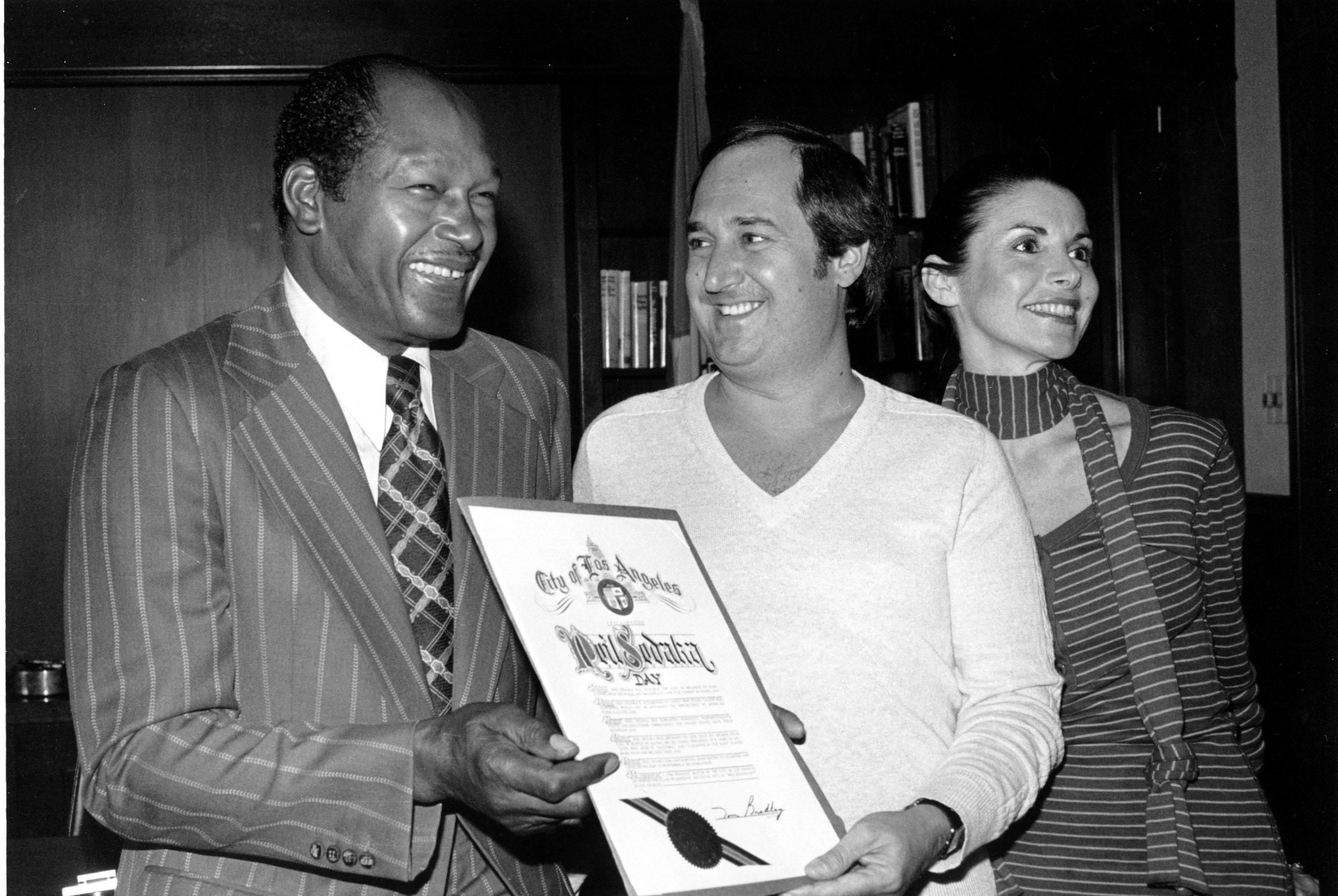

Early Life and Musical Training
Born in Brooklyn on March 13, 1939, Neil Sedaka came from a family of musicians. His father, a taxi driver of Lebanese Jewish descent, and his mother, of Russian and Polish heritage, both played the piano. From a young age, Sedaka showed a natural talent for music, joining his school choir at age 7. His mother, recognizing his potential, took a job to afford a secondhand piano for him.
Sedaka attended the Juilliard School’s precollege division from age 9 and won a competition at 16, judged by renowned musicians like Jascha Heifetz and Arthur Rubinstein. However, his path shifted when he met Howard Greenfield, a neighbor who encouraged him to turn his poetry into songs.
Sedaka’s interest in pop music began as a way to fit in socially. Short, with glasses and braces, he wasn’t popular in high school. Learning to sing and play the hits of the day helped him gain popularity. With Greenfield, he wrote songs daily, eventually taking them to Manhattan to sell to publishers in the Brill Building.


Breaking Into the Music Industry
Their breakthrough came in 1958 when they visited Aldon Music, where they met Jerry Wexler. Wexler introduced them to Connie Francis, who recorded “Stupid Cupid” and “Where the Boys Are,” both becoming hits. This success led to Sedaka leaving Juilliard to pursue his own music.
His first single, “The Diary,” was a top-20 hit in 1959, but subsequent singles failed to chart. RCA nearly dropped him, but he analyzed Billboard hits and realized the importance of girls’ names in song titles and strong drum breaks. He wrote “Oh! Carol,” which became a massive hit.
Carol, the subject of the song, was Carole King, whom he had dated. She responded with “Oh! Neil,” using the same tune. Despite his mother’s initial disapproval, she relented after receiving a $62,000 royalty check.
In 1962, Sedaka married Leba Strassberg, and they had two children: Dara, a singer, and Marc, a screenwriter. After RCA let his contract expire in 1966, Sedaka attempted to focus on classical music but faced challenges, including financial difficulties due to his mother’s mismanagement.


Later Years and Legacy
Sedaka continued to perform and record throughout the 1970s, eventually stabilizing his finances. In the 1990s, he released new recordings and rebranded his old hits. He also explored classical music with projects like “Classically Sedaka,” where he wrote lyrics for melodies by Chopin and Tchaikovsky. His classical influences inspired original works such as “Joie de Vivre” and “Manhattan Intermezzo.”
Sedaka also authored an autobiography, “Laughter in the Rain” (1982), and released a children’s album, “Waking Up Is Hard to Do” (2009), in collaboration with his son. Throughout his life, performing remained his passion. Even during the pandemic, he held daily online concerts from his home.
“When I come home to New York, with no more adrenaline rush from an audience, it seems kind of boring,” he once said. “Leba always says that when I open the refrigerator door and the light comes on, I break into song.”


