
The NHS faces collapsing this winter with the twin threats of ‘superflu’ and Christmas strikes, the Health Secretary has said.
Writing in The Times on Friday, Wes Streeting said the NHS faces a ‘challenge unlike any it has seen since the pandemic’.
Hospitals are struggling amid a ‘relentless strain’ of the virus which has seen a record number of flu patients on wards and a further influx expected over the weekend.
Speaking on LBC this morning, Streeting agreed that the NHS is ‘effectively’ at ‘one minute to midnight’ as regards the risk of a collapse of the health service and warned he could not guarantee patient safety if strike action goes ahead.
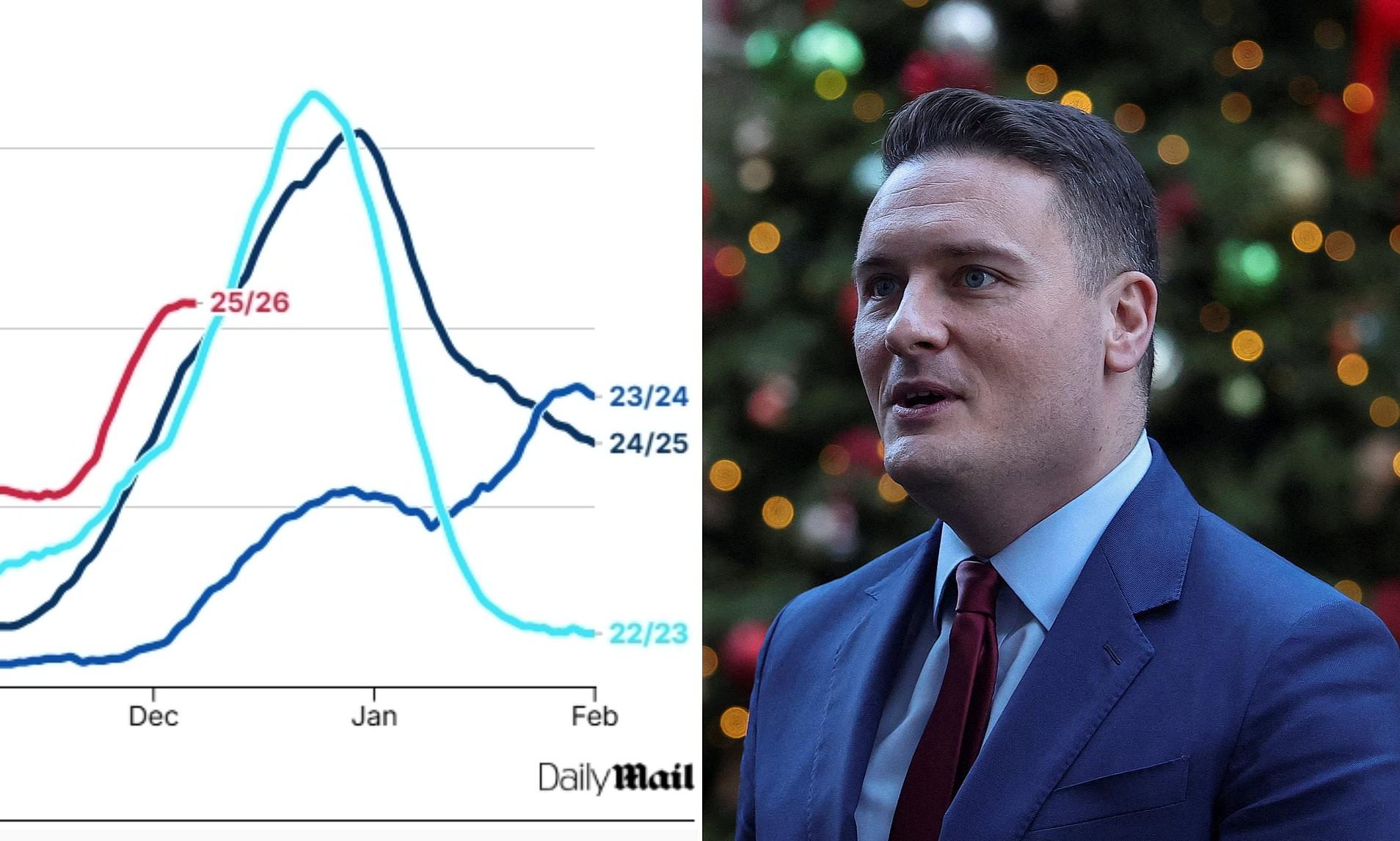
This week the Health Secretary described the outbreak as a ‘tidal wave of flu tearing through our hospitals’, with an average of 2,660 infected patients on wards each day last week, up 55 per cent from the previous week.
The figures represent a huge surge compared to this time last year, when 1,861 patients were in hospital with flu, while in 2023 the figure was just 402.
Citing the data, the Health Secretary praised staff for ‘working around the clock to keep the show on the road’.
But he added: ‘It’s a precarious situation, and Christmas strikes could be the Jenga piece that collapses the tower.’
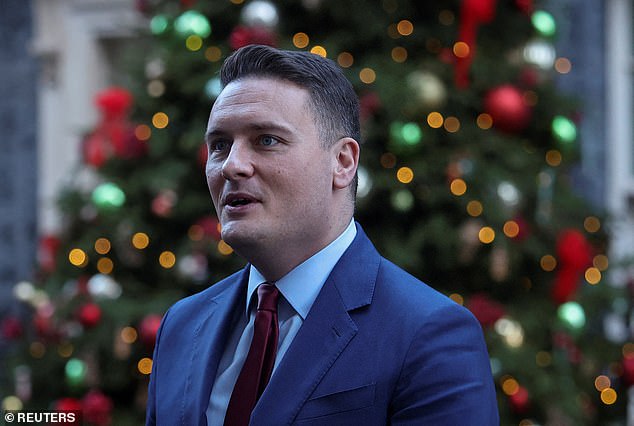

Appealing directly to resident doctors, Streeting called on them to reject the planned strike action and ‘begin a new era of partnership’, after a final offer to the BMA to call off or rearrange the strikes was rejected this week.
Speaking to LBC’s Nick Ferrari on Friday, he said he would be ‘unable to guarantee’ patient safety in the coming week if the walkout goes ahead.
‘The thing I’m genuinely fearful of is that, even if I throw more money at this situation now, at this time to get through the next week on strikes, there’s only a finite number of doctors and staff.
‘There’s only a finite number of care home beds and community based care. So if you’ve got strikes and you’ve got flu and you’ve got all of these trolleys on corridors, and you’ve got demand going up rather than down, I just don’t think there is a lever I can pull, I don’t think there’s an amount of money I can throw, that means I can sit on your programme and guarantee patient safety over the next week.
‘That’s a pretty terrifying position, not just for me to be in, but for the doctors and NHS staff who are confronting that challenge to be in, because they are the ones that are going to be bearing it on the front line.’
Asked whether patients’ lives could be at risk, he said: ‘I don’t want to catastrophise or sensationalise but I cannot sit here and look you in the eye and tell you that no patient will come to harm.’
The Health Secretary added that the strikes would be ‘self-defeating’ for doctors and put ‘untold pressure’ on their NHS colleagues.
It comes after Prime Minister Sir Keir Starmer warned doctors would be ‘irresponsible’ to plough ahead with next week’s strike.
The Prime Minister urged medics to call off their five-day walkout as health leaders warned the ‘double-whammy’ of a flu outbreak and industrial action left them facing a ‘worst case scenario’ in the run-up to Christmas.
Officials are expecting the number of patients on hospital wards with flu to pass the all-time high of 5,441 within days.
It comes ahead of the planned walkout by resident doctors from 7am on Wednesday.
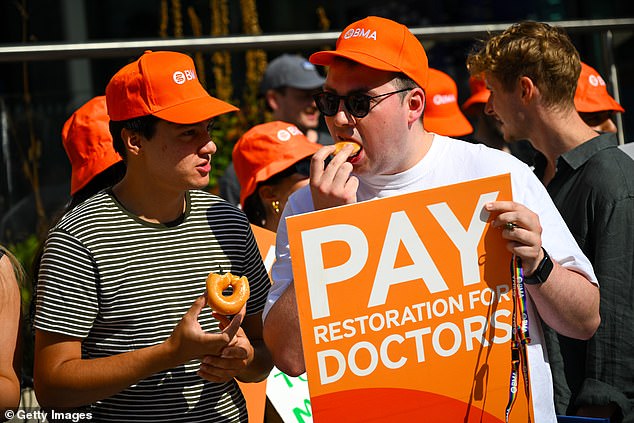
The medics – previously known as junior doctors – are demanding a 26 per cent pay rise on top of the 28.9 per cent uplift they have pocketed over the past three years.


Streeting has rejected calls for further pay rises, writing in The Times that the UK ‘cannot afford’ the British Medical Association’s demands and that it would ‘not be fair’ to other NHS employees who are not paid the same as even the lowest-salaried doctors.
He instead said the Government would bring in measures to reduce the competitiveness of specialist training places, allowing more resident doctors to advance up the career ladder.
But after the BMA rejected his latest offer, he is clinging on to hope that resident doctors themselves will call off the strikes.
‘I’m appealing over their [the BMA’s] heads and directly to resident doctors,’ he wrote.
‘I’m asking them to call off the Christmas strikes and choose a fresh start. Bring an end to the dispute and begin a new era of partnership.’
He added: ‘Give the NHS the only gift it’s asking for this Christmas.’
Professor Meghana Pandit, national medical director at NHS England, said: ‘This unprecedented wave of super flu is leaving the NHS facing a worst-case scenario for this time of year – with staff being pushed to the limit to keep providing the best possible care for patients.
‘The numbers of patients in hospital with flu is extremely high for this time of year.
‘Even worse, it continues to rise and the peak is not in sight yet, so the NHS faces an extremely challenging few weeks ahead.’
The NHS is typically busier at this time of year as it faces higher levels of staff sickness and holiday and a surge in demand from patients struck down by flu and other seasonal illnesses.
Sir Keir added: ‘I’m very concerned with the action of the BMA. They are being irresponsible in my view. We have already put in place quite a significant pay rise.

‘There are other issues that they’re concerned about, which we’ve been listening to, and we put an offer on the table to deal with those issues, but that offer can only go forward if they don’t take strike action, particularly in the run-up to Christmas, particularly when we’ve got a problem with flu.
‘It’d be irresponsible with BMA to push through, and I think for many resident doctors, I think in their heart of hearts, they probably don’t want to do this.
‘So I’d just say to the BMA, do the responsible thing, accept the offer that’s on the table, and we can all move forward.
‘Because at the moment, this is a challenge, not only to the winter, but also the good work we’ve done in bringing down waiting times, which is in everybody’s interests.’
Dr Vicky Price, president of the Society for Acute Medicine, said the ‘flu-nami’ was hitting the NHS but this was ‘a sadly familiar picture of a system under relentless strain’.
She added: ‘This week we have seen clinicians reviewing patients in waiting rooms due to lack of space, and cupboards used as temporary clinical areas – a new low for patient care standards.’
Corridor care is now so endemic that NHS England today issued new guidance for clinicians on how to deliver it as safely as possible and produced a letter for doctors and nurses to give to patients explaining why they were being cared for on a trolley in a corridor, rather than in a bed on a ward.
Some hospitals across the country have asked staff, patients and visitors to wear face masks to cut the spread of flu, while others have gone in and out of critical incident status due to the high number of people attending A&E.
NHS England is advising people to get a flu vaccine as soon as possible to ensure they are protected in time for Christmas and New Year.
But Janet Morrison, chief executive of Community Pharmacy England, admitted some pharmacies are struggling to obtain supplies.
She added: ‘Community pharmacies are busy vaccinating as many people as possible, but with a late surge in the number of people seeking flu jabs, people may need to wait a little longer than usual to secure an appointment.
‘While we have had some isolated reports of pharmacies struggling to obtain flu vaccination supplies, this seems to be very dependent on location; some supplies still appear to be available in some locations, and all pharmacies will be working hard to source extra stock if they need it.’
The Liberal Democrats said the NHS should start to offer flu jabs in pubs, churches and supermarkets to increase uptake during the ‘flu emergency’.
The UK Health Security Agency said there is ‘less natural immunity in the community’ to the predominant strain of flu that is circulating this winter but the vaccine being used is effectively protecting against it.
Hospital admission rates for flu in England are highest among people over 75 and children under five but children aged five to 14 are most likely to test positive for the virus, with positivity rates of 45.9 per cent compared with 21 per cent for the wider population, the agency added.
Meanwhile, new figures show the waiting list for planned hospital treatment in England rose slightly to 7.40million at the end of October, up from 7.39million at the end of September, despite there being no doctors strikes that month and in a blow to Labour’s promise to cut waits.
Read more
- Will Britain’s overburdened NHS survive this winter with a dramatic surge in flu cases and looming doctor strikes?
- How are doctors’ strikes during the peak flu crisis putting the NHS on the brink of collapse?
- Is the NHS on the brink of a crisis as unprecedented flu cases and strikes threaten to cripple hospitals this Christmas?
- Will NHS face ‘chaos’ as doctors prepare for a dramatic Christmas strike amid surging super flu cases?
- How is the UK bracing for a potential medical catastrophe with soaring flu hospitalizations and looming doctors’ strikes threatening patient safety?


