
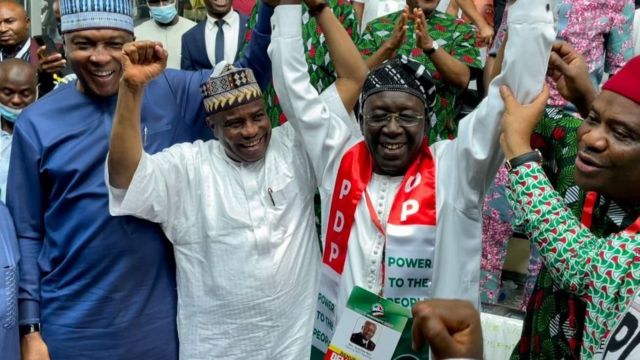
PDP Faces Uncertainty Over National Convention Amid Internal Struggles
As the People’s Democratic Party (PDP) approaches its planned national convention, it remains uncertain whether the event will proceed as scheduled. The national convention is a critical gathering for the party, primarily aimed at electing the national chairman and other key officials, as well as ratifying important decisions that affect the party’s direction.
Despite efforts to stabilize the party ahead of the 2027 elections, internal conflicts have repeatedly disrupted progress. This marks the third time in less than a month that the PDP has faced disputes over the decision to hold the convention in Ibadan, Oyo State, on November 15 and 16. Disagreements among party leaders have once again thrown the event into doubt.
At the last National Executive Committee (NEC) meeting, the decision to hold the convention in Ibadan was made, but some members, including the minister of the Federal Capital Territory, Nyesom Wike, opposed it. Analysts suggest that this opposition may be part of broader efforts by certain factions to gain control of the party.
The PDP, one of Nigeria’s largest opposition parties, faces high expectations for the convention to produce new leadership that can guide the party through the upcoming election year. However, the party has been in turmoil since the 2022 elections, with no clear path forward as guidelines for the 2027 general elections are still pending.
Several figures have expressed interest in the chairmanship position, including former governors Ahmed Makarfi, Sule Lamido, and Kabiru Tanimu Turaki. Lamido, who claimed he was denied the right to contest due to the party’s refusal to sell nomination forms, took legal action. On Tuesday, Justice Peter Lifu of the federal High Court in Abuja issued a restraining order halting the convention, citing unfair exclusion from the process. The court also ordered INEC not to recognize any outcomes of the event.
This development has raised concerns about the party’s ability to withstand further setbacks, especially after previous legal challenges. In October 2025, another court had halted the convention due to non-compliance with statutory requirements. However, a subsequent court order allowed the event to proceed, highlighting the ongoing instability within the party.
Background of the Crisis
The current crisis has deep roots in the party’s history. Shortly before the 2023 elections, the PDP faced a major conflict over the selection of its presidential candidate. When Atiku Abubakar emerged as the candidate, a group led by Nyesom Wike challenged the decision, arguing that both the president and chairman should not come from the same zone. This led to a split, with several governors working against the party’s interests during the election.
Analysts argue that the party’s failure to resolve these issues and discipline errant members has contributed to the current situation. Factions loyal to Wike continue to act against the interests of other members, creating further division.
Timothy Golu, a PDP chieftain in Plateau State, believes that those who do not intend well for the party are behind the current turmoil. “We are aware that there are attempts to weaken the party due to 2027, but it will not succeed,” he said.
A History of Crises
The PDP has long struggled with internal conflicts during its conventions. For example, when Olusegun Obasanjo tried to prevent Sunday Awoniyi from becoming national chairman, it caused a major rift. Most chairmen after that failed to complete their terms, often due to ongoing crises.
Barnabas Gemade served only two years as chairman, while Audu Ogbe had a longer tenure but was eventually forced to step down. Ahmadu Ali, Vincent Ogbulafor, and others followed, each facing challenges that led to their departure. Even recent leaders like Iyorchia Ayu and Damagum were unable to avoid controversy.
The recent exit of Ayu did little to calm tensions, as members from the North Central zone argued that the position should have remained with their region. Meanwhile, disputes over the recognition of the national secretary and the Board of Trustees (BOT) further divided the party.
Losses and Challenges
The PDP has suffered significant losses due to internal conflicts. Party members are frustrated by the party’s weakened position as the main opposition in the country. They argue that a stronger PDP could have better protected figures like Rivers Governor Siminalayi Fubara during his suspension.
Between 2023 and now, the party has lost three major elections, including governorship races in Edo and Anambra states, as well as rerun elections in various constituencies. It has also lost four governors—Sheriff Oborevwori (Delta), Umo Eno (Akwa Ibom), Douye Diri (Bayelsa), and Peter Mbah (Enugu)—who defected to the APC. Key leaders such as former Vice President Atiku Abubakar and former Senate President David Mark have also left the party.
With so many losses, it seems unlikely that the PDP will find a solution to unite its members before the next general elections. Timothy Osadolor, a member of the National Executive Committee, believes the party still has a chance to reorganize, but warns that if reason does not prevail, it may need to prepare for 2031.
“Time is running out, but I don’t think it is impossible,” Osadolor said. “If reasoning is not allowed to prevail, PDP should start retooling for 2031. If common sense does not prevail in the next one week, we must be ready.”
Related posts:

Mother Suffers Daily Allergic Attacks After Drinking Contaminated Coffee Syrup


Challenges of Climate Change in Africa and Lessons from China’s Green Revolution

Senate joint committee finally holds hearing on Ivanhoe deal

True measure of leadership lies not in power, privilege, pageantry – Tinubu at book presentation

