
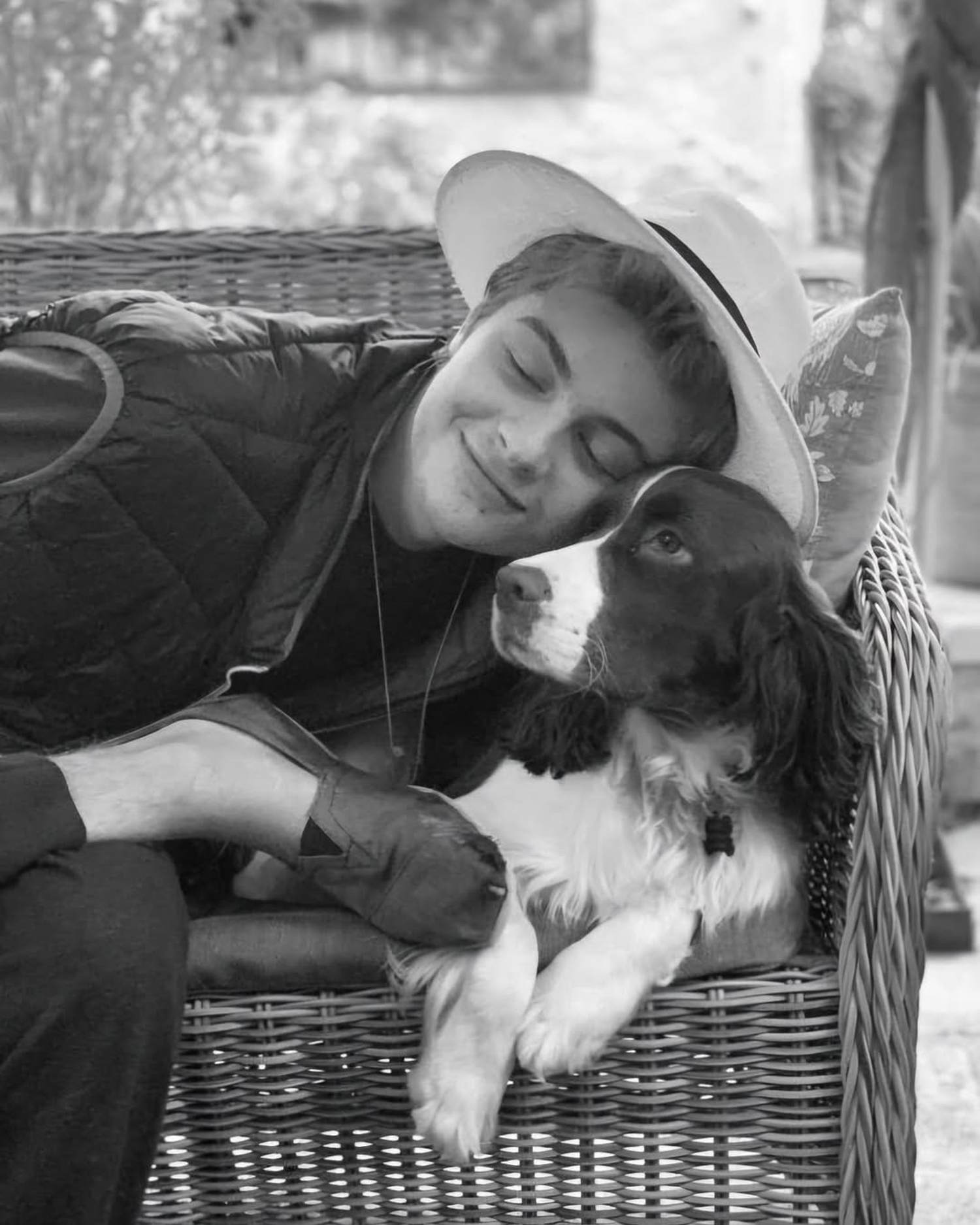
Prince Frederik, the youngest son of Prince Robert of Luxembourg and Princess Julie of Nassau, has died. He was 22.
website.
“It is with a very heavy heart that my wife and I would like to inform you of the passing of our son,” the statement began.
In the statement, Robert recalled Frederik had “called us in to his room to speak to him for one last time” on Feb. 28. He said the 22-year-old “found the strength and the courage to say goodbye” to his family, including brother Alexander and sister Charlotte, among others.
“After gifting each of us with our farewells — some kind, some wise, some instructive — in true Frederik fashion, he left us collectively with a final long-standing family joke. Even in his last moments, his humour, and his boundless compassion, compelled him to leave us with one last laugh….to cheer us all up,” Robert wrote.
He continued, “Frederik’s last question to me, prior to his other remarks was: ‘Papa, are you proud of me?’ He had barely been able to speak for several days, so the clarity of these words was as surprising as the weight of the moment was profound.
“The answer was very easy, and he had heard it oh so many times…. but at this time, he needed reassurance that he had contributed all that he possibly could in his short and beautiful existence and that he could now finally move on.”
Robert called his son the family’s “Superhero,” and noted the many accomplishments of the POLG Foundation, which Frederik founded to find community, treatment options and a cure to the disease.
Frederik was diagnosed with POLG Mitochondrial disease at 14, Robert explained in the statement, “when his symptoms were showing more clearly and when the progression of his disease had become more acute.”
“Because POLG disease causes such a wide range of symptoms and affects so many different organ systems, it is very difficult to diagnose and has no treatments much less a cure,” Robert wrote.
“This is the battle that Frederik fought, and this is the burden that he had to carry throughout his life. He always did so with grace and with humour,” Robert wrote.
What is POLG Mitochondrial disease?
.
Symptoms of POLG disease
Signs of POLG disease can show up any time from infancy to adulthood, per the UMDF. Because the disease causes such a wide range of symptoms, patients are typically categorized into subtypes, or names of specific conditions to help identify the needed treatment.
General symptoms include the following:
- Poor muscle tone
- Developmental delay
- Movement disorder
- Weakness of the limbs
- Depression
- Anxiety
- Headache
- Hearing loss
- Vision loss
- Slurred speech (dysarthria)
- Respiratory failure
- Apnea
Certain symptoms of the disease depend on what age it begins to emerge, however, the UMDF notes.
For disease onset prior to age 12, here are the main symptoms:
- Seizures
- Cognitive regression
- Motor impairment
- Cortical visual loss
- Feeding difficulties
- Liver dysfunction
For disease onset between age 12 and 40, here are the main symptoms:
- Seizures
- Impaired coordination (ataxia)
- Peripheral neuropathy
For disease onset after age 40, here are the main symptoms.
- Drooping eyelids (ptosis)
- Paralysis of the muscles that control eye movement
- Impaired coordination (ataxia)
- Myopathy
- Parkinsonism
Is there a cure for POLG disease?
There is no cure for POLG disease at this time, according to UMDF. Treatments focus on managing symptoms and improving quality of life.
Here are common treatments the UMDF notes:
- Anticonvulsant medications for seizures (although valproate must be avoided)
- Pain medication and muscle relaxants for comfort
- Small frequent meals or a feeding tube for nutritional support may be helpful and the ketogenic diet is sometimes used to help control seizures
- Physical therapy for declining motor skills and muscle strength
- Surgery or special glasses to correct drooping eyelids
- Speech therapy for slurred speech
- Breathing tube and/or artificial ventilation for respiratory failure
- CPAP or BiPAP for apnea
- Physical and occupational therapy for motor involvement
Related posts:

CUProf Sahid Claims FAO/IAMCR Award for Groundbreaking Rural Communication Research
Disney to Acquire Full Control of Hulu for $439M: A Streaming Giant Takes Over

Albert Ojwang: Kenyan TikToker Recreates Chilling Police Scene From Blogger’s Death

Romantic Notes Discovered at University of Southern Maine Date Back to the 1800s

