

Iran’s Red Crescent Warns of Toxic Rain in Tehran
Iran’s Red Crescent society has issued a dire warning to residents of Tehran, stating that the city may soon be hit by toxic rain that can cause chemical burns and damage the lungs. This warning comes after Israel struck oil facilities in the capital, leading to widespread concern about the health risks posed by the aftermath of the attack.
In a notification released early this morning, the humanitarian group warned residents of Tehran that they could face chronic lung and skin diseases following last night’s bombardment. The NGO emphasized that even after the rain stops, people should avoid leaving their homes as the evaporation of acid droplets from hot ground or surfaces could significantly increase the concentration of toxins in the air.
The Red Crescent also advised citizens to ensure their food was wiped down, even if it is sealed. They explained that microscopic acidic particles on container walls could contaminate the contents when opened. Additionally, the organization recommended replacing water filtration systems if possible, as toxic water could destroy older filters.
Harrowing Scenes from the Bombing Campaign
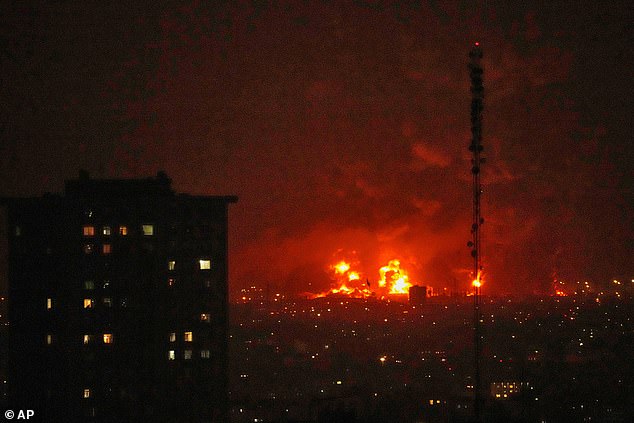
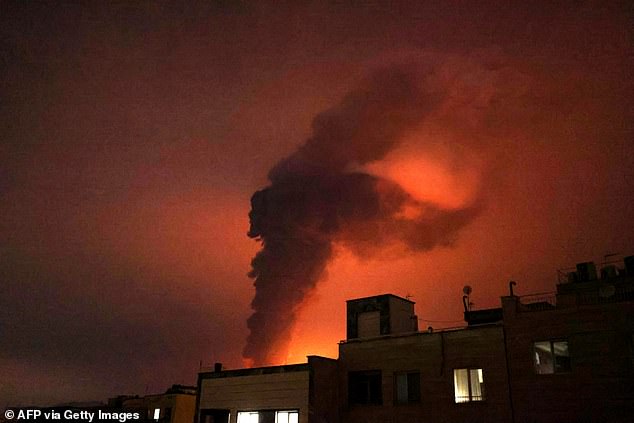
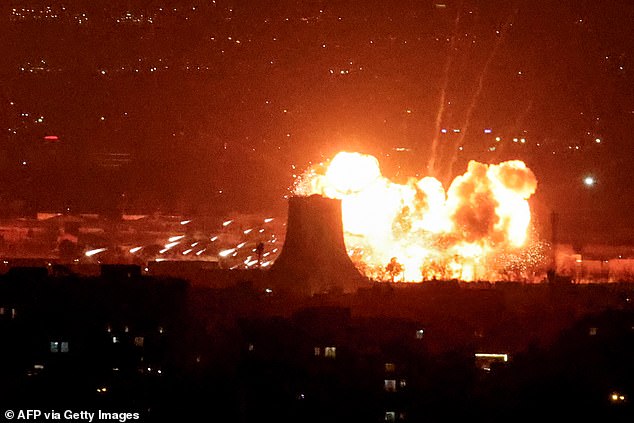
Harrowing footage from last night’s bombing campaign against Tehran has emerged, showing a massive inferno from the Shahran oil depot in north-west Tehran lighting up an impossibly tall plume of smoke that appeared to consume the night sky. This seems to be the first time a civil industrial facility has been targeted in the war.
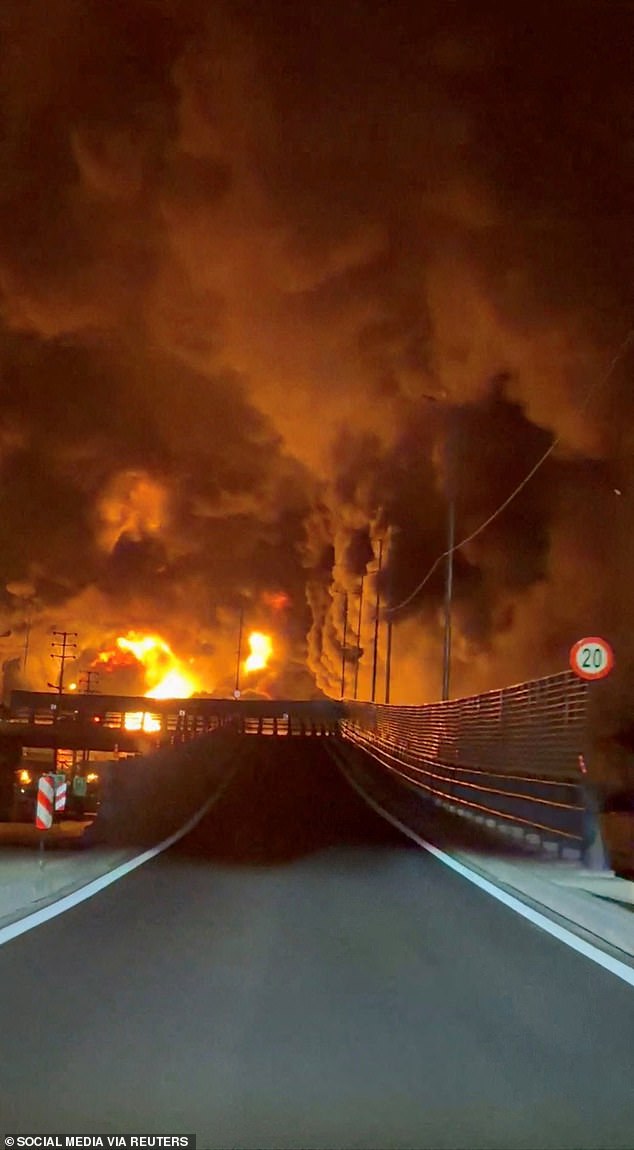


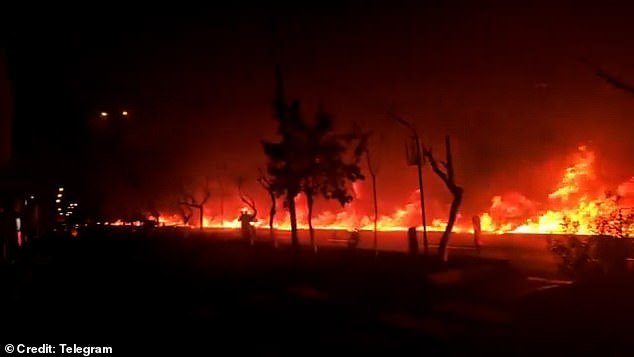
Fire was seen raging through the streets of the city as lit oil got into the sewer system, lighting up whole roads. Residents have reported a lingering burning smell in the air, as both the US and Israel have doubled down on their pledge to fight until the ‘eradication’ of the Iranian regime.
Today, Israel struck southern Lebanon, Beirut, and oil storage facilities in Tehran as the war in the Middle East continues to escalate. Prime Minister Benjamin Netanyahu promised ‘many surprises’ for the next phase of the conflict.
Escalation of Conflict and Regional Impact
Iran also targeted a desalination plant in Bahrain. Earlier in the day, Iran’s Foreign Minister Abbas Araghchi stated that a US airstrike damaged an Iranian desalination plant on Qeshm Island, warning that in doing so ‘the US set this precedent, not Iran.’ Such infrastructure is critical for drinking water supplies in the parched deserts of the Gulf.
An Israeli attack on oil storage sites in Tehran sent up pillars of fire that could be seen in Associated Press video as a glow against the Saturday night sky. It appeared to be the first time a civil industrial facility has been targeted in the war.

The war, which erupted on Feb. 28 after joint US-Israeli strikes hit Iran, has so far killed at least 1,230 people in the Islamic Republic, more than 300 in Lebanon, and around a dozen in Israel, according to officials. A Pakistani driver was killed overnight when debris from an aerial interception fell on a vehicle in Dubai, authorities said on Sunday. It’s the second death of a Pakistani national there in recent days.
Pakistan’s Prime Minister Shehbaz Sharif expressed grief over the deaths of the two Pakistanis in Dubai. Two other civilians, from Nepal and Bangladesh, have been killed by missile debris in Dubai since the US and Israel launched a war against Iran on Feb. 28, triggering Iranian missile and drone attacks on its Gulf neighbours.
Economic Impact and Political Responses
Iran’s parliament speaker says oil prices will surge more as the war continues. Oil prices have soared since the US and Israel attacked Iran on Feb. 28, reaching its highest levels since 2023. The price for a barrel of Brent crude jumped 8.5% to $92.69 on Friday—up from nearly $70 a barrel just late last week. Meanwhile, benchmark US crude climbed 12.2%, to $90.90 a barrel on Friday.
“If the war continues like this, there will be neither a way to sell oil nor the ability to produce it,” Speaker Mohammad Bagher Qalibaf said in a social media post. He said the war is not only impacting the US, but also the Middle East and the whole world “due to Netanyahu’s delusions,” referring to the Israeli prime minister.
US and Israeli strikes in Iran have killed 200 children and around 200 women, the Iranian Health Ministry said on Sunday. They are among more than 1,200 people killed in the war, spokesman Hossein Kermanpour said in a social media post. He said more than 1,000 others, including about 400 women, have been injured since Feb. 28.
Iran’s president has threatened to step up attacks on American targets throughout the Middle East as the US and Israel press ahead with their air campaign. “When we are attacked, we have no choice but to respond. The more pressure they impose on us, the stronger our response will naturally be,” President Masoud Pezeshkian said in video comments made on Sunday. “Our Iran, our country, will not bow easily in the face of bullying, oppression or aggression—and it never has.”
Pezeshkian appeared to be backtracking from conciliatory comments toward his Gulf neighbours on Saturday. Those comments, in which he appeared to apologize for attacks on their soil, were quickly contradicted by Iranian hard-liners. Pezeshkian said Iran is not looking for a battle against neighbouring Arab countries, many of which host American military bases. “They are our brothers,” he said, accusing the US of trying to pit the region’s countries against one another. Many Iranian attacks have gone beyond US bases in the region, striking energy facilities, hotels, and cities.
A missile alert sounded on Sunday morning in Dubai, United Arab Emirates. Bahrain says Iranian drone attack has caused material damage to desalination plant. It is the first time an Arab country says Iran has targeted a desalination plant during the nine-day war.
Continued Hostilities and Strategic Moves
Israel’s military said on Sunday that it had struck a series of fighter jets that pre-revolutionary Iran purchased from the United States. The fleet of F-14s parked at Isfahan Airport, south of Tehran, was a pillar of the Iranian air force and historically used to defend its airspace. The Israeli military did not say whether the jets were destroyed. It also said it had struck detection and air defence systems.


