
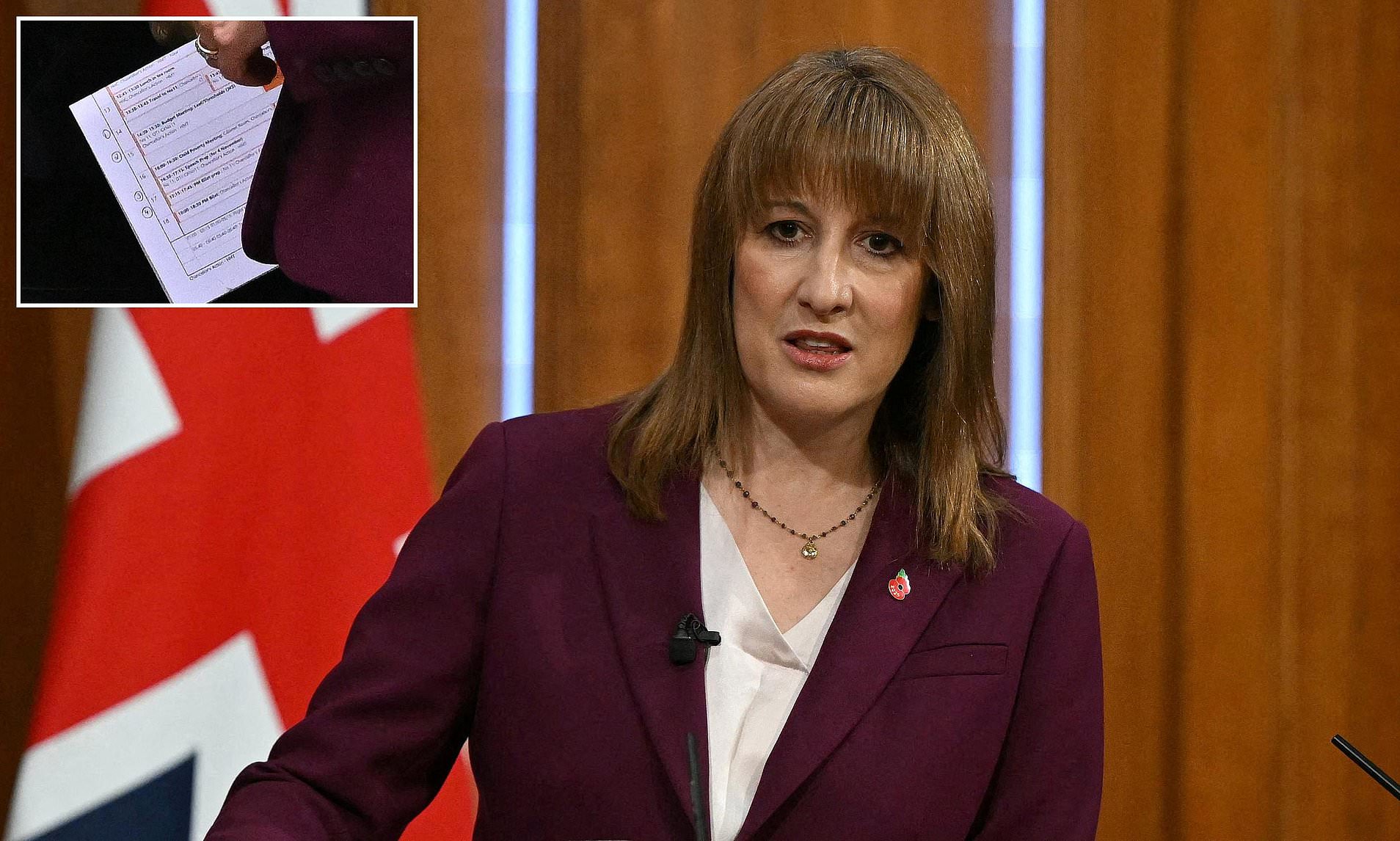
The Unexpected U-Turn and Its Consequences
Rachel Reeves, the UK Chancellor, faced intense criticism after abruptly abandoning her plans to raise income tax. This sudden decision led to accusations that she had turned Britain into an “economic laughing stock.” The Chancellor had spent weeks preparing for a manifesto-breaking increase in taxes for millions of workers, only to create chaos in the financial sector by reversing her stance.
According to government sources, the shift in strategy was prompted by improved forecasts from the Office for Budget Responsibility (OBR), which revealed a £20 billion budget gap—significantly smaller than previously anticipated. However, the move sparked backlash, with some suggesting it was driven by concerns among Labour MPs about losing their seats if they broke the party’s pre-election promise not to increase taxes on workers.
Despite Treasury officials downplaying the possibility of changing income tax thresholds, it is likely that the current tax bands will remain frozen for several years, pushing millions into higher tax brackets. Instead of a single bold move to raise income tax, the Chancellor will have to find alternative ways to address the financial shortfall, potentially leading to a range of other tax increases.
Shadow Chancellor Mel Stride criticized the situation, calling it the most chaotic pre-Budget period in memory. He argued that the constant leaks and briefings were fueling uncertainty and harming the economy. Markets were unsettled, and business confidence reached a record low, according to Stride, who described the situation as “chaos on an industrial scale.”


Former Chancellor Sir Jeremy Hunt echoed these concerns, stating that the world was watching British economic decision-making and finding it chaotic. He warned that such instability was not beneficial for the country.
It had been widely expected that Ms. Reeves would increase income tax in her Budget speech on November 26 to balance the books. However, her unexpected “scene-setter” speech in Downing Street failed to rule out a tax hike, and in a recent interview, she hinted at the possibility, saying, “It would, of course, be possible to stick with the manifesto commitments, but that would require things like deep cuts in capital spending.”
Initially, it was thought that she planned to increase the basic rate of income tax for the first time in 50 years, raising it by 2p while offsetting it with a 2p cut in employee National Insurance to raise £6 billion. However, on Thursday night, the Financial Times reported that she had abandoned this plan, causing a sell-off in gilts and briefly increasing government borrowing costs.
Nigel Green, CEO of deVere Group, warned that such actions could lead to credibility shocks, noting that bond traders were signaling that mixed signals would not be tolerated. Anna Leach of the Institute of Directors added that the public airing of the Treasury’s workings was damaging to business confidence and planning.
Even Labour’s favored think-tank, whose former boss Torsten Bell is helping to draft the Budget, expressed concern about excessive “Budget kite-flying,” which risks increasing market uncertainty. Ruth Curtice of the Resolution Foundation noted that it was unusual for so much of the process to be made public.
Polling by YouGov found that nearly two-thirds of Britons believe the government is handling the upcoming Budget poorly, although most (58%) think not raising income tax is the right decision.
Ms. Reeves’ U-turn has led to a potential “smorgasbord” approach to raising funds, including measures such as pay-per-mile charges for electric car drivers, higher gambling taxes, and cuts to tax relief for workers using salary sacrifice schemes to buy expensive bicycles.
Health Secretary Wes Streeting welcomed the decision, stating, “I’m not in favor of breaking manifesto pledges.” However, some Labour MPs criticized the move, claiming that Ms. Reeves and Keir Starmer had prioritized short-term survival over national interest.
A Treasury spokesperson stated, “We do not comment on speculation around changes to tax outside of fiscal events.”
Timeline of Key Events
- July 3: Rachel Reeves warns that the cost of welfare changes will be reflected in the Budget.
- Sep 23: The Resolution Foundation urges the Chancellor to increase income tax by 2p, offset by a 2p cut in employee National Insurance.
- Sep 29: Asked about tax increases at the Labour conference, Ms. Reeves says, “The world has changed.”
- Oct 11: At the IMF meeting, the Chancellor admits she is considering further tax and spending measures.
- Oct 23: The Guardian reports that Ms. Reeves is considering raising income tax but is “nervous” about doing so.
- Oct 29: Keir Starmer refuses to rule out a tax hike, stating, “The Budget is on November 26.”
- Nov 3: Defence Secretary John Healey declines to repeat Labour’s tax promises, saying, “That’s for the Budget.”
- Nov 4: In a scene-setter speech, Ms. Reeves fails to rule out a tax hike.
- Nov 7: The Times reports that the Chancellor has told the OBR that a tax hike is one of the “major measures” she will announce.
- Nov 10: Ms. Reeves hints she may break the tax pledge, saying, “It would, of course, be possible to stick with the manifesto commitments, but that would require deep cuts in capital spending.”
Related posts:

Mother Suffers Daily Allergic Attacks After Drinking Contaminated Coffee Syrup


Challenges of Climate Change in Africa and Lessons from China’s Green Revolution

Senate joint committee finally holds hearing on Ivanhoe deal

True measure of leadership lies not in power, privilege, pageantry – Tinubu at book presentation

