
The Recognition of Somaliland by Israel and the Global Backlash
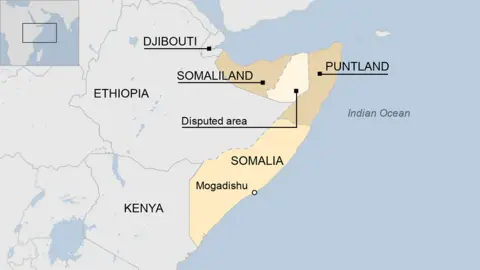
Somaliland, an autonomous region in the northeastern part of Somalia, has recently gained international attention after being recognized as an independent state by Israel. This move, made by Prime Minister Benjamin Netanyahu, has sparked widespread condemnation from various global entities, including the United Nations, regional blocs, and individual nations.
International Reactions to Israel’s Decision
The African Union (AU) immediately supported Somalia, the Federal Republic of Somalia, in its rejection of Israel’s recognition of Somaliland. The AU warned that such a move could jeopardize the security of the Horn of Africa and the Red Sea region. Similarly, the United Nations Security Council, the European Union (EU), the Intergovernmental Authority on Development (Igad), the East African Community (EAC), the League of Arab States, and the Organisation for Islamic Cooperation (OIC) all condemned Israel’s decision. These organizations emphasized the importance of respecting Somalia’s sovereignty and territorial integrity.
The AU highlighted that Israel’s recognition sets a dangerous precedent with far-reaching implications for peace and stability on the continent. The EU urged international actors to respect Somalia’s unity, while the OIC warned that Israel’s actions could lead to serious repercussions in the Horn of Africa.
Geopolitical Implications and Regional Tensions
The Gulf Cooperation Council (GCC) stated that Israel’s move contradicted regional and international efforts aimed at strengthening peace and security. Igad noted that any unilateral recognition of Somaliland breaches international treaties, and the Arab League called on the UN Security Council to take a firm stance against Israel, warning that the move threatens international peace. The EAC reaffirmed its recognition of Somalia as a single sovereign state.
Numerous countries have also joined the condemnation, including Türkiye, Qatar, Iran, Saudi Arabia, Pakistan, Jordan, China, Algeria, Eritrea, and Nigeria. Notably, many of these countries face their own secession issues or have significant interests in the geopolitical landscape of the Horn of Africa.
Diplomatic Moves and Strategic Alliances
President Recep Tayyip Erdoğan of Türkiye expressed strong opposition to Israel’s decision, calling it an illegal and unacceptable step that risks destabilizing the Horn of Africa. During a press conference with Somali President Hassan Sheikh Mohamud, Erdoğan announced plans for offshore oil and gas drilling off the coast of Somalia starting in 2026, as well as the establishment of a space port in the country.
This move reflects Türkiye’s broader strategy to expand its influence in the Horn of Africa. Ankara’s biggest diplomatic mission in Africa is in Mogadishu, where it supports Somalia’s federal government. In contrast, Djibouti has pursued a different approach by hosting military and security presences from multiple global powers, including the United States, China, France, Japan, and Italy.
Somaliland has cultivated close ties with the United Arab Emirates, particularly through investments in the Port of Berbera. This aligns with broader opposition to political Islam and agendas advanced by Turkey and Qatar. Israel’s recognition of Somaliland is widely believed to have occurred with Abu Dhabi’s backing.
Strategic Importance of Somaliland
Somaliland, which initially merged with southern Somalia to form the Somali Republic at independence, unilaterally declared independence after the civil war in 1991. Despite its strategic location and relative stability, it has struggled to gain international recognition. Israel became the first sovereign state to recognize Somaliland, offering support in agriculture and related areas. In return, Somaliland provides a strategic base for Israel to deal with the Houthis, Yemeni rebels who have been a persistent threat.
Somaliland also reportedly accepts a group of Palestinian refugees on Israel’s request. However, Somaliland officials have denied this, stating that the relocation of Palestinians has not been part of the discussion.
Geopolitical Significance and Future Prospects
Somaliland anchors the western edge of the Bab el-Mandeb strait through the Port of Berbera, now integrated into regional logistics and security planning. Israeli media reported that in November 2025, Somaliland assumed full operational control of its airspace, closing a long-standing radar and monitoring gap over a critical maritime corridor. This transition, supported by Israeli surveillance and air-traffic technologies, eliminated a blind zone previously exploited by Iranian-aligned networks and illicit arms trafficking routes.
The recognition marks a significant achievement for Hargeisa’s diplomacy, which has recently lobbied in the US to pitch its case. American senators have pushed for the establishment of a military base in Somaliland, highlighting its strategic importance in the Gulf of Aden, a vital maritime artery.
Despite the backlash, the US defended Israel’s right to recognize Somaliland as a sovereign state, emphasizing that there has been no change in American policy. However, Somalia’s ambassador to the UN rejected statements regarding the involuntary relocation of Palestinians, condemning such actions as unlawful and morally reprehensible.
Legal and Ethical Considerations
Supporters of the recognition argue that rejecting it is a missed opportunity to reward a beacon of stability in a volatile region. Prof Wafula Okumu, executive director of The Borders Institute, criticized the AU for its position, pointing out that a 2005 report laid the groundwork for such recognition. The 2005 AU report found that the 1960 union between Somaliland and Somalia was never ratified and had malfunctioned, bringing enormous injustice and suffering to the region.
Prof Okumu also questioned the impartiality of the AUC chairperson, Mahmoud Ali Youssouf, noting his potential conflict of interest due to Djibouti’s financial interests in maintaining the status quo.
Conclusion
The recognition of Somaliland by Israel has ignited a complex web of geopolitical tensions and legal debates. While the move has been met with widespread condemnation, it also highlights the strategic importance of the region and the potential for future shifts in international relations. Whether this decision marks the beginning of a broader trend or remains a singular exception remains to be seen.


