
South Sudan’s Economic Crisis and Political Instability
South Sudan is facing a potential economic meltdown due to a combination of factors, including falling oil revenues, soaring debt, frequent changes in key leadership positions, political uncertainty, and fears of a resurgence of civil war. These challenges are compounding the nation’s already fragile state, with the World Bank warning that Juba’s outlook depends largely on restoring political and macroeconomic stability, strengthening governance, and managing natural resources transparently and effectively.
The Bretton Woods institution has highlighted that frequent changes in key leadership positions have heightened policy uncertainty and dampened foreign investor interest in the troubled nation. This instability is further exacerbated by the ongoing conflict and speculation about President Salva Kiir’s eventual succession.
Leadership Changes and Their Impact
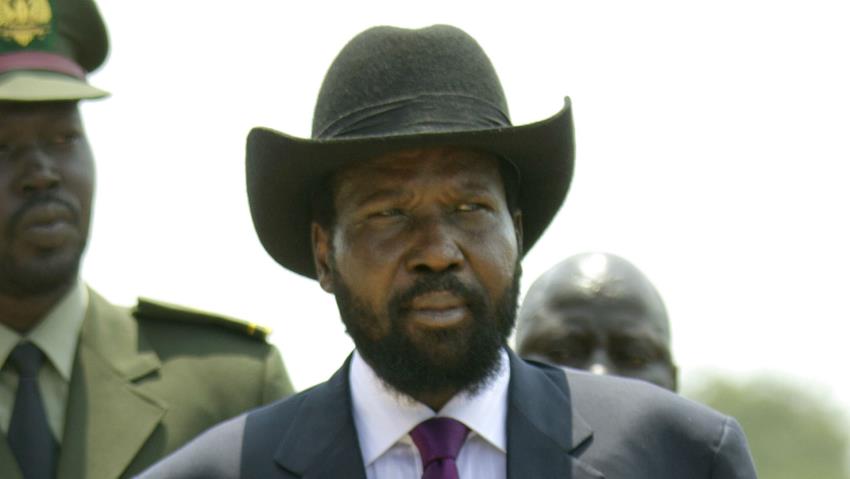
President Kiir has made several reshuffles in the ranks of South Sudan’s military and Treasury and central bank, ostensibly to maintain control. This week, he sacked Dr Benjamin Bol Mel, vice president in charge of the economic cluster, who was considered one of his closest allies and heir apparent. Dr Mel was demoted from general to private and dismissed from the National Security Service. The sacking also affected central bank governor Addis Ababa Othow and Commissioner-General of the South Sudan Revenue Authority Simon Akuei, both close allies of Dr Mel.
Dr Mel is under US sanctions on allegations of corruption. Additionally, Kiir dismissed the undersecretary at the Ministry of Petroleum, Chol Thon Abel, just one week after appointing him, and reinstated Deng Lual Wol to the position. Earlier this month, he sacked Finance Minister Athian Diing Athian just two months after his appointment and replaced him with Barnaba Bak Chol.
In October, he dismissed the country’s army chief General Dau Aturjong and reinstated his predecessor, General Paul Ngang Majok.
Regional Conflicts and Economic Strain
Spillovers from the conflict in Sudan, including refugee inflows and damages to South Sudan’s oil pipeline, have exacerbated Juba’s difficult humanitarian and macroeconomic situation. This has resulted in an economic slowdown, sharp exchange rate depreciation, high inflation, and higher spending needs, against the backdrop of large fiscal revenue losses.
The World Bank, in its Macro Poverty Outlook for South Sudan (October 2025), noted that the incomplete implementation of the 2018 peace agreement could reignite conflict, further eroding governance and macroeconomic stability. “Political stability remains fragile, with the implementation of the 2018 peace agreement facing numerous challenges,” the report said.
“Sustained growth, however, will require attracting investment, particularly foreign direct investments (FDI), into both oil and non-oil sectors. Investor confidence remains dampened by the exit of Petronas, ongoing legal disputes in the oil industry, and frequent changes in key leadership positions, which heighten policy uncertainty.”
Humanitarian and Political Challenges
The United Nations (UN) warns that Juba is entering a period of rising instability marked by political polarization, renewed armed clashes, and severe humanitarian strain. UN undersecretary-general for peace operations Jean-Pierre Lacroix told the Security Council that developments in South Sudan have continued to move in a negative and possibly dangerous direction as a result of increased ceasefire violations, including widespread aerial bombardments and clashes between the signatories of the peace agreement.
Mr Lacroix described the humanitarian situation in South Sudan as “catastrophic,” with more than 7.5 million people facing acute food insecurity and 28,000 at risk of famine. Severe flooding has displaced more than a million people, and another 1.2 million returnees and refugees from Sudan have crossed into a country already struggling to feed its own.
Oil Dependency and Economic Vulnerability
Oil provides 90 percent of government revenue and nearly all exports, yet severe mismanagement, corruption, and weak accountability have eroded its potential, leaving the state unable to deliver services or invest in education, health, or infrastructure. Non-oil growth is constrained by recurrent conflict and violence, climate shocks, chronic underinvestment, and shallow financial markets.
Oil exports, which rely on Sudan’s pipeline, were halted in April 2023 and only resumed in January 2025 after extensive repairs to damage from the fighting. However, security threats have led to renewed fears of another shutdown after Sudan’s Ministry of Energy and Petroleum ordered the shutdown of the pipeline in the Heglig area after rebel attacks.
Currently, South Sudan exports around 110,000 barrels per day — down from 350,000 barrels per day prior to the outbreak of civil war in 2013 — and a prolonged export ban could worsen the nation’s economic challenges and political instability.
Fiscal Crisis and Inflation
The prolonged oil disruption triggered a severe fiscal crisis, with the deficit widening to 4.9 percent of GDP in 2024 from a surplus of 3.3 percent in 2023. Forced fiscal consolidation, the incurrence in nine months of salary arrears to civil servants, and additional efforts to mobilise non-oil tax revenues helped contain the deficit to an estimated 1.3 percent of GDP in FY2025, while annual average inflation surged to 183 percent in the same period.
Soaring inflation and wage arrears further eroded household consumption and deepened poverty, with improved agricultural output providing only partial relief. Extreme poverty has risen from 76.5 percent in 2016 to nearly 91 percent in 2025, pushing an additional 2.8 million people into poverty, the World Bank says.


