
New Satellite Imagery Reveals Iranian Military Activities Amid Escalating Tensions
New satellite imagery has provided a detailed look into Iran’s recent military activities, offering insights into the country’s efforts to fortify and conceal sensitive facilities. This development comes as the White House warns that it would be “very wise” for Iran to make a deal with the United States.
The images show that Iran has constructed a concrete shield over a new facility at a key military site and covered it in soil, according to experts. This work appears to be taking place at a location that was reportedly bombed by Israel in 2024 amid heightened tensions with the United States. Additionally, the imagery reveals that Iran has buried tunnel entrances at a nuclear site that was targeted by the US during Israel’s 12-day war with Iran last year. The country has also reinforced tunnel entrances near another site and repaired missile bases that were damaged in the conflict.
These developments highlight the ongoing tensions between Iran, the United States, and Israel, as Washington seeks to negotiate a deal on Iran’s nuclear program while threatening military action if talks fail. The White House press secretary, Karoline Leavitt, recently stated, “Iran would be very wise to make a deal with President Trump and with his administration.”
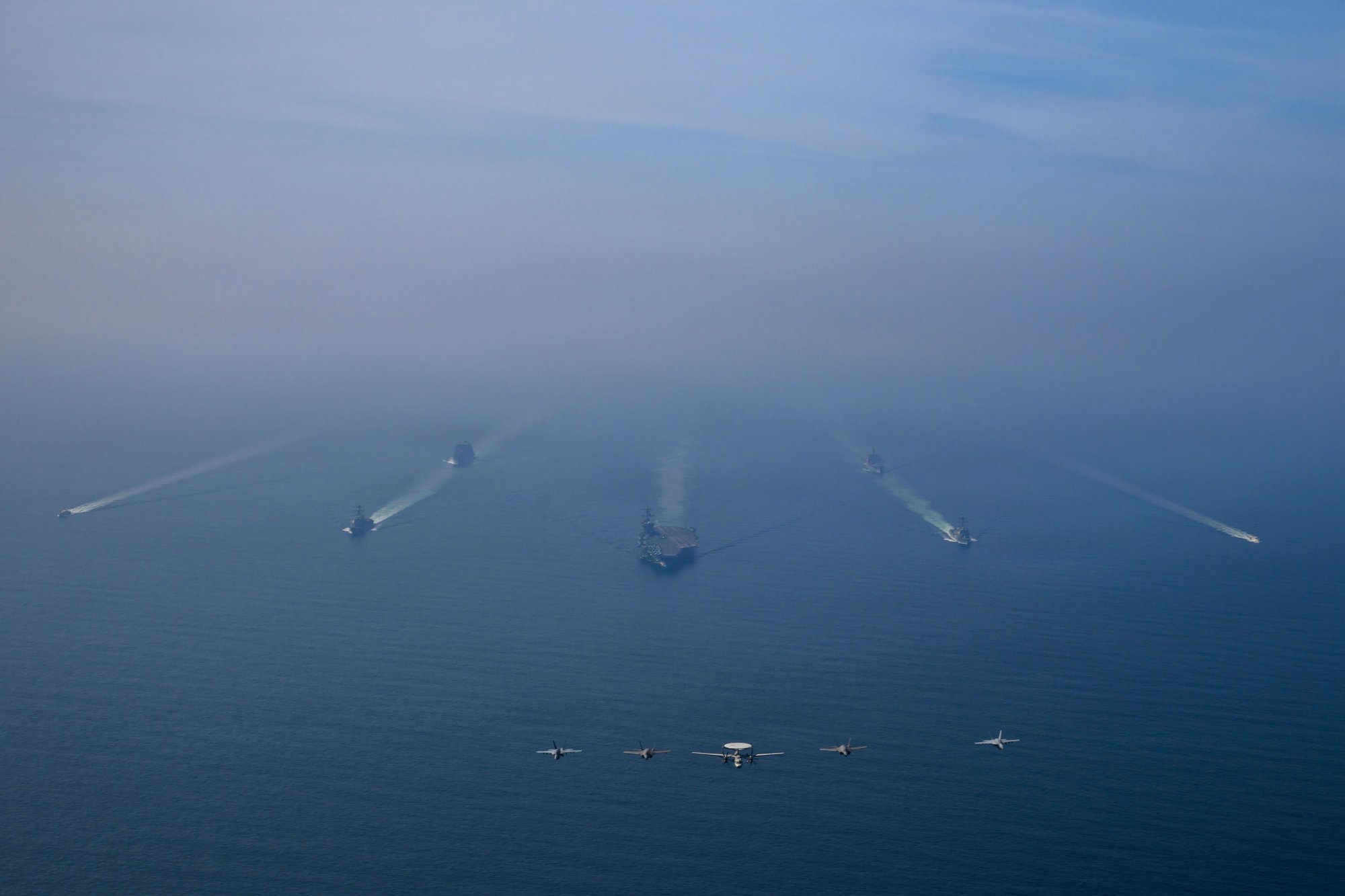
On Wednesday, former US President Donald Trump suggested the possibility of a strike against Iran on his Truth Social platform, as the US military continues to build up its presence in the Middle East. Currently, there are 13 warships in the region, including one aircraft carrier, the USS Abraham Lincoln, nine destroyers, and three littoral combat ships. More vessels are expected to arrive soon.
The USS Gerald R. Ford, the world’s largest aircraft carrier, is en route from the Caribbean to the Middle East after being ordered there by Trump earlier this month. It is accompanied by three destroyers. CNN and CBS reported that the US military could be ready to launch strikes against Iran as early as this weekend, although Trump has not yet made a final decision.

Parchin Military Complex
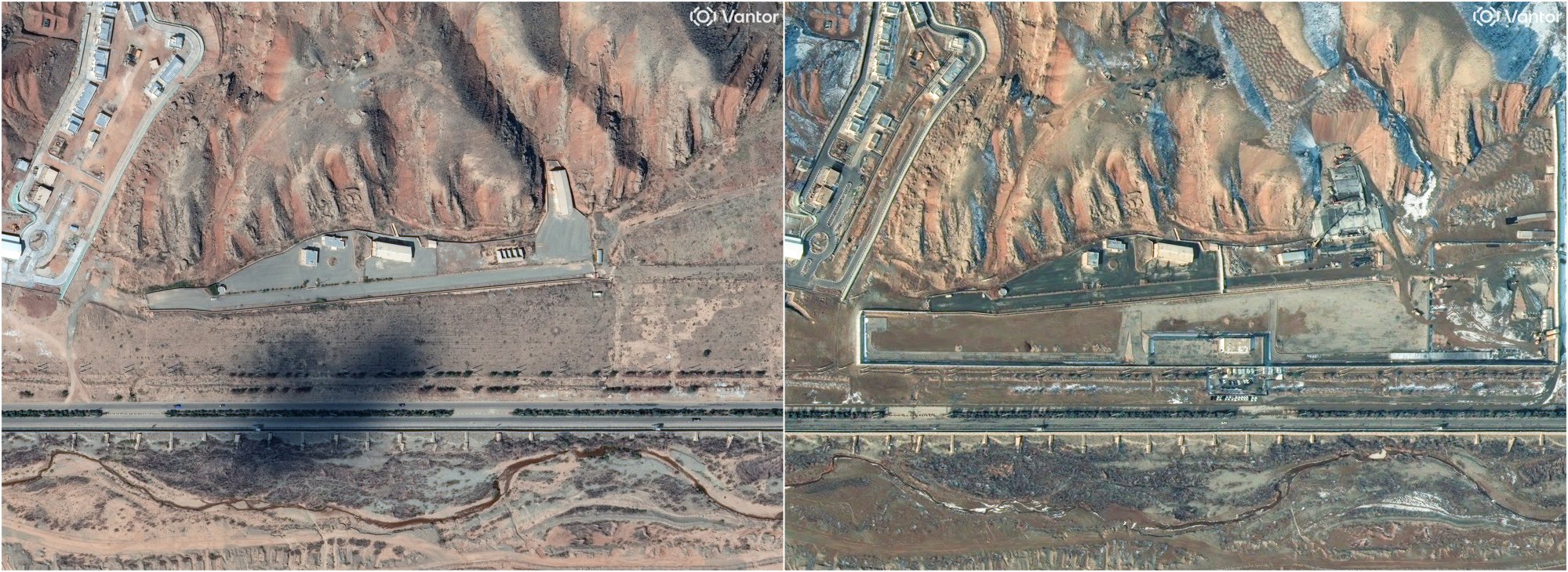
Located about 30 km (20 miles) southeast of Tehran, the Parchin military complex is one of Iran’s most sensitive sites. Western intelligence has suggested that Iran conducted tests related to nuclear bomb detonations there more than two decades ago. Iran has consistently denied seeking atomic weapons.
In October 2024, Israel reportedly attacked Parchin. Satellite imagery before and after the attack shows extensive damage to a rectangular building at the site, followed by apparent reconstruction in November 2024. Further images from October 12, 2025, reveal development at the site, with the skeleton of a new structure visible. By November 14, what appears to be a metallic roof covers the large structure.
However, by February 16, the facility is no longer visible, hidden by what experts believe is a concrete structure. The Institute for Science and International Security (ISIS) noted in a January 22 analysis that construction of a “concrete sarcophagus” around a newly built facility at the site, identified as Taleghan 2, was underway. ISIS had previously reported on the presence of a long, cylindrical chamber, possibly a high-explosives containment vessel, inside a building.
William Goodhind, a forensic imagery analyst with Contested Ground, observed that the roof had a similar hue to the surrounding area, suggesting it may have been covered with dirt to obscure the concrete color. David Albright, founder of ISIS, noted that Iran has been busy burying the Taleghan 2 facility, making it difficult to recognize and providing significant protection from aerial strikes.

Tunnel Entrances Buried at Isfahan Nuclear Complex
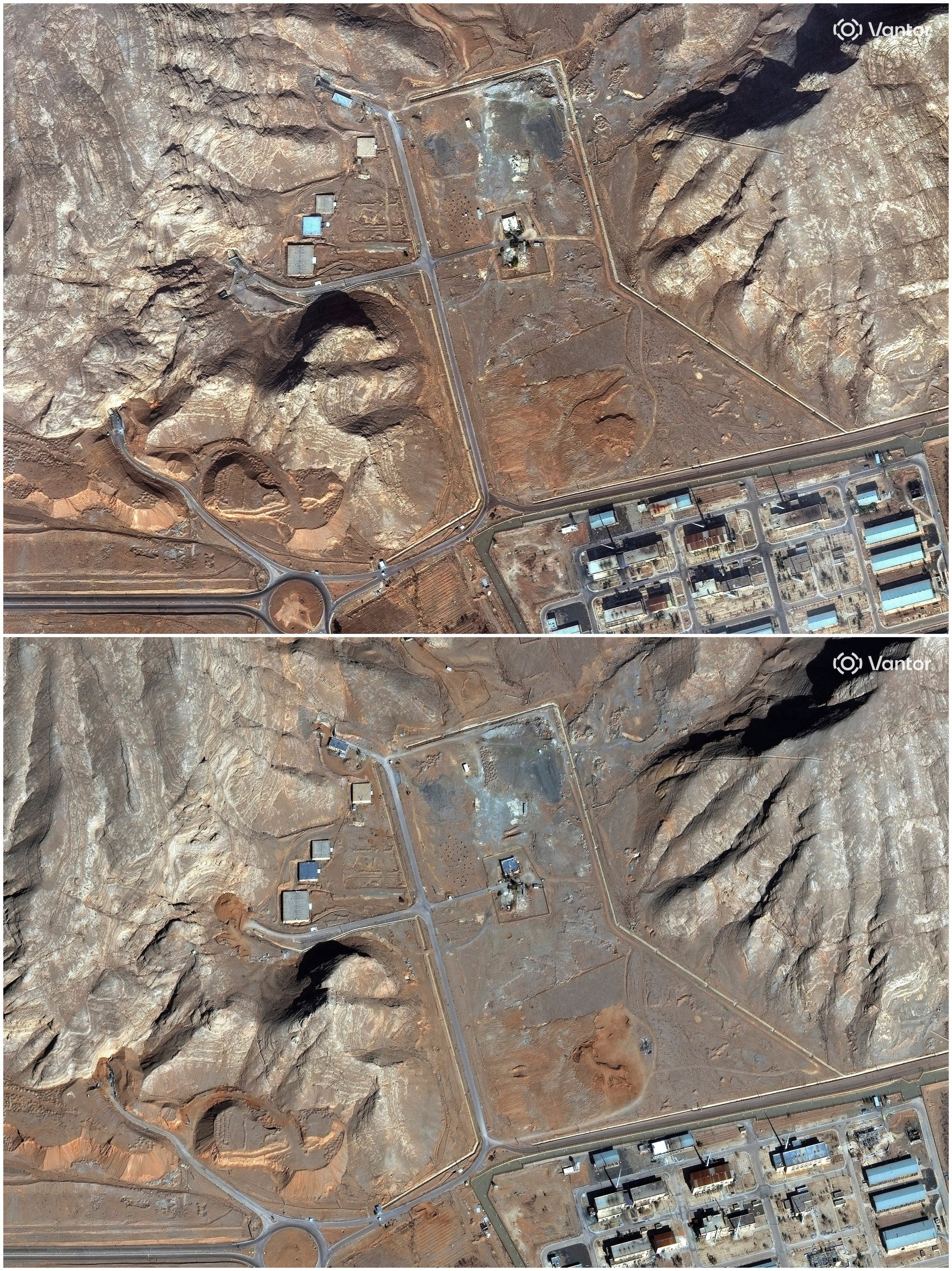
The Isfahan nuclear complex is one of three Iranian uranium-enrichment plants bombed by the United States in June. It includes an underground area where much of Iran’s enriched uranium is stored. In late January, satellite images showed new efforts to bury two tunnel entrances at the complex. By February 9, a third entrance had also been backfilled with soil, meaning all tunnel entrances were completely buried.
Goodhind confirmed that a February 10 image showed all three tunnels buried. ISIS reported that burying the tunnel entrances would help protect against potential air strikes and make ground access for special forces raids more difficult.
Tunnel Entrances Fortified at Complex Near Natanz Site
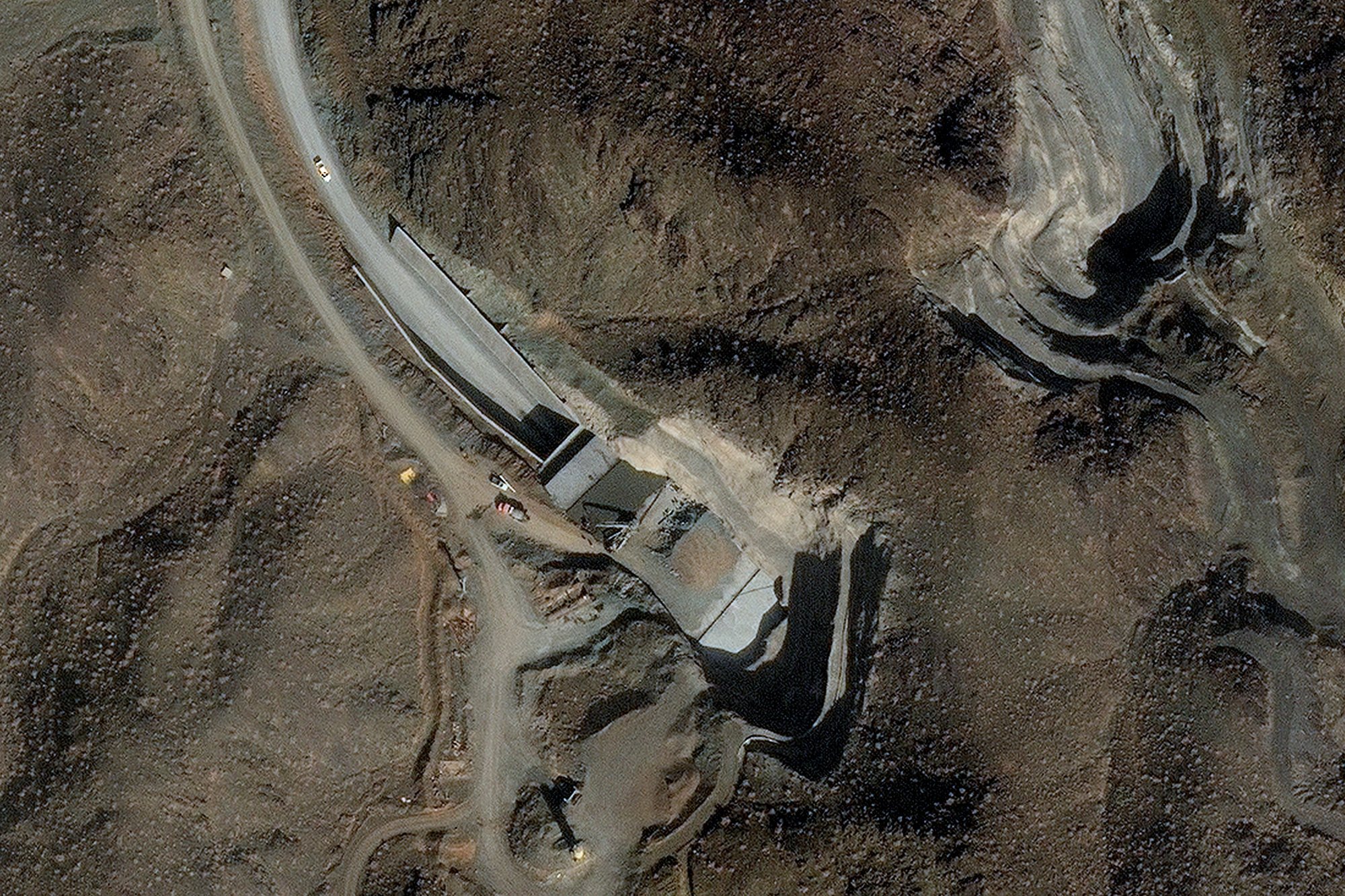
ISIS has reported that satellite images indicate ongoing efforts since February 10 to “harden and defensively strengthen” two entrances to a tunnel complex under a mountain near Natanz, which houses Iran’s other two uranium enrichment plants. Imagery shows activity involving numerous vehicles, including dump trucks and cement mixers, as part of these efforts. The purpose of the facility, known as Pickaxe Mountain, remains unclear.
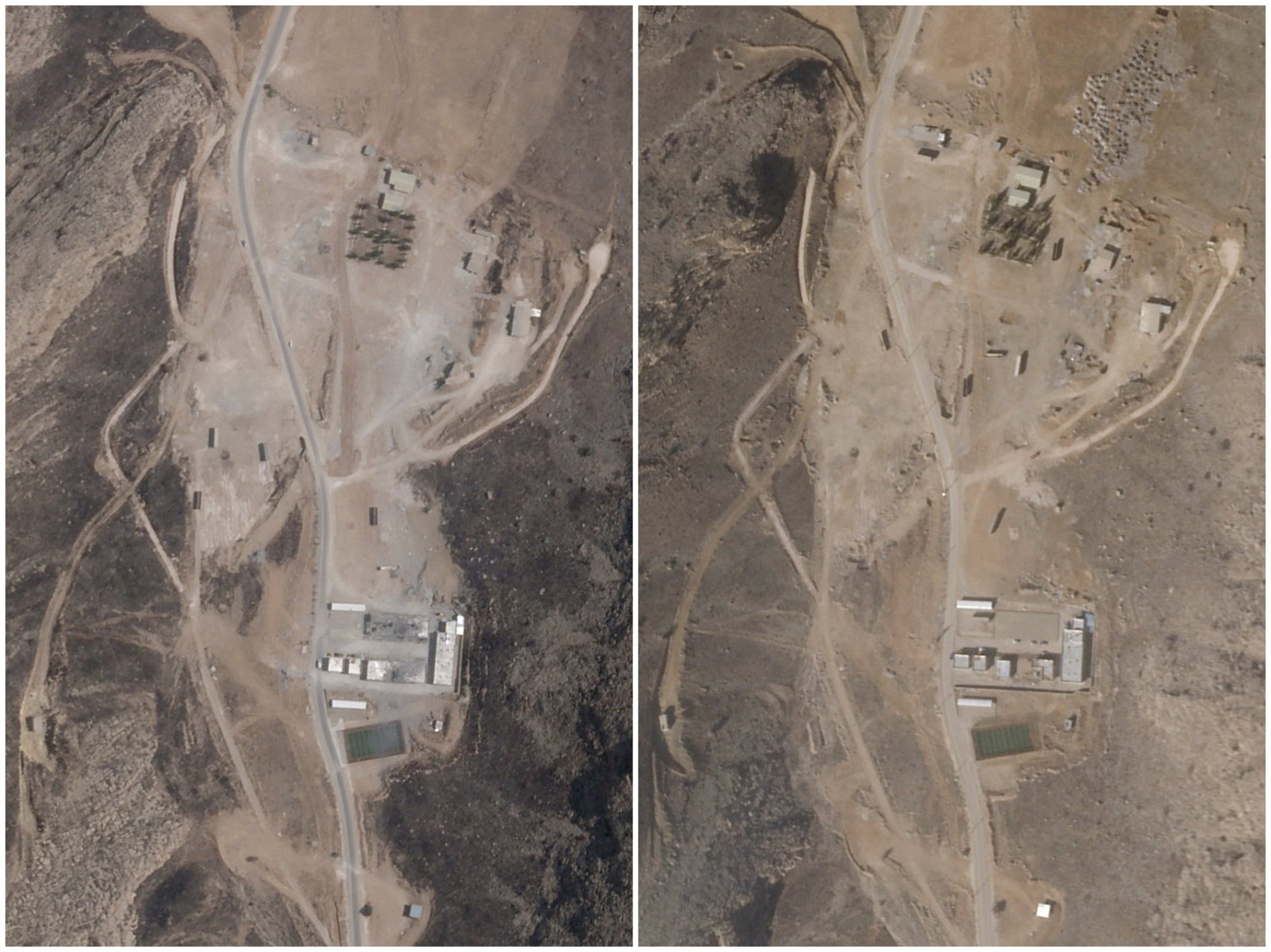

Shiraz South Missile Base
Located about 10 km (6 miles) south of Shiraz, the Shiraz South missile base is one of 25 primary bases capable of launching medium-range ballistic missiles. Alma Research and Education Centre, an Israeli organization, assessed that the site suffered light, above-ground damage during last year’s war. A comparison of images taken on July 3, 2025, and January 30 shows reconstruction and clearance efforts at the main logistics and likely command compound. However, the compound has not fully returned to its pre-strike operational capacity.
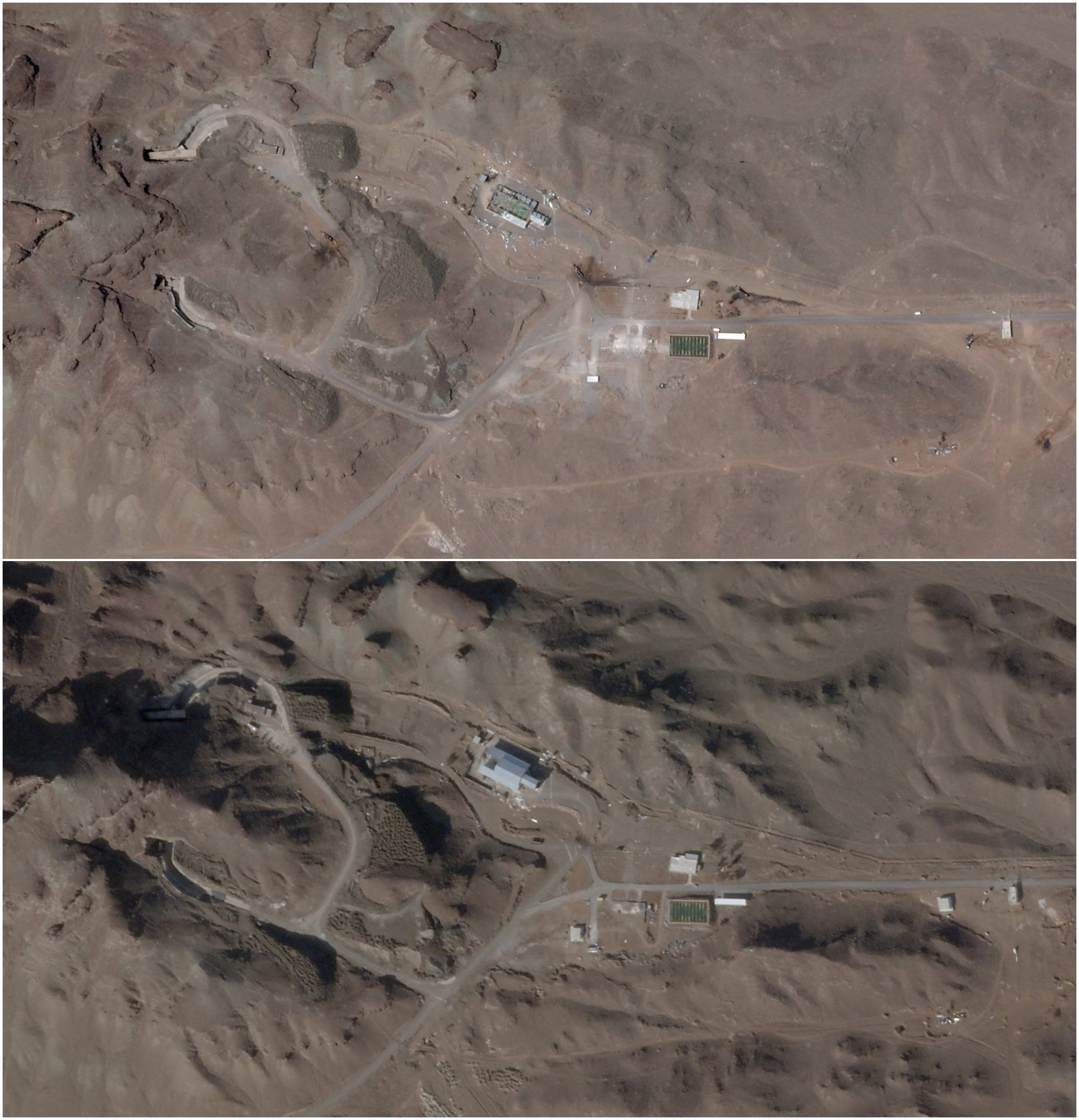

Qom Missile Base
Situated 40 km north of Qom, the Qom missile base experienced moderate above-ground damage, according to Alma. A comparison of images taken between July 16, 2025, and February 1, shows a new roof over a damaged building. Repairs began on November 17 and were likely completed 10 days later.
Additional reporting by Agence France-Presse


