
The Shifting Landscape of Security in the Sahel
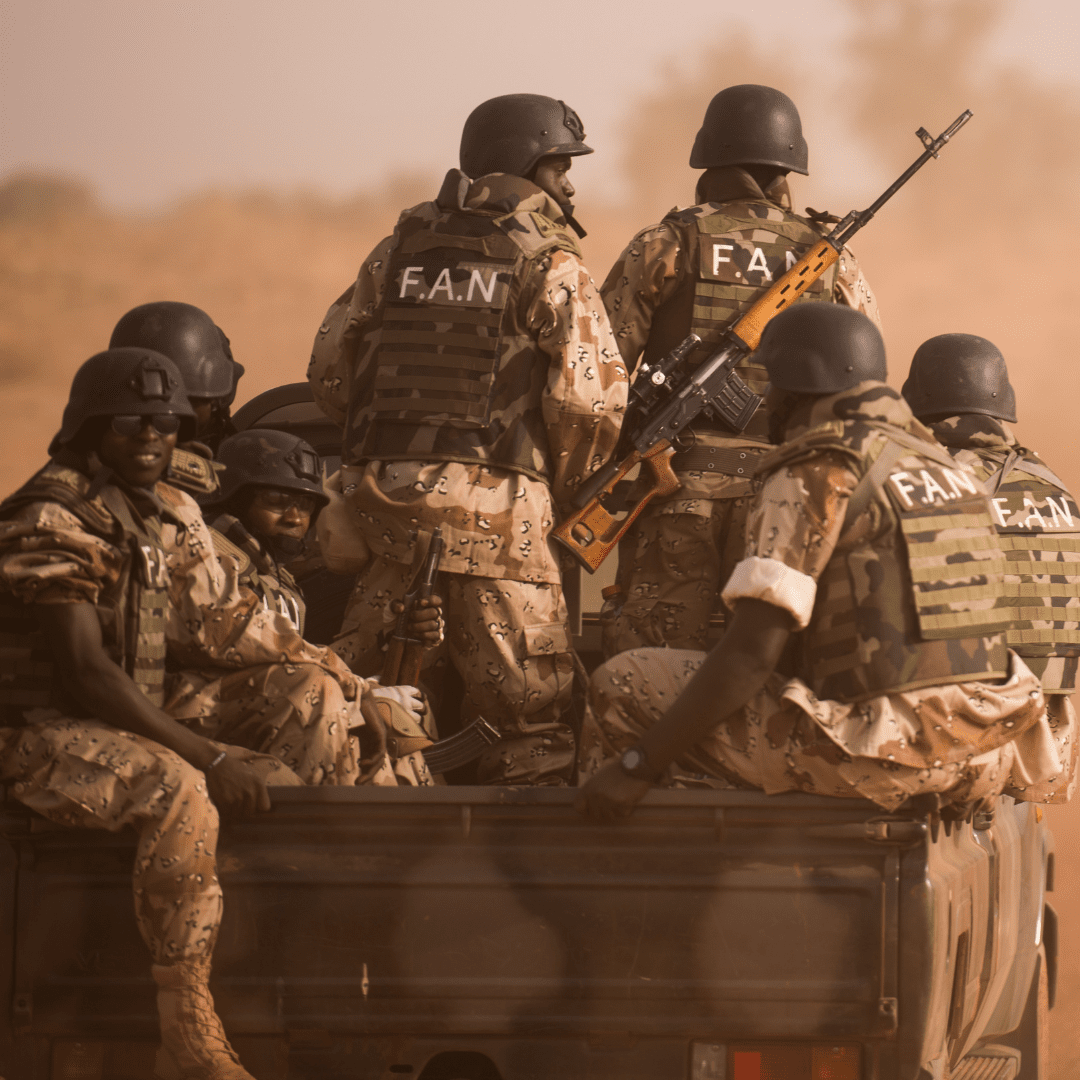
At dusk in central Mali, the soundscape has changed. Along stretches of the Niger River, villagers say helicopters now punctuate the evening air, armoured vehicles rumble through narrow roads, and then, often, there is silence. It is that silence that unsettles them most. It comes after gunfire, after unfamiliar uniforms pass through. After explanations fail to arrive.
This is the terrain in which new security partnerships have taken root. Over the past five years, military governments in Mali, Burkina Faso, and Niger have redrawn their foreign alliances. Frustrated by insurgency, strained relations with Western partners, and domestic anger over civilian casualties, they turned to Russia.
The move was framed as a sovereign choice; pragmatic, necessary, and independent. But what followed has been more complicated. After two coups in 2020 and 2021 and worsening ties with France, Mali’s government started seeking closer relations with Russia. Officials spoke of “military instructors” and technical cooperation. Soon, evidence mounted that fighters linked to the Wagner Group were operating alongside Malian forces.
The Kremlin denied formal control. Mali insisted it had hired private contractors. Western governments warned of consequences. The pattern would later echo in Burkina Faso and Niger after their own coups. Russian flags appeared at rallies. Western troops withdrew. Moscow stepped forward.
For many citizens, the calculation was simple: if previous partners failed to defeat insurgents, why not try another? Yet beneath that logic lay harder questions. What were the terms? Who scrutinised them? And how would success be measured?
Persistent Violence and Unanswered Questions
Conflict data from organisations such as ACLED suggest violence in parts of Mali and Burkina Faso has persisted, and in some regions intensified, since 2021. In March 2022, the town of Moura in central Mali became the focus of international scrutiny. Witnesses interviewed by the UN and human rights groups alleged that hundreds of civilians were killed during a joint operation by Malian forces and foreign fighters. The government denied wrongdoing; Russia rejected the accusations.
In Burkina Faso, insurgent attacks have continued despite new security alignments. Civilians remain trapped between armed groups and counter-insurgency operations. So the question lingers: does a new partner necessarily produce a new outcome — or merely a new configuration of the same struggle?
Security Agreements and Resource Interests
Security agreements do not exist in isolation. In Mali, Russian-linked entities have been connected to mining interests, particularly gold. Analysts and investigative reports have documented cases where security cooperation intersected with access to natural resources. In the Central African Republic, a similar model emerged: security support alongside mining concessions.
Supporters argue that such arrangements are pragmatic, compensation for services rendered. Critics warn that opaque contracts tied to extractive wealth risk mortgaging the future. What happens when the wealth beneath the ground becomes collateral for protection above it? Where contracts remain unpublished and parliamentary oversight is limited, public trust erodes quietly.
After the death of Wagner leader Yevgeny Prigozhin in 2023, Moscow restructured its Africa operations under what became known as the Africa Corps. The intention, officials suggested, was greater state control. Yet investigations by the Associated Press, the Los Angeles Times, and Le Monde have reported continued allegations of abuses involving Russian-aligned forces in Mali. Governments deny wrongdoing. Access remains restricted. Is reorganisation reform, or simply continuity under a new name?
Nigeria’s Divergent Path
Nigeria presents a quieter contrast in the region’s evolving security landscape. Its relationship with Russia has involved equipment purchases and diplomatic engagement, but not structural realignment. Crucially, Nigeria’s security architecture remains plural and institutionally anchored. Civilian rule continues, military contracts pass through bureaucratic channels and oversight mechanisms, parliamentary committees, courts, and a questioning press still operate, however imperfectly.
Unlike some Sahelian juntas, Nigeria has not embedded foreign private military forces in frontline operations, nor tied security cooperation to opaque mineral concessions. Yet Nigeria is not insulated from the pressures reshaping its neighbourhood. Insurgency in the northeast, banditry in the northwest, and separatist tensions in the southeast have created deep frustration, and with it, the temptation of quick fixes.
Recent cooperation with the United States, focused on training, intelligence sharing, and logistical support, reflects Abuja’s attempt to strengthen capacity without outsourcing control. American personnel are not combatants; officially, they advise, assist, and observe. The distinction matters. So does transparency.
Lessons from the Sahel
Experience from the Sahel suggests that clarity is essential. Where security agreements are opaque, mistrust and misinformation flourish. Nigeria’s engagements, whether with Washington, Moscow, or others, require clear mandates, public communication, and parliamentary oversight.
Governments that pivoted abruptly in the Sahel often found themselves trading one external security architecture for another. Nigeria’s comparative advantage lies in diversification: partnerships without capture, cooperation without surrendering agency.
Nigeria’s path raises a broader question for the region: can diversification serve as resilience? And where, precisely, is the line between cooperation and capture?
The Importance of Transparency and Oversight
Recent developments have brought renewed US security cooperation into focus, including advisory deployments and intelligence support at Nigeria’s request. American officials describe the presence as limited and advisory. Nigerian authorities emphasize that sovereignty remains intact.
Yet the Sahel offers a broader lesson: the issue is not who the partner is, but how the partnership is structured. Are mandates clear? Are agreements transparent? Is civilian oversight active or symbolic? Are the rules of engagement publicly defined?
Nigeria’s strength lies not merely in diversification but in maintaining control over its institutions. Dependence is not a strategy. Transparency is. None of the Sahelian governments published the full terms of their agreements with Russian entities. Journalists seeking details face restricted access, legal pressure, or expulsion, while civil society operates under strain.
Transparency is not theoretical here; it is absolutely missing. When contracts are hidden, citizens cannot assess outcomes. When chains of command blur, accountability weakens. When security is negotiated behind closed doors, the risks fall elsewhere.
The picture is uneven and contested. Nigeria is not Mali. Its democratic institutions — legislature, courts, and press — remain operational, though pressure can affect even stable systems.
The Sahel experience offers three lessons. First, transparency matters. Security agreements should withstand parliamentary scrutiny; secrecy breeds mistrust. Second, professionalism must override expediency. Foreign training should reinforce Nigerian legal and civilian protection frameworks. Third, diversification reduces strategic risk. Cooperation is valuable, but only when guardrails prevent overdependence.
The Sahel shows the cost of urgency without oversight. Nigeria’s opportunity is to engage international partners without repeating these mistakes. The real measure will not be the partner’s flag, but whether agreements are debated, oversight is protected, and justice institutions can function freely.
Security partnerships are shaped quietly in contracts, committees, and courtrooms, and ultimately judged by accountability after the dust settles.


