
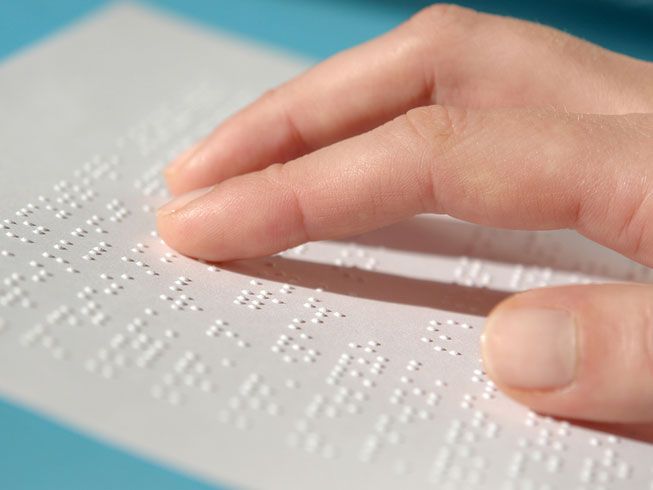
The Significance of World Braille Day
World Braille Day is celebrated annually on January 4th, honoring the birth of Louis Braille, the French educator who developed a tactile writing system for the blind and visually impaired. This day serves as an important reminder of the challenges faced by individuals with visual impairments and highlights the importance of accessible education and communication tools.
In Morocco, efforts to provide education using Braille are led by organizations such as the Alaouite Organization for the Promotion of the Blind (OAPAM) and the Moroccan Braille League (LBM). These institutions play a vital role in ensuring that visually impaired children have access to education and opportunities for growth.
Education and Challenges in Morocco
The most recent data on disability in Morocco dates back to 2015, when a survey conducted by the Ministry of Solidarity, Women, Family and Social Development revealed significant barriers to education for disabled individuals. The report highlighted that blind and visually impaired students often face high dropout rates due to various factors, including lack of resources and support.
To address these challenges, several training centers have been established across the country. OAPAM, founded in 1967, operates 13 centers throughout Morocco, providing education and support for visually impaired children. Similarly, the Moroccan Braille League, through its Taza center, has been offering similar services since 1998.
The Role of NGOs in Education
Azelarab Idrissi, founder and president of the Moroccan Braille League, emphasized the organization’s commitment to combating blindness, teaching Braille, and supporting the blind and visually impaired. He also mentioned the association’s focus on the “Rights of Persons with Disabilities” and its efforts to prepare young people with visual impairments for certified exams like the baccalaureate.
Currently, over 10 individuals have obtained their baccalaureate, 12 have earned primary school certificates, and four have received middle school degrees. These students are hosted at the Taza center, where 12 girls and 12 boys were staying in 2017, according to Idrissi.
Collaboration and Employment Opportunities
The Moroccan Braille League collaborates with the Office of Vocational Training and Promotion of Employment to offer recognized state degrees to these young people. Additionally, the NGO works with the Ministry of National Education to ensure the recognition of degrees and diplomas.
However, employment remains a challenge for visually impaired individuals. Idrissi noted that while it is not always easy, it is crucial for these individuals to come to the center, where they can meet others facing similar challenges. He called for changes in public institutions to better accommodate visually impaired individuals, suggesting that computers should be equipped with Braille displays to enable independent work.
Braille and Speech Synthesis: Complementary Systems
In schools and universities, visually impaired students often require assistance during exams. According to Idrissi, they can take exams in Braille, and their papers can be corrected by Braille teachers. However, he admitted that progress in this area is limited in Morocco.
Another key issue is the Marrakech Treaty, signed by Morocco in 2013 but not yet ratified. This agreement aims to improve access to communication and printed materials for the blind. Idrissi pointed out that ratification would allow for the transcription of books in Braille, benefiting students in need of references and educational materials.
Despite the advancements in technology, some individuals now use speech synthesis instead of Braille. Idrissi acknowledged that while Braille is not widely used by children and young people, it remains an effective system. He emphasized that Braille, created by a blind person, continues to be essential for independence and social integration.
Conclusion
Braille remains a critical tool for the visually impaired, offering a means of communication and education. While technology provides additional support, the importance of Braille cannot be overstated. With continued efforts and collaboration, the goal of creating an inclusive society for all individuals, regardless of their abilities, can be achieved.


