
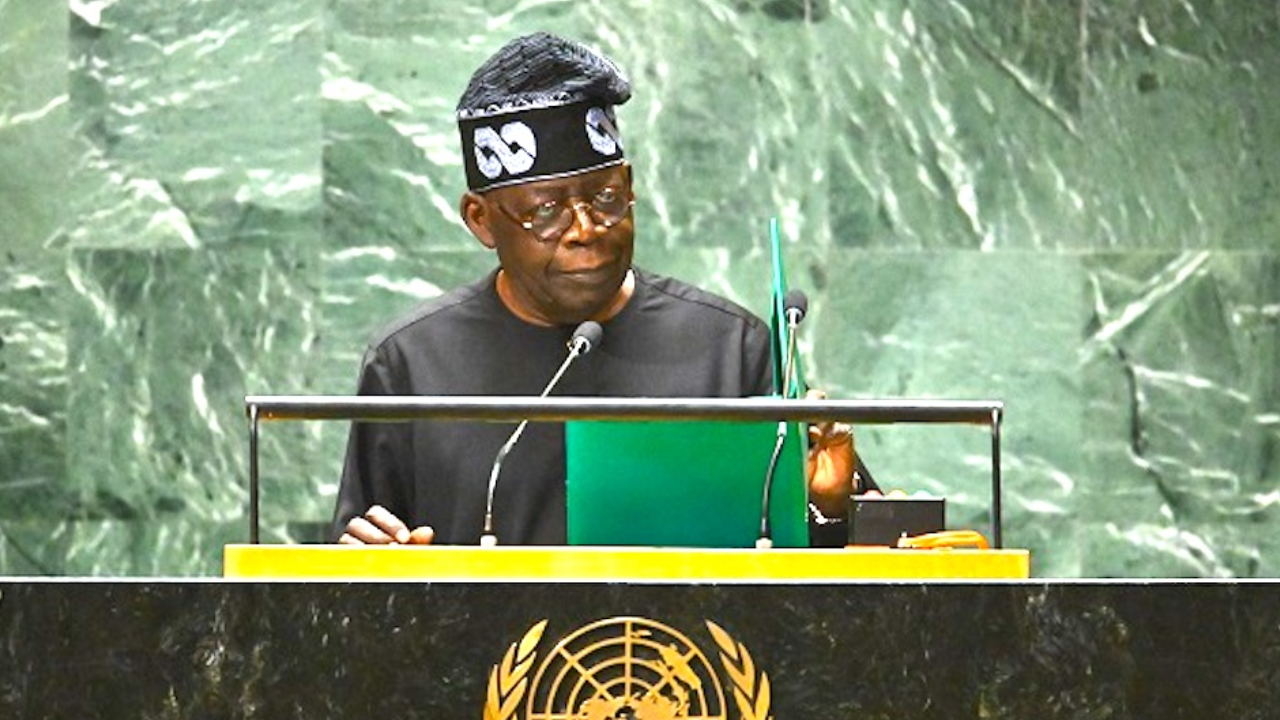
Nigeria’s Leadership on the Global Stage at the 80th UNGA
The 80th session of the United Nations General Assembly (UNGA) recently concluded in New York, United States. While the event itself came to an end, the impact of President Bola Ahmed Tinubu’s address has continued to shape national and international discourse. His bold policy statement demanding reforms in global governance has significantly enhanced Nigeria’s standing as one of Africa’s leading economies.
During the annual event, President Tinubu made a powerful call for multifaceted reforms within the United Nations, focusing on areas that require immediate attention. This message was delivered through Vice President Kashim Shettima, who effectively articulated the President’s vision and policies. VP Shettima’s ability to understand and communicate the President’s ideas has been a key strength, ensuring that Nigeria’s voice is clear and impactful on the global stage.
One of the main themes of VP Shettima’s address was the need for reform within the UN Security Council. President Tinubu emphasized the importance of Nigeria and Africa securing a permanent seat, arguing that this would reflect the continent’s growing population, economic influence, and contributions to global peacekeeping. He highlighted how Nigeria has transformed from a colony with a small population to a sovereign nation with over 236 million people, projected to be the third most populous country in the world.
President Tinubu’s address also underscored Nigeria’s commitment to peace, development, unity, multilateralism, and human rights. He called for reform and cooperation to tackle global challenges such as climate change, irregular migration, and financial instability. His diplomatic approach aims to foster partnerships and cooperation, showcasing his negotiation skills and strategic thinking.
On the global front, President Tinubu expressed support for a two-state solution to the Israeli-Palestinian conflict, describing it as the most dignified path to lasting peace. He emphasized that Palestinians deserve the same freedom and dignity as everyone else, urging the international community to take concrete actions to protect their lives and facilitate a peaceful resolution. This stance aligns with other countries, including the United Kingdom, France, Canada, Australia, and Portugal, which have also called for Palestinian statehood.
Despite this, some Nigerian politicians have criticized President Tinubu’s stance on the Palestine issue, claiming he failed to address domestic concerns. However, these criticisms are often based on a simplistic view of complex global politics. Well-meaning Nigerians argue that politicians should prioritize national and global interests over partisan agendas, especially when dealing with sensitive issues like human suffering.
President Tinubu did not limit his focus to the Palestine issue. He also condemned the humanitarian crises in Gaza and other conflict zones, calling for coordinated global efforts to de-escalate tensions and address the root causes of regional conflicts. He emphasized the importance of empathy and compassion over political gains, maintaining a level of statesmanship and decorum in global political discourse.
Regarding the Nigerian situation, President Tinubu acknowledged the threat of violent extremism and terrorism but stressed that his administration is tackling the menace through values and ideas. He noted that while military tactics may win battles, it is values and ideas that deliver long-term victories. On economic reforms, he acknowledged the difficult reality facing his citizens but said that Nigeria’s economic reforms represent a model for resilience. He highlighted steps taken to restructure the economy and remove distortions, expressing confidence in the power of the market to transform the country.
President Tinubu proposed the establishment of a new, binding mechanism to manage sovereign debt, including an International Court of Justice for money. This initiative aims to help emerging economies escape the constraints of debt and focus on development and growth. He also called for a complete overhaul of the global financial architecture governing Africa’s mineral resources, emphasizing the need for African nations to assert control over their resources and promote economic sovereignty.
Additionally, the President called for a dedicated initiative to close the digital divide, bringing together researchers, the private sector, governments, and communities to promote access to technology and enable growth. Closing the digital divide is crucial for ensuring that all nations, especially developing ones, can participate in the global digital economy.
Beyond the General Debate, Vice President Shettima met with UN Secretary-General António Guterres to discuss Nigeria’s quest for a permanent seat on the UN Security Council. He also engaged with leaders from Namibia and the Gates Foundation, reaffirming Nigeria’s commitment to deepening bilateral ties and promoting investment in education and human capital development.
VP Shettima’s performance at the 80th UNGA demonstrated his capacity to stamp the President’s authority on the global stage. His ability to convey the President’s vision and policies seamlessly has been particularly notable, highlighting the strong partnership between President Tinubu and Vice President Shettima.


