
A Political Showdown Over Tariffs and a Governor’s Bold Move
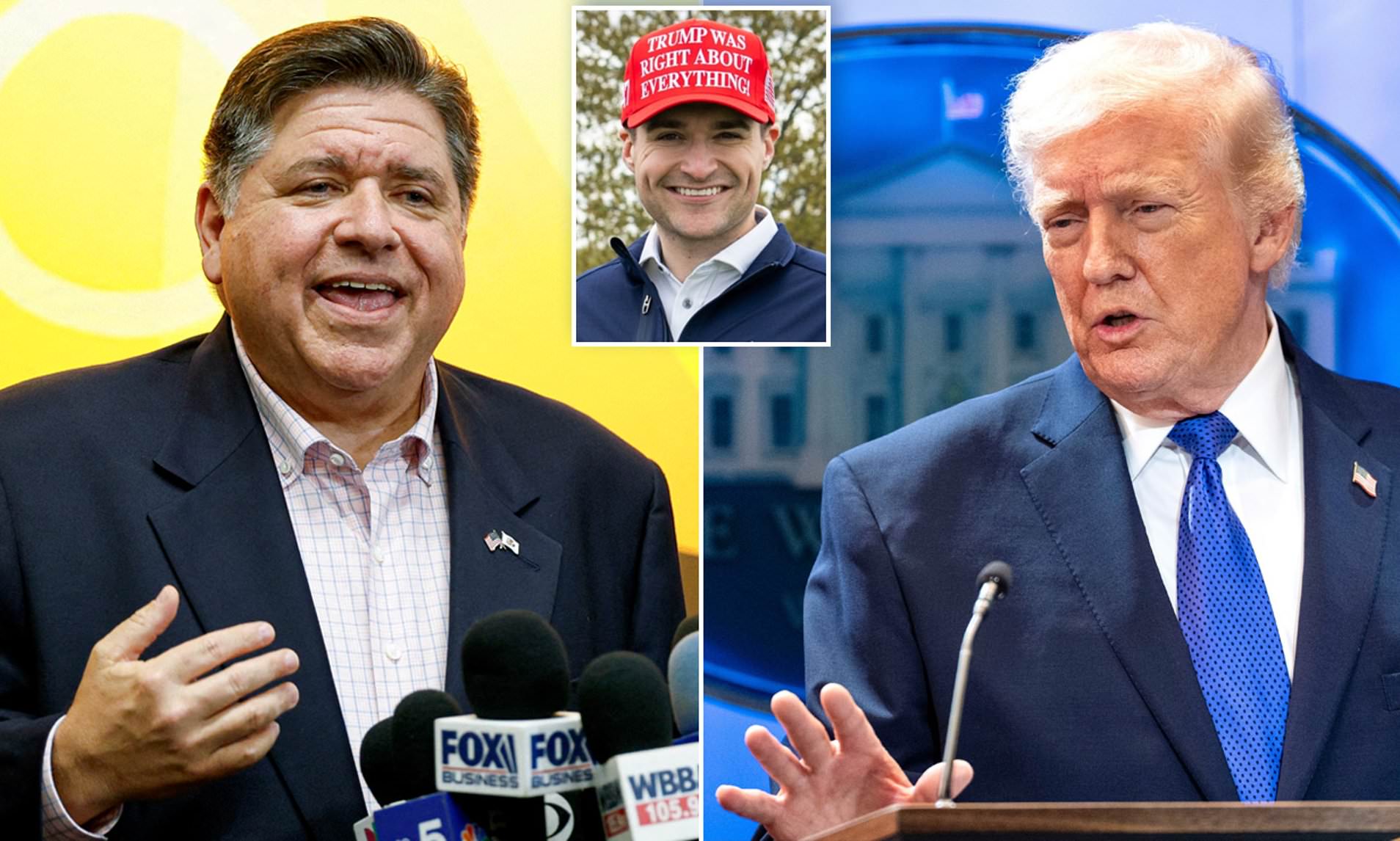
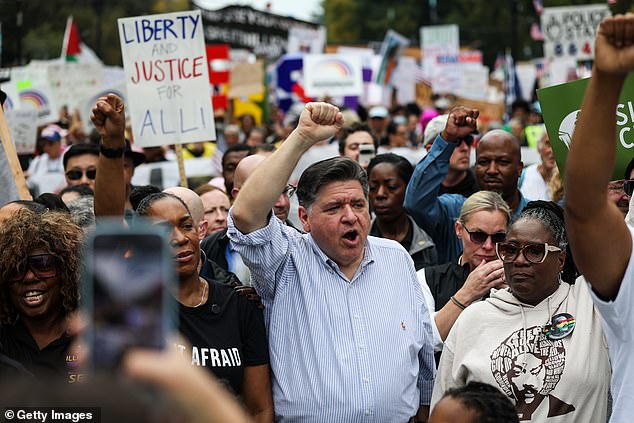
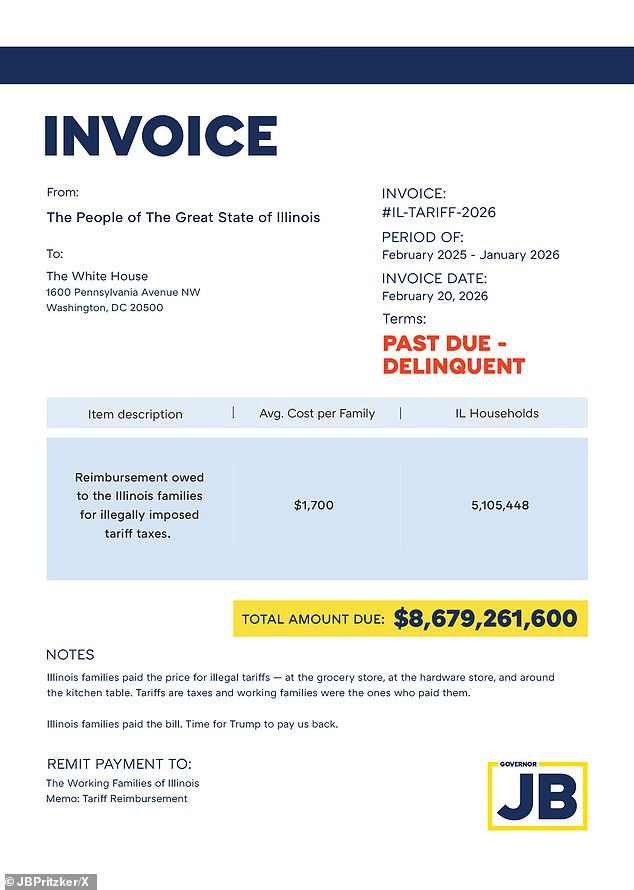
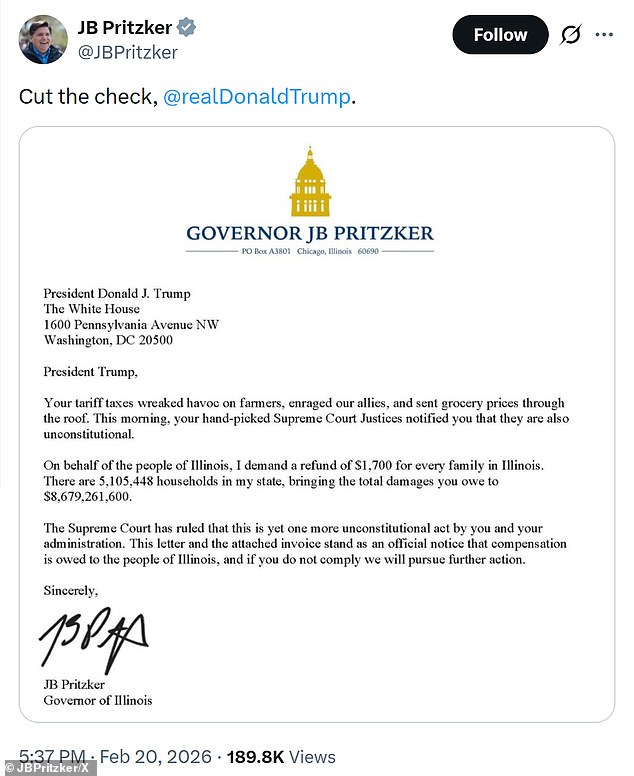
Illinois Governor JB Pritzker, a Democrat with a deep connection to the Hyatt Hotels fortune, has taken a bold stance against President Donald Trump following the Supreme Court’s ruling that his trade policies are unconstitutional. In a letter addressed directly to Trump, Pritzker demanded that the president issue refunds to the people of Illinois, citing an invoice for $8.6 billion. The governor even threatened “further action” if the request was not met.
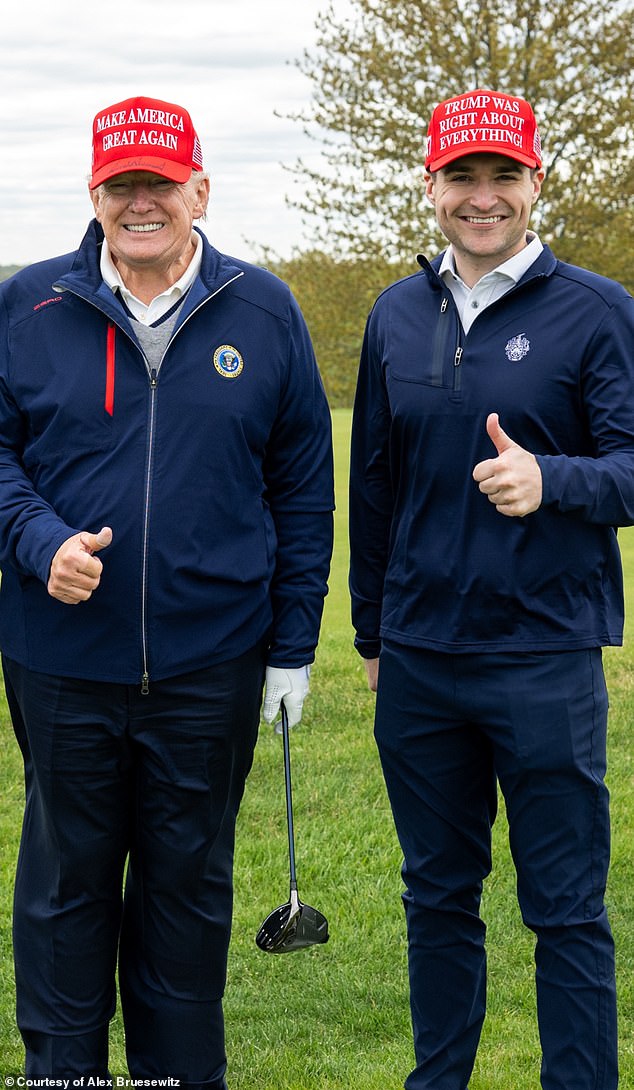
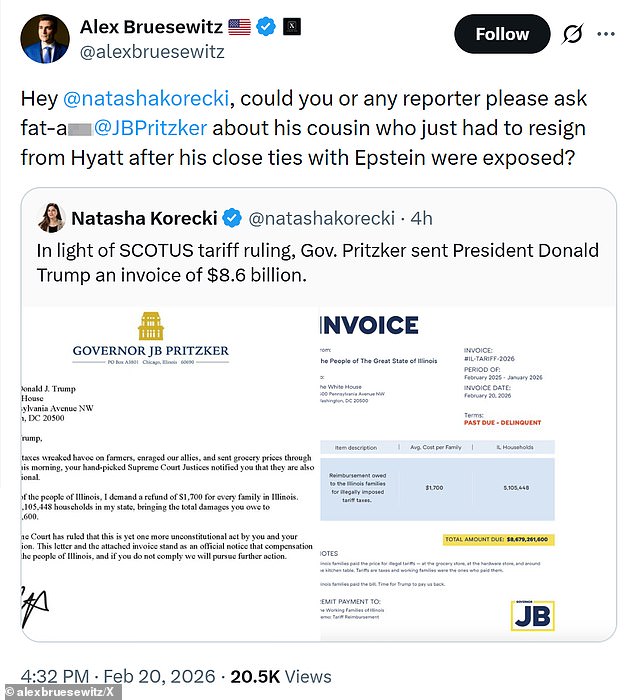
This move by Pritzker has sparked a heated exchange with one of Trump’s longest-serving advisers, Alex Bruesewitz. After a reporter named Natasha Korecki shared details of the invoice on social media, Bruesewitz responded with a pointed question: “Hey @natashakorecki, could you or any reporter please ask fat-a** @JBPritzker about his cousin who just had to resign from Hyatt after his close ties with Epstein were exposed?”
The reference is to Thomas Pritzker, the governor’s cousin, who recently stepped down from the board of directors at Hyatt. His resignation came after he admitted to having associations with Jeffrey Epstein and Ghislaine Maxwell, two figures linked to serious legal issues.
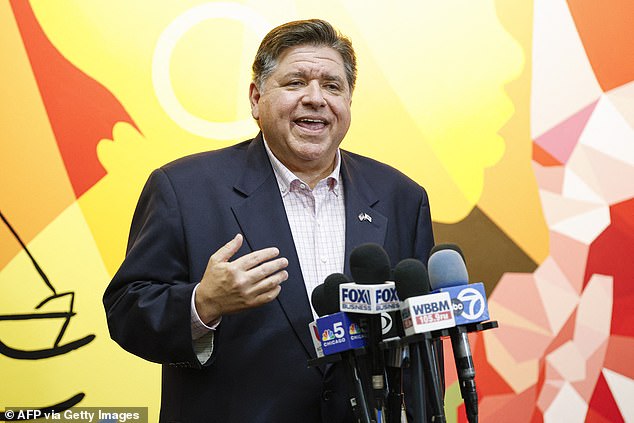

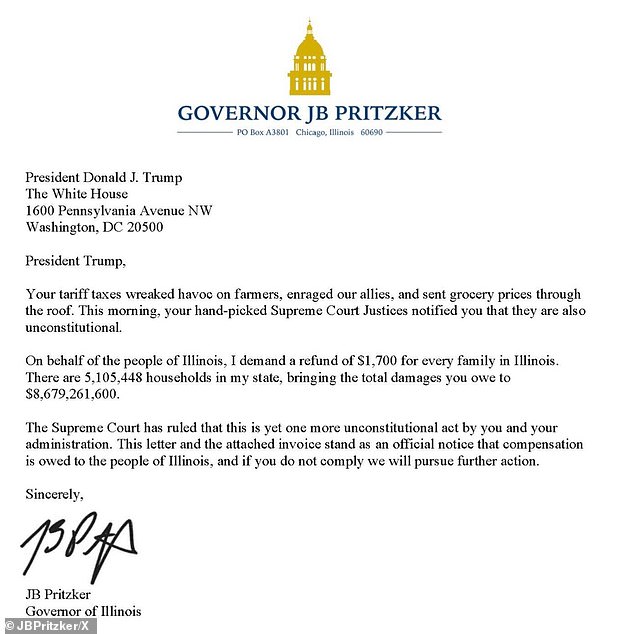
In his letter, Pritzker highlighted the impact of Trump’s tariffs on Illinois residents. He argued that the trade policies caused significant harm to farmers, strained relationships with allies, and led to increased grocery prices. “Your tariff taxes wreaked havoc on farmers, enraged our allies, and sent grocery prices through the roof,” Pritzker wrote. He then demanded that Trump refund the people of Illinois $1,700 per family, totaling over $8.6 billion for more than five million households in the state.
“This letter and the attached invoice stand as an official notice that compensation is owed to the people of Illinois, and if you do not comply, we will pursue further action,” Pritzker added. The invoice, captioned with the words “cut the check,” was marked as “Past Due – Delinquent.”


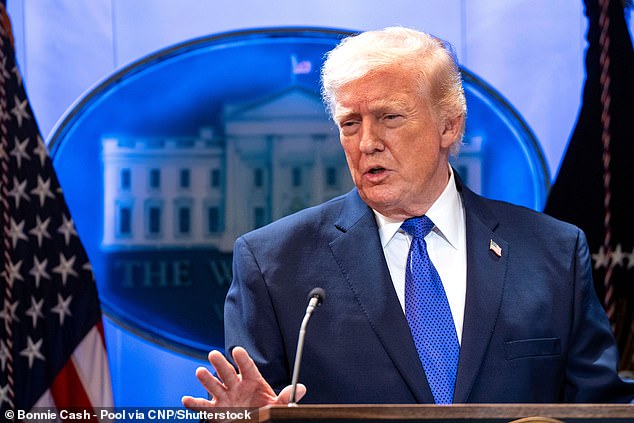
Trump, however, has not backed down. Earlier this week, he claimed to have found a little-known trade law to re-implement his sweeping tariffs, which are set to take effect in just days. On Friday evening, he announced on Truth Social: “It is my Great Honor to have just signed, from the Oval Office, a Global 10% Tariff on all Countries, which will be effective almost immediately.”
The new tariffs are based on Section 122 of the Trade Act of 1974, which grants the president the power to impose temporary tariffs. This law was originally intended to address short-term emergencies and does not create long-term trade policies. The tariffs can remain in effect for only 150 days without congressional approval.


The White House confirmed that the temporary import duty will take effect on February 24 at 12:01 a.m. EST. However, the tariff does not apply to a wide range of goods, including energy products, natural resources, fertilizers, pharmaceuticals, some electronics, some vehicles, certain aerospace products, informational materials, and accompanied baggage. Food products, such as beef and tomatoes, will be exempt to minimize impacts on the average consumer.
Additionally, the global tariff excludes products from Canada and Mexico due to the United States-Mexico-Canada Agreement (USMCA). These countries have the lowest effective tariff rate globally. They will still be taxed on steel, aluminum, and non-USMCA compliant goods. Certain textiles and apparel are also exempt under the Dominican Republic-Central America Free Trade Agreement.
Despite the Supreme Court’s decision, Trump remains defiant. In a press briefing, he accused the justices of being “swayed by foreign interests” and criticized some conservative justices for not being “loyal” like those appointed by Democratic presidents. He lamented that the court’s decision was “nonsensical” and claimed that the justices admitted he could do anything as president except impose tariffs.
“I’m allowed to destroy the country, but I can’t charge them a little fee,” Trump said. “I can do anything I want to do to them, but I can’t charge any money.”
Three conservative justices joined all three liberal justices on the panel to rule against Trump, resulting in a 6-3 decision. This marked a rare moment of consensus among conservative justices to go against the president. Justice Brett Kavanaugh, the third Trump appointee, wrote the dissent, joined by Justices Samuel Alito and Clarence Thomas.


