
A Historic Military Operation in Venezuela
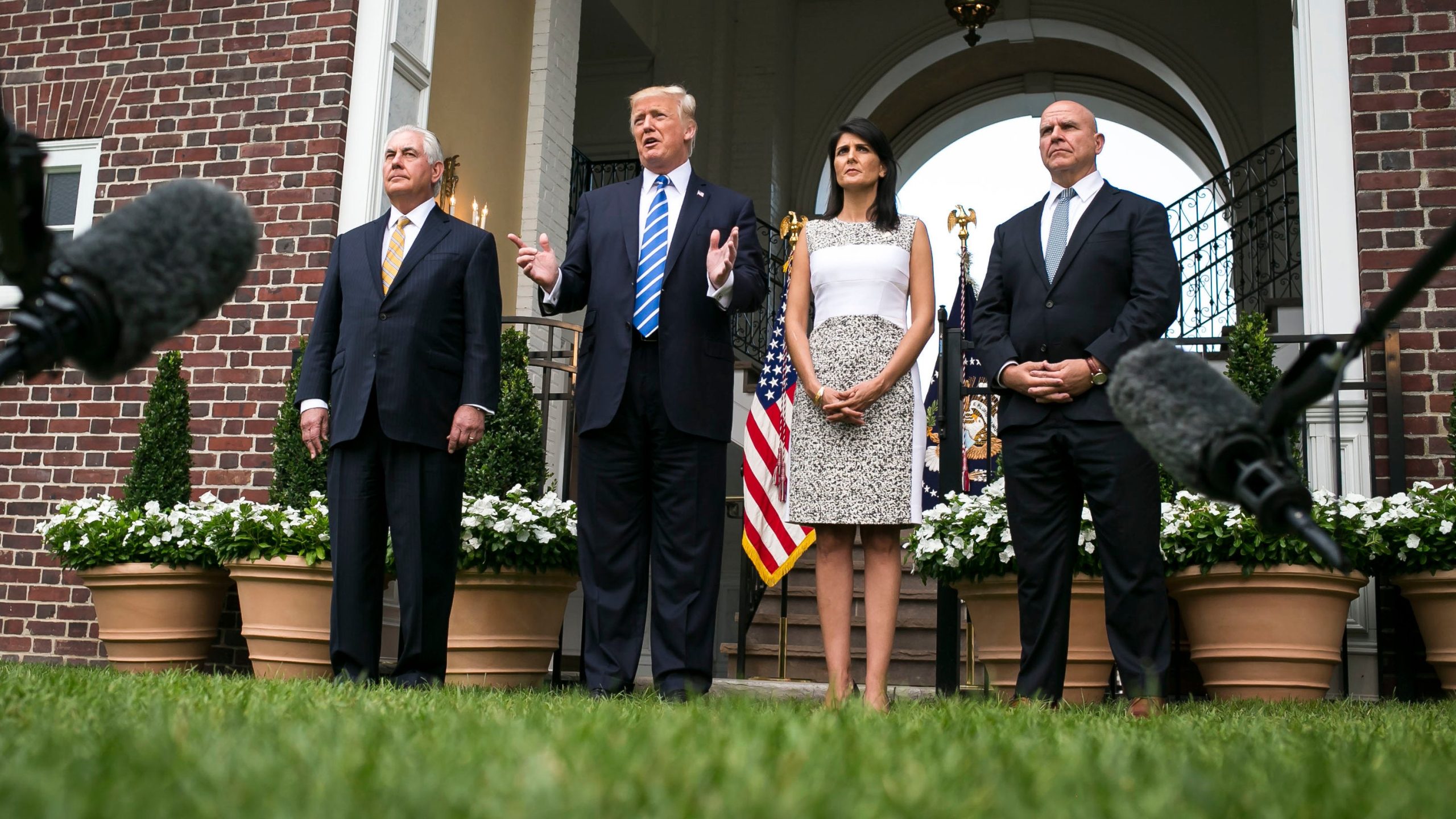
Hours after explosions shook Caracas, part of a large-scale US military operation inside Venezuela, Donald Trump made a statement at his Mar-a-Lago estate. He claimed that Washington would take control of the country until a “safe, proper and judicious” transition could be achieved.
Trump described the assault, which led to the capture and removal of Venezuelan President Nicolás Maduro and his wife, as one of the most significant displays of American military power seen since World War II. “This was one of the most stunning, effective, and powerful displays of American military might and confidence in American history,” he told reporters on Saturday. He added, “We want peace, liberty and justice for the great people of Venezuela.”
Venezuelan authorities called the attack—carried out by the US Army’s elite Delta Force on Friday night—an “imperialist assault.” They declared a state of emergency and urged citizens to take to the streets to defend their nation. The response from governments around the world was swift, with strong condemnation coming from Pretoria.
The air, land, and sea operation followed months of US accusations that Maduro’s government is connected to drug cartels such as the Cartel de los Soles and Tren de Aragua. These groups were alleged to be responsible for smuggling cocaine and fentanyl into the United States. This operation also comes after months of increased US military presence in the region, including the deployment of the USS Gerald R. Ford, the Navy’s newest aircraft carrier, along with several other warships in the Caribbean.
In recent weeks, the US has seized two oil tankers, attacked over 30 boats carrying drugs, and struck what Trump described as “the dock area where they load the boats with drugs.” During his press briefing, Trump mentioned that Maduro and his wife, Cilia Flores, have been indicted in the Southern District of New York. They face charges including narco-terrorism conspiracy, cocaine importation conspiracy, possession of machine guns and destructive devices, and conspiracy to possess machine guns and destructive devices against the US.
Trump claimed the attack was successful. “Rarely do we see anything like it,” he said. He contrasted this with past operations in Afghanistan or during the Jimmy Carter years, stating, “They were an embarrassment.” He emphasized that the US is now a respected country again. “If you had seen what I saw last night, you would have been very impressed. I am not sure you will ever get to see it, but it was an incredible sight.”
He also highlighted that no American service members were killed, and no American equipment was lost during the operation. Trump further discussed Venezuela’s oil reserves, stating that major US oil companies would invest billions to fix the broken infrastructure and start generating revenue for the country. He added that the US was prepared for a second, larger attack if needed.
US Defense Secretary Pete Hegseth, who was present at the press briefing, praised the operation. “America can project our will anywhere, anytime,” he said. “The coordination, the stealth, the lethality, the precision, the very long arm of American justice, all on full display in the middle of the night.”
Global Reactions to the Attack
South Africa (SA) strongly condemned the attack, calling it a grave violation of international law and a threat to the global rules-based order. The international relations and cooperation department stated that the action constituted a clear breach of the United Nations Charter, which governs the conduct of states in international relations.
“SA views these actions as a manifest violation of the Charter of the United Nations, which mandates that all Member States refrain from the threat or use of force against the territorial integrity or political independence of any state,” the department said. It also stressed that international law does not permit external military intervention in the domestic affairs of sovereign nations, adding that such actions undermine the principle of state sovereignty.
“Furthermore, the Charter does not authorize external military intervention in matters that are essentially within the domestic jurisdiction of a sovereign nation,” the statement read. It warned that military invasions often exacerbate instability rather than resolve political crises.
“History has repeatedly demonstrated that military invasions against sovereign states yield only instability and deepening crisis,” the department said. It cautioned that unilateral use of force weakens the international system. “Unlawful, unilateral force of this nature undermines the stability of the international order and the principle of equality among nations.”


