
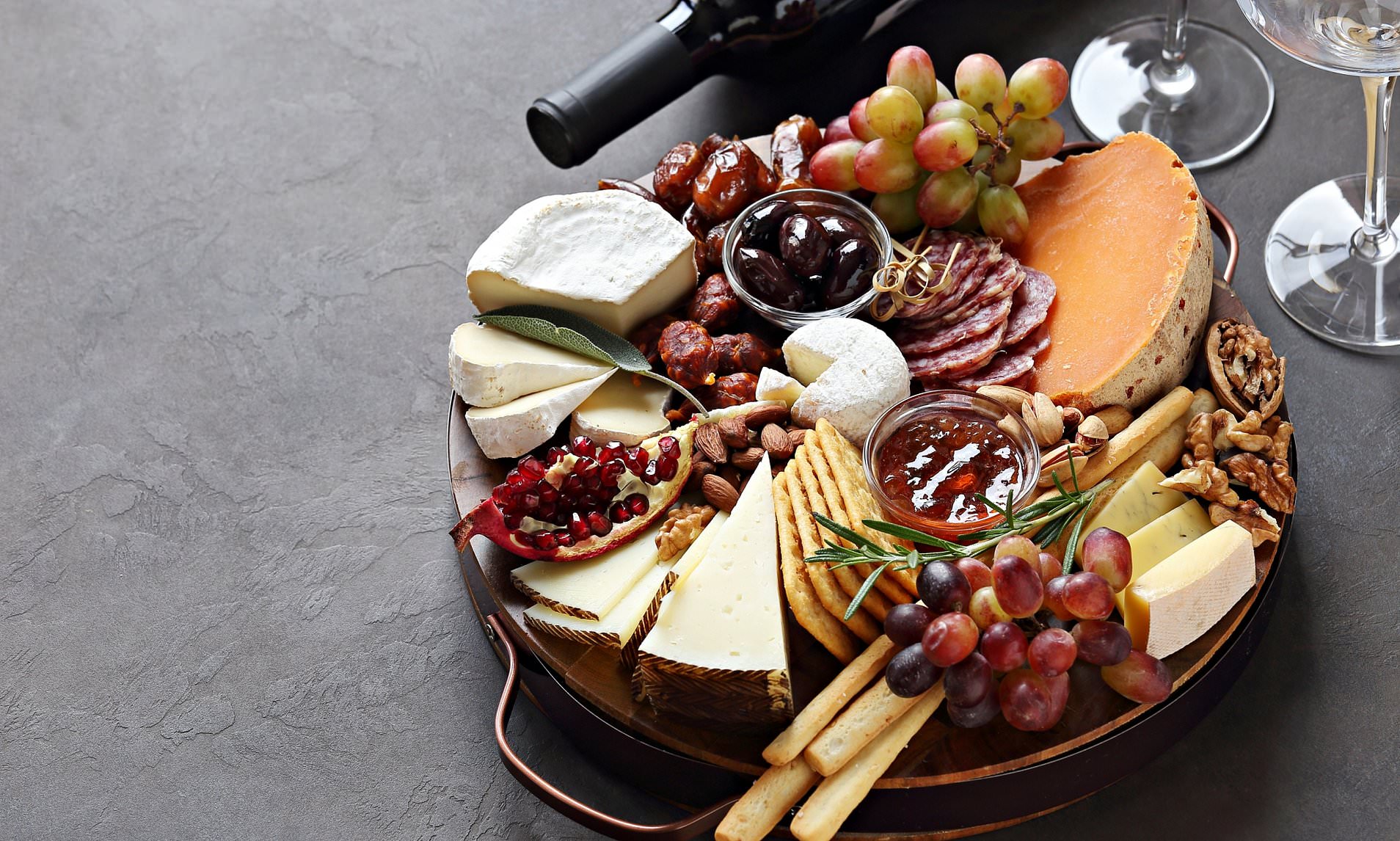
The NHS recommends that we eat around 30g of cheese a day—but who’s weighing out their wedges of cheddar when there’s a stack of crackers and quince jam to get through?
For many, a Christmas cheeseboard is the pinnacle of festive fare, and can be enjoyed as a buffet spread, served in lieu of dessert after dinner, or grazed upon during a Twixmas boxset binge.
A platter of creamy brie, gooey camembert and shavings of aged parmesan is often regarded as a ‘last hurrah’ before we begin our pledge to start the new year eating better—whether that’s cutting back on dairy, sugar or gluten—with losing a few pounds often the nation’s number one New Year’s resolution.
But festive excess aside, is there a way of hacking our cheeseboards to make them healthier?
Dietary fat is an essential part of a healthy balanced diet—and as a source of essential fatty acids which they body can’t make itself, we need it to survive.
But too much fat, especially when it’s saturated as it often is in cheese, can raise cholesterol, increasing the risk of heart disease.
Cheese has long been linked to so-called ‘bad’ cholesterol which raises the risk of not only heart disease, but type two diabetes, stroke and life-limiting obesity, but according to one leading nutritionist, cheese is not all bad.
In fact, some studies have found that indulging in the moreish dairy product could even help us live longer.
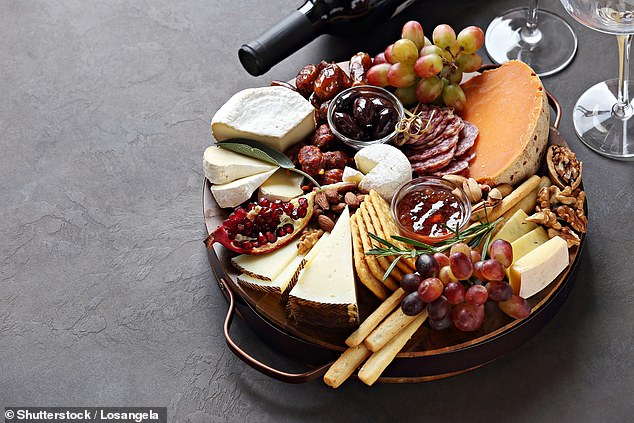

‘Cheese often gets a bad rap because of its saturated fat and salt content, but it’s also a nutrient-dense food that can absolutely be part of a healthy diet,’ says Rob Hobson, a registered nutritionist and author of Unprocess Your Family Life.
‘Nutritionally, it’s an excellent source of high-quality protein, calcium, phosphorus, vitamin B12 and vitamin A, which in combination are good for bone health, muscle repair and energy metabolism.’
And, he added, the link between cheese and heart health isn’t as simple as its saturated fat content might suggest.
So whilst aged cheeses, such as mature cheddar, parmesan and stilton are quite salty—which can be bad news for blood pressure—and contain around 120 calories per serving, meaning they shouldn’t been eaten in excess, they do have many redeeming features.
Hobson says: ‘Certain aged or traditionally made cheese, like brie, blue or unpasturised cheddar can contain live bacteria that may support gut health, whilst others found in holey cheese can help ward off inflammation and regulate blood sugar.
‘Because cheese is naturally high in protein and fat, it’s very satisfying, which can help with appetite control if eaten mindfully.
‘The issue usually comes down to portion size, so around 30g, a small matchbox-sized piece, is a sensible serving to add flavour without overdoing calories or salt.’


When it comes to cheeseboards, the real joy comes from what you’re pairing up on your plate.
With this is mind, we asked Hobson how to build the most nutrient dense cheese board this Christmas, and which crackers to pick to unleash your cheese’s innate health benefits…
Christmas crackers, crudités and nuts
One of the simplest tweaks to boost the nutrient content of your cheeseboard is to add as much variety, in the form of fibre, protein and healthy fats, to your spread as you can, so you’re not defaulting to a plate of beige, Hobson says.
A handful of nuts, colourful crudités, good quality charcuterie, hummus and seeded crackers will go a long way.
‘I’m not anti-cracker and it is Christmas after all!” Hobson says.
‘Some options are definitely more nourishing than others, with seeded, rye or wholegrain crackers offering the best nutritional edge.
‘They contain fibre, healthy fats, and a bit more protein than your classic cracker, which help slow the release of sugars into the bloodstream and make the cheese board feel more satisfying.’
Prolonged blood sugar spikes signal to the body so start storing sugar as fat, clogging up the arteries and ultimately leading to weight gain, high blood pressure and even stroke.
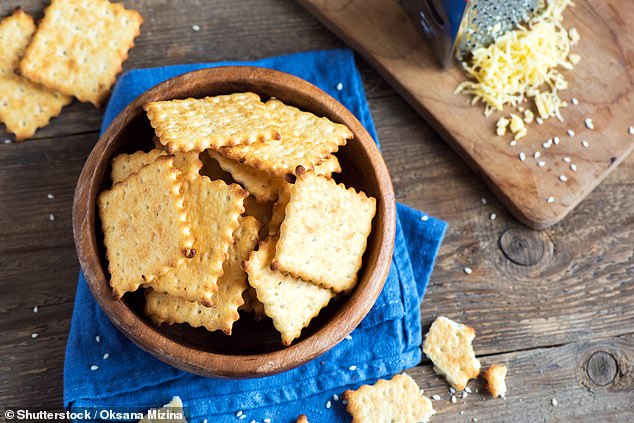
But numerous studies have shown that pairing foods rich in protein or fat, like cheese, with fibre, in this case in the form of seeded crackers or vegetables, can reduce your blood sugar response because the fibre slows down digestion, keeping energy levels stable.
Hobson added: ‘Nuts like walnuts also work brilliantly because they add crunch, protein and fibre, all of which help slow digestion.
‘Fruit can also absolutely feature, so things like sliced apple, pear or fresh figs which are naturally sweet but also contain fibre. But skipping crackers altogether isn’t necessary unless you simplify prefer eating cheese this way.’
What about a touch of charcuterie?
Processed meats such as salami and ham have been getting a lot of attention as of late, after scientists called for a ban on supermarket bacon and ham after the chemicals used in their production were linked to more than 50,000 bowel cancer cases.
Experts said that the refusal to ban nitrates—the chemical which keeps these foods fresher for longer— has come at a devastating cost, but does this mean they have no place at Christmas time?
The NHS advises cutting consumptions of processed meat to no more than 70g a day and as such, Hobson says salami definitely shouldn’t dominate your cheese board.
He said: ‘These types of processed meats are high in salt and saturated fat, so they’re best treated as an occasional festive extra father than a staple.
‘From a nutrition perspective, leaner options like thinly sliced roast turkey, sliced home-cooked ham, or even prosciutto in small amounts are better choices.
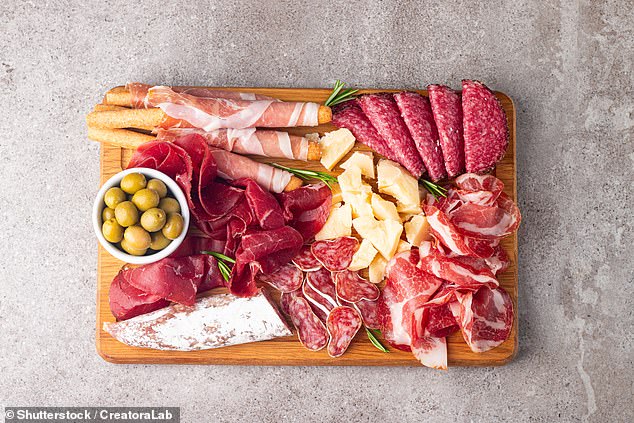
‘I would advise really limiting your intake of processed meats, especially salami, bacon and ham because of the association with cancer.
‘But if salami is a non-negotiable for you, balance things out with fibre rich items like nuts, wholegrain crackers, vegetables and fruits so the board isn’t just a wall of fat and salt.’
What about spreadable cheeses?
‘Spreadable cheeses often get judged harshly because they’re lower in protein and calcium than hard cheeses, but they still have a place on a cheeseboard,’ Hobson says.
These cheeses are a great lighter option for people with smaller appetites or for those of us sensible enough to eat a proper meal before heading out for a night of drinks and nibbles.
Hobson suggests spreading them on wholegrain seeded crackers, for an added fibre and protein hit, or spreading it on crudités.
However, he says: ‘Just check the label as some brands contain long ingredient lists which push them into the ultra-processed foods category.
‘Ironically, it’s often supermarket own brands that contain the fewest ingredients.’
Boursin, a full fat soft cheese with garlic and herbs, is also another good choice, made predominately from pasteurized milk.
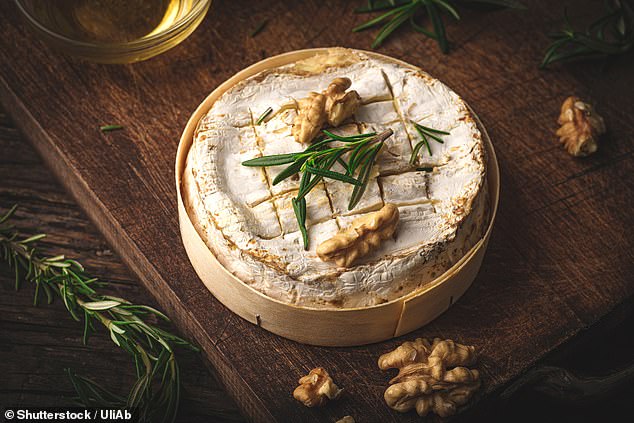
Brie and camembert are also great additions to any cheeseboard, providing spermidine, which Cancer Research claims can help prevent damaged liver cells from replication, and fatty acids which can boost brain function and memory.
‘But, if you’re aiming for nutrient density, traditional hard cheese like cheddar, Comte or parmesan give your more bang for your buck.’
This is because they tend to be the highest in protein, so a great option for all ages at the party, supporting bone growth in teenage years and bone density and repair for women going through the menopause and older people at risk of osteoporosis—a health condition that weakens bones, making them fragile and more likely to break.
And remember, Hobson says, the more mature a cheese the greater number of gut-boosting bacteria it likely contains.
The Christmas classic: Brie and cranberry
Fresh cranberries are low in calories but naturally very high in polyphenols—a type of disease-fighting antioxidant—easily making them one of the healthiest things on the platter, Hobson says.
So, provide a sugar-packed highly processed sauce, its worth slathering your brie in it, or sprinkling fresh berries over canapes.
Adding the red berries to your diet can even help to reduce weight gain and keep hidden visceral fat at bay, according yo a study in The Journal of Functional Foods.
‘Just be cautious of sauces that are made with added sugar, which can nudge blood glucose levels up,’ Hobson warned.
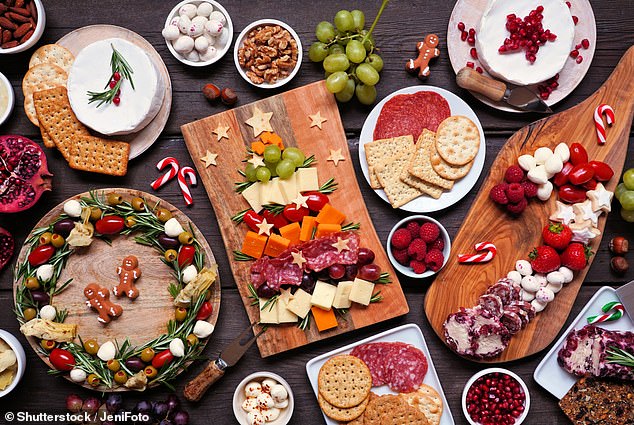

‘Though it’s unlikely to be eating this on its own so the effect is negated by the protein and fat in the cheese you’ll be eating it with.
‘If you want a healthier twist, look for a reduced-sugar cranberry sauce or make your own with less sugar and added orange zest.’
What’s the deal with chutney?
Another big hitter when it comes to salt is chutney and pickles.
Patak’s Mango Chutney, for example, contains 2.98g of salt per 100g, while Branston Pickle tips the scales at 3.5g.
Hobson says: ‘Chutney is very tasty, but it’s essentially a sweet preserve and even savoury versions rend to contain added sugar,
‘That doesn’t mean it’s off limits. A teaspoon or two alongside cheese is hardly going to ruin your health during the festive season, particularly if the rest of your cheese board includes fibre reach-rich foods and some fruits and veggies,’
Everything in moderation
Indulging in cheese over the festive period is unlikely to do too much harm, but if you’re going to eat it regularly, then you should only do so in moderation Hobson says.
This is because some cheeses are very high in salt, with the nation’s favourite, cheddar, packing in around 0.54g per serving, around 10 per cent of the daily recommended amount.
This 30g matchbox-sized serving is also in keeping with recommendations for adults to limit their saturated fat consumption to 11 per cent of total daily calories.
Eating too much salt can cause high blood pressure, which increases the risk of heart attacks and strokes.
And because its so widely consumed, it’s one of the UK’s top contributors to dietary salt intake.
Too much cheese has also been linked with bad cholesterol, the waxy substance that when deposited in the bloodstream can restrict blood flow to tissue and organs, increasing the risk of heart disease and stroke.
However as Hobson explains, overall moderate cheese consumption hasn’t been consistently linked with a higher risk of heart disease in large scale research—meaning there’s no reason not to tuck in this Christmas season.
Read more
- Could your Christmas cheese board be a gut health warrior? Discover how Parmesan and Gouda might transform your festive indulgence!
- Could indulging in cheese actually add years to your life, despite its notorious saturated fat content?
- Is the festive cheese board secretly sabotaging your complexion? Uncover how too much dairy can trigger skin breakouts and redness during the holiday season.
- As Christmas indulgence looms, which dietary tweaks can you make to prevent a heart attack, and are statins enough?
- Could lavish charcuterie spreads be the true champions of alcohol tolerance? Explore how cheese might just save your sanity during festive revelries!


