
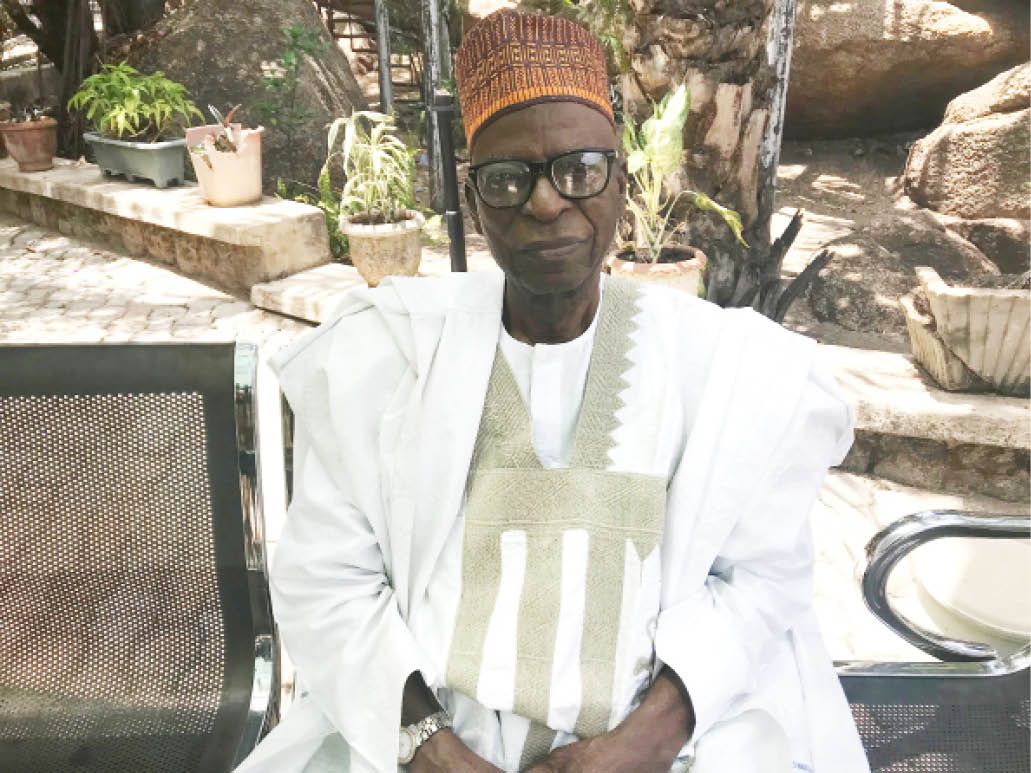
A Journey Through Nigeria’s History with a Traditional Ruler
His Royal Highness, Miskoom Yahaya Kwande, is the Longkwo of Kwo Chiefdom in Qua’an-Pan Local Government Area of Plateau State. Before ascending the throne, this 96-year-old elder statesman had a multifaceted career as an active politician, former Nigerian Ambassador to Switzerland, teacher, civil servant, and administrator. In this interview, the traditional ruler shares his perspectives on Nigeria’s evolution, tracing the country’s history from before independence to its current state, highlighting key developments and challenges along the way.
The Independence Day Celebration of 1960
You were one of those who witnessed the Independence Day celebration in 1960. How did it go?
Every part of Nigeria was celebrating in its own way. People had the opportunity to come together and make merriment. First October has now become a possibility of putting people, families back together. Another aspect of the October 1st celebration is that it allows people to showcase their cultural heritage. Participants, especially cultural dancers, adorned themselves in unique, often custom-made costumes. This celebration brought people together, providing an opportunity for smaller tribes to display their cultural prowess. I believe this cultural display was a significant part of the October 1st ceremony.
Awareness of Independence
Was there much awareness by the masses about what Nigeria was going into?
No, but people were very happy. People were very happy and whether they knew the meaning or not is another thing. It is only now that the meaning is clear, but in our days in the 60s, definitely it was not too apparent. The colonial masters used to put together schoolchildren, armed forces of different kinds, police, army to display and that used to be the ceremony. Only very few knew what it meant.
Leadership and Responsibility
For those of you who were the elite then, did you have any apprehension about whether the new set of leaders were going to manage the responsibility thrust on them?
The Britons are clever. All our colonialists were extracting what they wanted and at the same time showing love to us. I was a district officer in charge of a division, which is the area of my responsibility, I felt proud and people in the town were also happy. We were not allowed to stay in our offices more than 15 days for the 30 days of the month. You had to go and meet the people and know how they were faring; you go to a dispensary and see whether the medication is adequate, whether drugs were available. And you went to the school and the children were so proud to see you. But at the moment, everything seems to be on the computer and the telephone. If you have a telephone, you have the whole world. So, the man you are ruling is not touched to know that there is a particular person responsible for his health. People don’t.
Progress and Challenges
It’s 65 years now since independence, how in your view has Nigeria fared?
From an honest mind, we have progressed. I remember that there used to be only one secondary school in the whole northern Nigeria that the government was controlling. Then they had two secondary schools. My brother, we are talking about one million secondary schools now. I’m not talking about the standard of what is now being taught. But I definitely must tell you that we have progressed. This telephone is progress. Even the quality of our food is progress. Solar light is progress. Up to a small village, I don’t know if anyone who is true to himself or honest to himself, can say that Nigeria has not progressed. Certain things have gone back, deteriorated, like transportation in the sense of railways but I must tell you that we have progressed.
Unity and Leadership
You were one of those close to the Sardauna, can you recall the efforts he made towards uniting the North?
Our leaders then had different minds altogether, not only Sardauna. They had different minds of ruling. They came with the influence of honesty from the British, in the sense of not cheating who you are ruling, who you are governing. They inherited that. And we that were civil servants assisting them, believe me, we came with that fear. You didn’t need somebody to stand by you. We had what you call auditors in the midst of officers. You could not talk about corruption to the officials of the government. Unlike now that it is so rampant, even in your households, corruption is nothing anymore.
Post-Coup Situation
What was the situation like in the country after the January 1966 coup?
Well, we started deteriorating. That is the bad thing about us. You know, that reminds me, when I took the wrong way to go to my village on holiday, with a difference of only about 30 kilometres, I was queried that I was displaying dishonesty. And I had to prove that the bridge on the shuttle way was broken and it was published in the New Nigerian. And that’s why I escaped being sacked from the service. That honesty is no longer there. The traditional rulers are not making things better in the sense that the more you steal, the more they honour you. And you know, when you are made, when you are given a title, a royal title, then everybody in the village will testify that you deserve it. And the honour that the British used to give us, KBE, you were looked at as a wonderful human being who deserved the Queen’s honour. Now it is, who do you know? If you are not careful, you will find a neighbour that is well-connected getting a higher honour than you. And you wonder what it is that makes him different from you; but it’s just a connection.
Military Intervention and Unity
Nigeria has experienced coups and counter coups; would you say the intervention of the military helped in uniting the country?
The intention was to unite. But then the players missed the point when it appeared that a tribe were the players. That was when they missed the point about uniting this country by the military coup. But the way the late General Muhammadu Buhari and his deputy went about theirs was another thing. The intention of the military to me was good because corruption, elements of differences between tribes were beginning to gain ground. They wanted to stop it. When your country is going down the drain, and you are in the military, and you think that you can arrest the trouble, and not make things worse, then I will support it.
Overcoming Challenges
The challenges confronting Nigeria since 1960 like insecurity, corruption and mutual suspicion on ethnic basis are still there. Can the country overcome these problems?
Yes, the challenges can be overcome. What we need in this country is discipline and a change of attitude. Once people change their attitude and become disciplined, there is hope. I still believe that if people want something, they can do it because in the past, Nigerians were very disciplined and trusted.
Role of Traditional Rulers
Should traditional rulers be given constitutional roles?
The set of traditional rulers we have today is not the same as what we had in the years back because most of them are graduates. They know what they are doing. They come in just because they are honouring their tradition. Why do you allow the traditional rulers to remain as part of your constitution without action, without responsibility? They can prevent insecurity because they know who is who in the village. So, once a role is given to them, they would help significantly in reducing insecurity in the country.
Missing Opportunities
Where did Nigeria miss it?
The only thing that I feel is not being done by the government is the question of tax payment. I don’t know why the government of Nigeria seems to neglect head taxes, you know, individuals paying two naira, or six naira, or one naira. It is a matter of pride. When you now say you take it away from them because you now have oil money, you are taking away the patriotism of a citizen of Nigeria because he likes challenging the government by telling it that it is using the money and not doing much. An ordinary man on his farm will turn around and if he sees somebody passing, he will think, look, they are using their money uselessly. They don’t seem to care because he has paid five naira in a year. But when you take it away from him, the responsibility of citizenship is no more there. So, if I am to advise, I would like paying head tax to be made compulsory and organised properly. That will help even the population of our country.


