
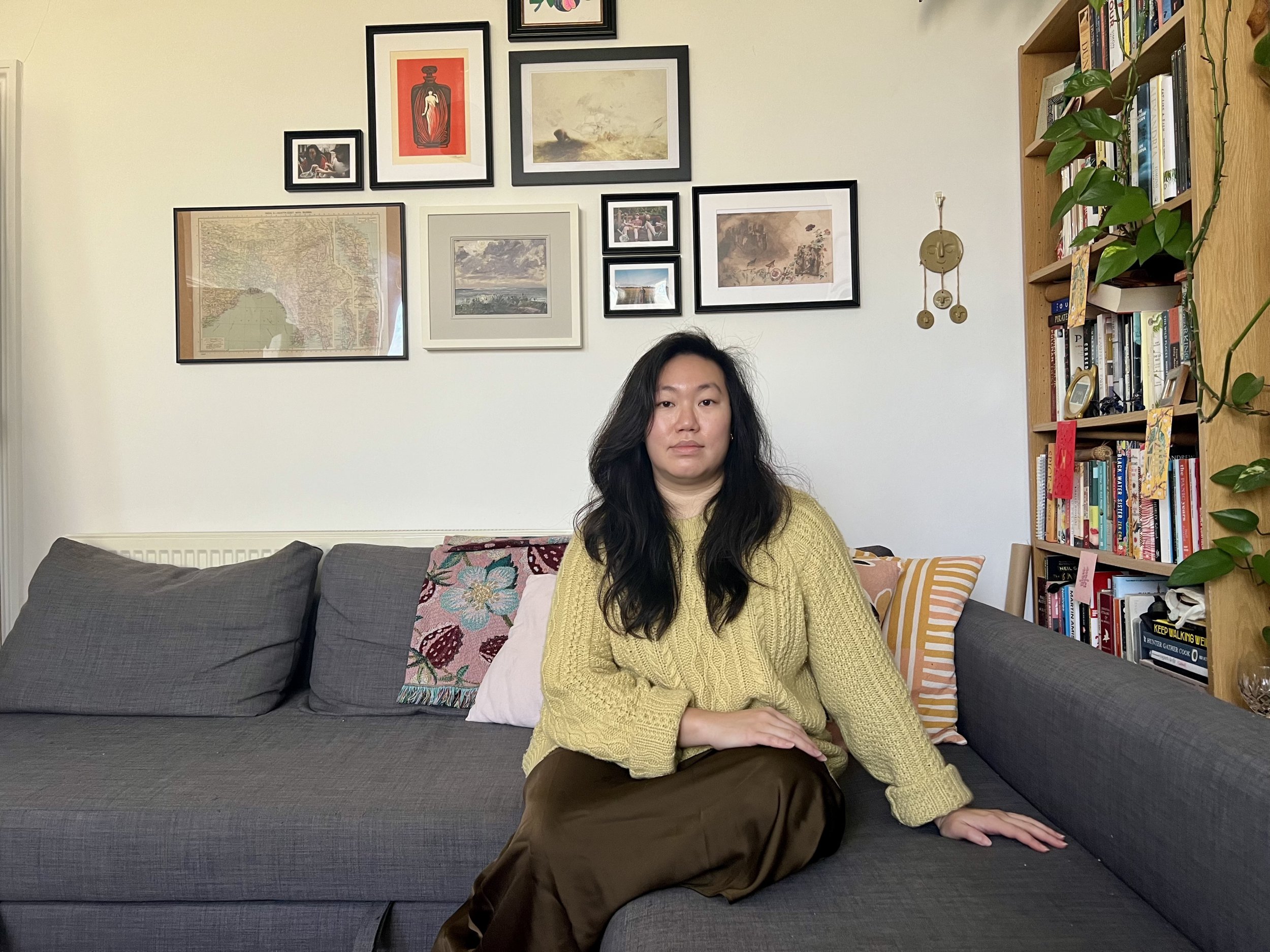
Up until she became pregnant with my older brother at the age of 31, my mother was an active, outgoing and outdoorsy person. She used to DJ in nightclubs in her home of Kuala Lumpur, spend time soaking up the sun on the tropical beaches of Malaysia, go on hikes and work out outdoors with my father in the early days of their relationship.
Starting a family was always something she wanted to do, but no one could have predicted just how much having children would alter the course of her life. Yes, there were all the changes one would expect – sleepless nights and the loss of spontaneity – but my mother also underwent a seismic change in her body from the moment of my brother’s conception.
The massive hormonal shift, so crucial to support a growing baby in pregnancy, triggered a strange reaction in my mum’s immune system and brought on a totally new allergy. About halfway through the pregnancy, she found she had become allergic to the sun.
UV light allergies are not uncommon, affecting up to 10 to 20 per cent of the population in western countries. But for my nature-loving mother, it was a shock. She could no longer spend longer than five minutes in the sun without her skin breaking out into a hot, itchy rash with red, blister-like hives; before, she would turn a beautiful burnished bronze colour in the sun. They appeared anywhere the sun touched her skin, on her face, shoulders, arms, and legs.
Fluctuations in the hormones estrogen and progesterone during pregnancy are known to heighten skin sensitivity to sunlight, making women more susceptible to sunburn and heat rash. These same hormone changes can also exacerbate existing allergies or lead to new ones, although for most people, pregnancy-induced allergies clear up in the weeks after birth once hormone levels return to normal.
But experiences vary and for some, like my mother, now 67, the allergies persist after birth (only the menopause seems to have brought some respite for mum) and scientists haven’t found the answer to why. So, my mother withdrew indoors, where sunlight through windows didn’t trigger reactions, and her life changed exponentially – not only did she now have children to look after, but she could never return to doing the things she loved before.
Read Next: I judged Katherine Ryan for working weeks after giving birth – I was a hypocrite
More people than ever are sharing their candid experiences with pregnancy, childbirth and parenthood on social media – particularly the brutal side of it all. One TikTok user named Yuni has even designed a master list titled “Yuni’s Pros and Cons List of Having Children.” The list consists of 350 “cons”, including “[the fetus] can try to stand while inside you and it feels like knives against your body’ and ‘fetus can scratch the inside of your uterus.”
The reality of pregnancy and childbirth was also laid bare on TV with shows like Channel 4’s One Born Every Minute. While it played a major role in lifting the curtain on just how difficult, emotional and rewarding labour is, it also sometimes showed how dangerous and downright brutal it can also be.
More recently, painfully honest accounts from anonymous parents confessing how much they regretted having children have proliferated on Reddit. Not to mention, there has been more coverage of high-profile pregnancy illnesses, like the Princess of Wales’ hyperemesis gravidarium, the severe pregnancy-induced nausea and vomiting that hospitalised her. Last year, a friend of mine also struggled hugely with HG. I felt so incredibly sorry for her.
Although all this plays on my mind, for me it is my mother’s experience that has mostly informed my decision to be child-free.
I was in my 20s when I first thought about being child-free for the rest of my life. I couldn’t see myself being a parent – the thought of pregnancy and being so completely powerless over the changes in my body terrified me then, and it still does now. I also loved my freedom and the ability to go to the movies or on holiday without thinking about childcare. Not to mention, financially, having a baby seemed unaffordable – this, to be honest, is still the case.
Now that I am in my early 30s, I’ve spent this past year reexamining this decision. I wanted to give myself the opportunity to change my mind. But it has occurred to me that I may have tokophobia – the fear of childbirth and, by extension, pregnancy. If I close my eyes and imagine holding a positive pregnancy test, the feeling that spreads is not of excitement, but terror.
Picturing myself spending any time at all with sickness or nausea also brings me nothing but anxiety, as I have a debilitating fear of vomit, emetophobia. Then, imagining my body expanding and my organs shifting makes me think of Cronenbergesque levels of horror.
I know all of this sounds extreme, but what happened to my mum was extreme. Her allergy was especially difficult to deal with while living in a tropical country, where the high humidity exacerbates the rashes.
I never knew the outdoorsy version of my mother, and have spent my whole life helping her hide from the sun. Planning events based on how much shade there was, buying her expensive suncream because she could only cope with certain textures, and foregoing trips because it was too sunny. The allergy dominated her life, and therefore the rest of the family’s, whether she liked it or not.
As more women share their honest experiences of motherhood, critics say that it is irresponsible because it puts non-mothers off – and by extension, is contributing to a declining birth rate in countries like the UK and the US. But I am grateful for knowing what I know about how my mother’s pregnancy threw the trajectory of her life into a tailspin. I feel much better informed to stick to my decision to remain childfree.
I am now just a year older than my mother was when she had my brother. I can only try to put myself into her shoes and imagine what it was like to be so full of joy for the child she brought into the world, yet so full of mourning for the life she left behind.
At this point, she wouldn’t even know the full extent of how this allergy would change things for her. Her experience has made my decision an easy one and having gone through it herself, my mother supports me. If that makes me selfish, then so be it.


