

It’s hard to pinpoint the exact moment I realised I wanted to leave London. It was the city that moulded me: where I went to school, cut my teeth as a journalist, survived and thrived in grubby flat shares, made friends for life, fell in love.
Every street corner had a visceral memory attached – somewhere I’d doubled over in laughter, cried or been violently flung off a Lime bike. There was a time I insisted with all the certainty in the world that it would be my home forever.
But this summer, after 29 years in the UK, I left London for Lisbon, for good. Having a Malaysian, part Portuguese and part Japanese heritage, I had always been drawn to Portugal, a feeling that intensified last year after spending two weeks hiking its coastline, marvelling at its rugged beauty and friendly locals.
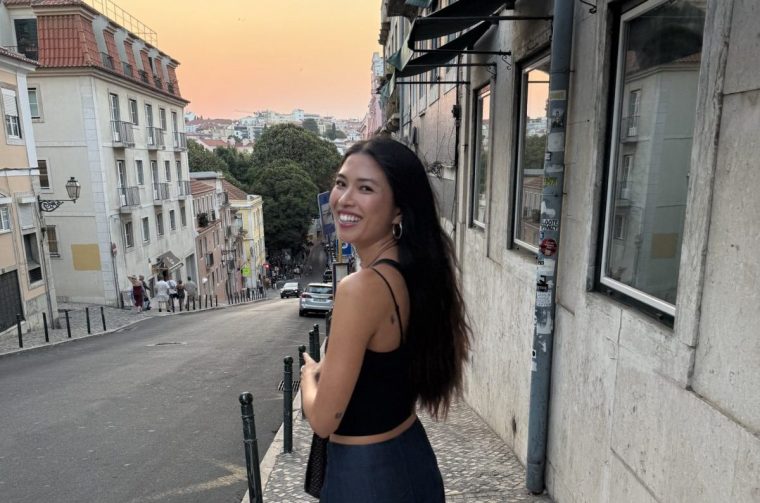
Every time I touched down in Lisbon, with its cobbled streets and pastel-coloured buildings, Bougainvillea tumbling over every wall, my shoulders would go slack. I felt lighter here, like this was where I was meant to be. Now I can say I’m the happiest I’ve ever been and I’m just one of many Brits that has taken the leap in recent years.
Some 174,000 16- to 34-year-olds left the UK in the year to March, show figures released by the Office for National Statistics (ONS) on 27 November. “This ‘brain drain’ will only get worse after Labour’s punishing Budget this week,” said Shadow Home Secretary Chris Philp. Britain is seeing “nothing short of an exodus of our young people”, added Shadow Business Secretary Andrew Griffiths.
Earlier this month, the ONS admitted that it had been systematically undercounting British emigration in recent years. After revising its methods, it now estimates around 650,000 British citizens left between 2021 and 2024, around 344,000 more than previously estimated.
The reasons? Emma Schubart, data and insights manager at the Adam Smith Institute, says they are frequently cited as cost of living, with an emphasis on housing. Wages, especially early-career wages, haven’t kept up with rents, energy bills and food prices.
Schubart says ASI’s findings show that Australia, New Zealand, Canada, the US and the UAE, are the biggest draw to highly skilled young professionals working in healthcare, teaching, tech, finance, academia and more. “The people leaving tend to be working age, especially 25 to 44, and are the most able to act on that feeling that you don’t have to endure high-cost, high-tax, low-reward Britain. You can go to other countries that offer a clearer route to a good life.”
In recent polling of 18-30-year-olds, just under 30 per cent are either seriously considering emigrating or actively planning it. “A lot of them said, very bluntly, they don’t see a long-term future for themselves in the UK,” Schubart says.
In my work, writing The i Paper’s Expat Files series, I have spoken to numerous British expats, who have moved to Spain, France, Denmark or further afield to Brazil, Australia, South Africa and many more. This is why I – and many others – have chosen to leave.
British weather
There are so many things I love about the UK: the dry humour, pub culture, nightlife, the buzzy food and arts scene. But one thing I do not miss: the endless grey skies, merciless winters, and going to work and leaving work in darkness. I felt constantly exhausted, fell ill frequently and had eczema all over my eyelids every time the temperature dropped.
Portugal is one of the sunniest countries in Europe, averaging between 2,500 and 3,200 hours per year. Yes, the summers can be sweltering (it was pushing 38 degrees celsius when I arrived), but the warm evenings and guaranteed sunshine has made a massive difference to my energy levels, mood and overall quality of life.

Julia Neville, now living in Valencia, says: “For me, the weather is the biggest sell, the opposite to England’s drab never-ending winter. We get 300 days a year of blissful sunshine and blue skies, ideal for enjoying the nearby beaches, only a 35-minute cycle from my front door.”
Many of the expats I’ve spoken to cite weather as being one of their main motivations for leaving, and say now they have been exposed to a life with a warmer climate they could never go back. Also living in countries with a bigger focus on being outdoors, their skin or health problems have cleared up, and they are happier, more social and fitter.
Backbreaking cost of living
It’s normal to feel the pinch living somewhere like London, but in the last five years, everything suddenly felt so absurdly expensive. In my friendship group, we would all watch over half our wages instantly disappear on rent, council tax and bills. “What’s everyone going to spend their two pence on this month?” we’d joke.
Everyone worked hard and had good jobs but we all were constantly stressed about making ends meet. In the winter, we would laugh about layering three jumpers or seeing our breath in our flats from the cold because heating was so costly. It’s sad that this grin-and-bear-it attitude is so normalised.
In Lisbon, I split my €1,800 (£1,580) rent equally with my partner. There is an ongoing housing crisis here and rents are soaring, so it isn’t too far off London prices. But here, it gets us a two-bedroom, two-balcony flat in the equivalent of Zone 1. What makes the biggest difference is that everything else is relatively low: bills, groceries, beauty treatments, eating out and alcohol, hobbies, travel, childcare. It feels easier to enjoy life here.
Other expats’ experiences mirror my own: since leaving the UK they have been able to come out of survival mode, get more bang for their buck and not worry so much about being squeezed by mounting debt or finances.
Hattie MacAndrews, now living in South Africa, says, “The cost of living is remarkably cheap in comparison to the UK. For about £2,000 a month you could move into a big four-bedroom house with a swimming pool and a sea-view. Nursery care costs around £15 a day.” All this means she has been able to return to work, after becoming a mother, at her own pace. “It gives me the time and space I need each day, so that I can be the type of mother I’d like to be – calm, happy and relaxed.”


Seeking a better work-life balance
In London, everyone I know is on edge, overworked, underpaid and stressed. I loved my job and the people I worked with, but the packed commute (an hour each way) on a stuffy train and the fluorescent lights of the office depressed me. Every day started to feel like Groundhog Day and I could see exactly what the rest of my life looked like. I had a vision of me, mid-50s, swaddled in a puffer jacket cramming under someone’s armpit on the central line until retirement. The thought sent a shudder through me.
Here, both me and my partner work remotely, pretty much the same more or less as we did in London, but the difference now is that when we clock off, the sun is shining – and it’s still warm enough to dry your clothes outside (even now in late November).
Emma Burstow, now living in Denmark, has found her new work culture life-changing. “At 3pm on a Friday afternoon, all the workplaces close early for ‘Friday bar’, which is where colleagues get together and have a beer before they go home,” she says. “There’s much less presenteeism. If you are at your desk beyond 4pm, people will be wondering if you can’t do your job or if you need help with your workload.”
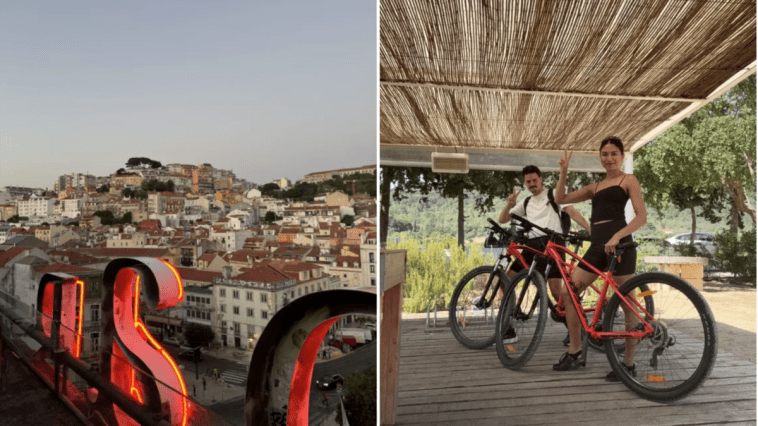
This means you end up simply living more. Me and my partner make the most of living in a walkable city where it takes around 15 minutes to get to our gym, shops, restaurants, bars. We also have incredible beauty – beaches, mountains, green spaces – pretty much on our doorstep. At the weekend we might try a new run club along the Tagus river, play padel, go to the beach and have a surf lesson, or it’s never far on public transport to explore somewhere new.
Within 15 minutes of hopping on a short train ride (around €4) or taking an Uber (around €15 depending where you go), we can be splashing around in the freezing Atlantic, later warming ourselves up on the beach with a €2 bottle of vinho verde (wine is dangerously cheap here), feeling the scorching sun evaporate the saltwater off our skin. Life has really opened up.
Worrying about crime
Every single week in the UK, a friend would WhatsApp saying they had their bag snatched, their house broken into, a bike nicked. I once fell on my face on Exmouth Market running away from moped drivers who practically drove into me trying to get my phone. Living in London often felt like existing in a state of imminent threat, waiting for something bad to happen, to you or to loved ones.
Neville, now in Valencia, felt the same. “Living in Hackney often felt unsafe and like everyone was always on high alert,” she continues. “Once, on the way home, I had to duck behind a car to dodge an exploding firework as warring gangs shot them down the street at each other. Another night, me and my flatmates huddled in the bathroom at 2am after men in balaclavas tried to force their way into our neighbour’s house. Just five days later, police tape cordoned off the park at the end of the road – someone had been killed.”
It’s not to say Portugal is crimeless, but it is one of the safest countries in Europe and the world. I walk to the gym in the darkness and don’t think about popping my headphones on. I don’t get catcalled or stared at or groped on public transport. Children play in parks at night while their parents sip wine at nearby quiosques (public huts that sell coffee, snacks or alcoholic beverages). My body no longer feels like it’s in constant fight-or-flight mode.
Overwhelming racist sentiment in the UK
I came to the UK from Malaysia when I was four years old in 1995, first living in Manchester and then moving to Edgware in London. London had always felt incredibly diverse and open-minded, but with Brexit something shifted. Racist beliefs that had always existed now had nationwide endorsement and was solidified by policy, emboldening discrimination and hatred.
During Covid, with the rise of anti-Asian prejudice and the keenness to scapegoat minorities, a racist incident left me suffering with intense panic attacks, unable to leave my then-boyfriend’s flat. It didn’t matter that I had lived here all my life and had a British passport. Each incident compounded the realisation that in the UK I was “other” and probably always would be.

“Growing up mixed race in the UK,” says Burstow, currently in Denmark, “not a month would pass without a stranger asking me where I was ‘really from’. I would think, ‘OK, I can tell you the country that my grandparents moved here from but I’ve never been there, so what’s the point?’ It was exhausting. I was British, yet no one believed me.”
Every country has its problems, including Portugal. A right-wing party is gaining traction and has recently upped the citizenship period from five years to 10, to match many countries such as the UK. But Lisbon is incredibly diverse, and I feel like I can just get on with my life here without constantly thinking about my race.
Seeing British news reports this summer of violent anti-immigration riots, the Home Office reporting hate crime has risen in England for the first time in three years, St George’s flags strewn everywhere and Health Secretary Wes Streeting warning of the return of “70s-style ugly racism in the UK”, all makes me think I’ve made the right choice.
A better family life and community
While I don’t have children yet, at 33, it’s something on my mind especially since I interview so many British expats with families for work. Most of them talk about struggling with family life in the UK, whether it’s down to the back-breaking cost of childcare, archaic presenteeism or rigid company structures forcing mothers out of work – all major factors pushing them to leave.
Many, now in countries such as France, Brazil, Denmark and Italy, have told me they believe they are now giving their children the best lives possible in countries that are safer, more outdoorsy and with less exam pressure. An improved sense of community also allows them to be more relaxed and present parents.
Burstow feels like she is “100 per cent a better parent” in Denmark. “I have time to show up for my kids, and I don’t have to balance whether I’m going to be amazing at my job or a present and attentive mother,” she continues. “There is so much less stigma attached to me being a working mum. In the UK, the school gate was hell for me because I was never there, and the other mums always made sure to tell me so.”
In search of a slower pace of life
One of my favourite things in Portugal is the relaxed culture and slower pace and – for better or worse – this seeps right down to everything. So yes, Portuguese bureaucracy is excruciatingly slow and frustrating, but I’m learning to go the flow rather than rage against it. I’ve accepted it’s just the way things are.
I love the friendliness and warmth that you experience on a daily basis from strangers. People care about you. Neighbours bring you slices of cake; you might meet someone once and they’ll invite you to their house for a cup of tea. Someone who works at the gym will be genuinely rattled if you’ve been ill and they haven’t seen you in a while. Many expats share this sentiment, telling me that in leaving the UK, they have been able to forge strong communities built on care and duty.
Eleanor Meireles, living in Brazil, now spends her time constantly outdoors. “We spend our weekends down at the river, where there are restaurants and bars by the shore. Often we might take a little canoe and go to the beautiful surrounding beaches, or go hiking,” she says. “If we’re not out, we’ll be in the garden, round the fire or lying in the hammock. Brazil is our home now, we can’t imagine being anywhere else.”
Just as many expats reiterate, there are so many things I love about the UK and I miss my friends and family, but it’s not enough to make me want to go back. I’m also not blind to all the problems Portugal has. Like any other country, it comes with its own unique challenges. But right now, as the late November sunshine streams through the window, warming my face, I know I wouldn’t change a thing about my new life.


