
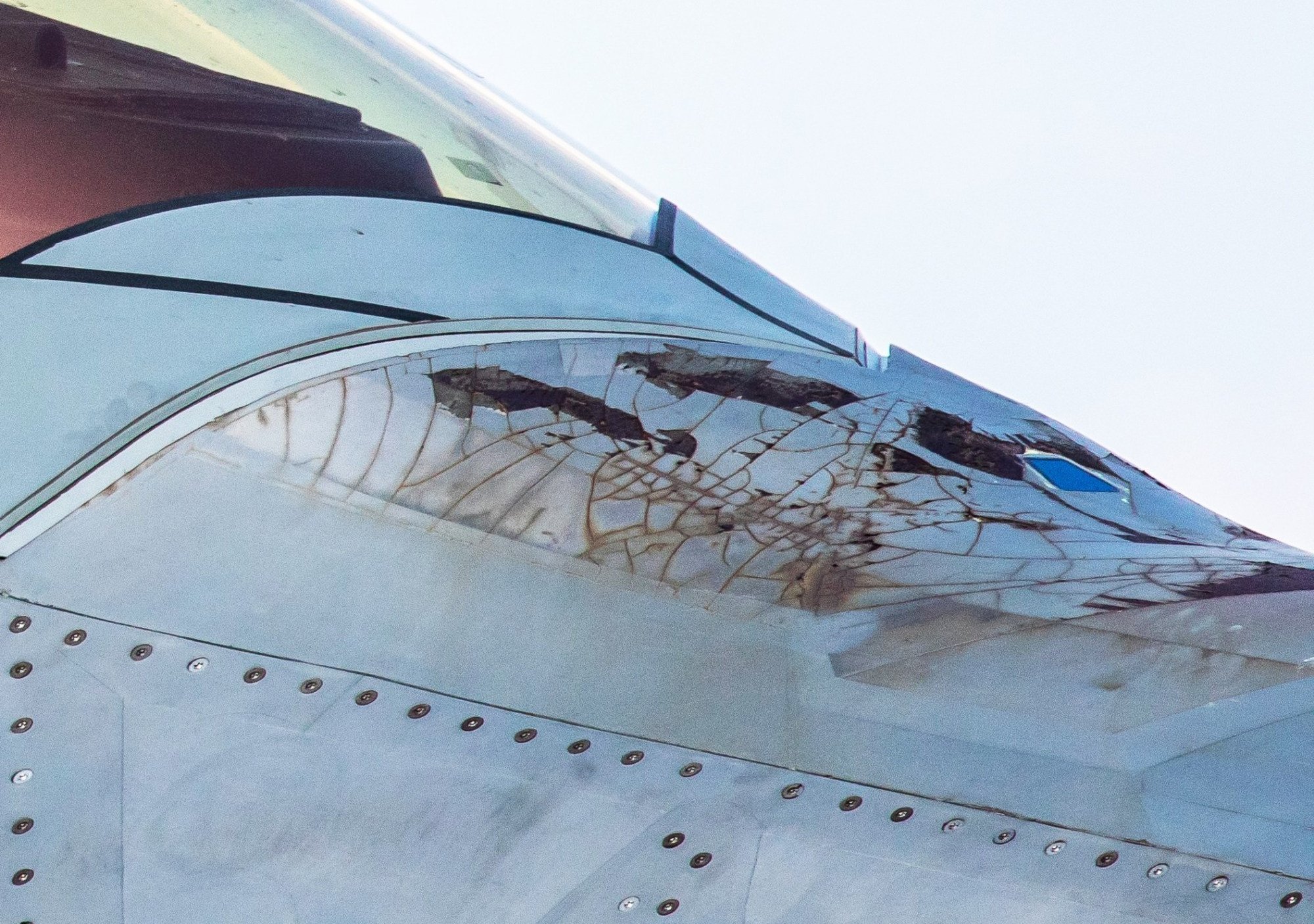
As the US faces issues with aging radar-absorbent materials, China has turned to historical approaches for its advanced solutions.
As U.S. stealth aircraft such as the F-22 Raptor face issues with peeling radar-absorbing materials—a flaw compared to “molting cicada wings”—China asserts it has discovered a traditional remedy for this problem affecting its fifth-generation fighter jets.
Recently, defense industry experts have disclosed information indicating that advanced stealth technology may
technology
aboard China’s smooth-skinned
stealth fighters
The durability might be attributed to a 3,000-year-old textile advancement: the skill of silk jacquard weaving.
Contemporary stealth airplanes, including the
F-22
and
F-35
Relies on multi-layered coatings to bounce back radar waves. However, these materials deteriorate quickly when exposed to strain.
Are you looking for insights into the most significant issues and global trends? Find your answers here.
SCMP Knowledge
Our latest platform features handpicked content including explainers, FAQs, analyses, and infographics, all provided by our acclaimed team.
U.S. maintenance records indicate that even small scratches caused by high-speed flights or dust storms in desert environments can significantly reduce stealth effectiveness, necessitating repeated applications of protective coatings.
radar-absorbent materials
(RAM) approximately every three weeks at costs surpassing $60,000 per flight hour, as reported by certain US media outlets.
Moreover, in areas such as Florida, humidity intensifies adhesive problems, whereas corrosion at seaside installations additionally undermines effectiveness.
Chinese aerospace engineers have frequently criticized these temporary fixes. Rather, they aimed for a fundamental solution—one integrated into the very fabric of the materials.
As reported in a study released last month in the Chinese scholarly publication Knitting Industries, the solution hinges on a two-layer composite material modeled after
Han dynasty
(206 BC-AD 220) Jacquard looms – a weaving method for silk that dates back to around 200 BC.
By incorporating conductive threads into a warp-knit “double-layered jacquard” design, scientists from the China Aerospace Science and Industry Corporation (CASIC) along with Tiangong University developed a fabric that can absorb up to 90.6 percent of radar waves within the 8-26 GHz range, surpassing traditional coating methods.
According to Professor Jiang Qian’s research team, this material represents a blend of traditional patterns and contemporary electromagnetism.
Similar to how traditional jacquard weavers utilized “flower books” akin to punch cards for encoding complex patterns, Jiang and her team incorporated radar-evading structures right into the fabric’s structure. The quartz fibers serve as an insulating foundation layer, whereas stainless-steel threads generate resonating circuits that convert electromagnetic waves into thermal energy.
Each conductive thread is precisely positioned to direct and capture signals, similar to how ancient weavers would arrange silk threads to illustrate dragons or clouds, as stated by the
researchers
.
Laboratory tests highlighted significant mechanical benefits. It was discovered that the composite can endure up to 93.5 megapascals of longitudinal tensile stress—which surpasses the resilience of conventional coatings by over tenfold. This enhanced toughness originates from the knitted material’s anisotropic architecture, wherein the load-carrying threads are oriented parallel to each other.
aircraft’s
stress vectors, reflecting the axial strength found in Han Dynasty textiles.
The Smith Chart, which is used for electromagnetic analysis, further demonstrated nearly perfect impedance matching in the longitudinal direction, enabling
radar waves
to delve into rather than mirror, as per the study.
Archaeologists link Jacquard’s roots back to the looms of the Shang Dynasty (1600-1046 BC), where craftsmen used manual “multi-heddle” systems to create intricate geometric designs. These mechanisms advanced significantly during the Han period, featuring as many as 120 heddle rods, evolving into complex devices. This pioneering technology was later embodied in the world’s earliest known Jacquard weaving apparatus discovered within the Laoguanshan Tombs near Chengdu.
A scholar from Beijing specializing in scientific history mentioned, ‘The Han dynasty looms were not solely used for producing luxuries,’ ” stated the source anonymously because of the sensitive nature of the technology involved.
Just as early binary computers stored weaving codes in physical memory, today’s military engineers appear to have rediscovered this approach.
More Articles from SCMP
Why China might benefit from the escalating tension between Trump and Zelensky as divisions widen within the Western alliance.
Hong Kong’s financial industry set to gain from AI advancements, China’s openness, and growing Asian wealth: think tank
China’s optimism regarding its real estate sector is justified, though caution is advised.
Hong Kong shares plunge to nearly a two-week low amid concerns over trade wars sparked by Trump’s tariffs.
The article initially appeared on the South China Morning Post (www.scmp.com), which is the premier source for news coverage of China and Asia.
Copyright © 2025. South China Morning Post Publishers Ltd. All rights reserved.


