

A Home in Peril: The Fight to Save a Historic Detroit Landmark
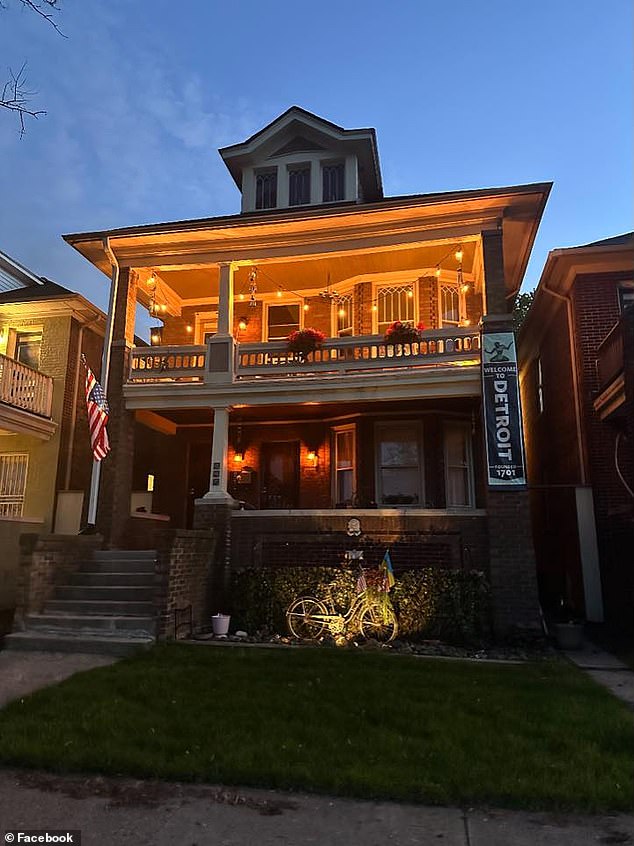
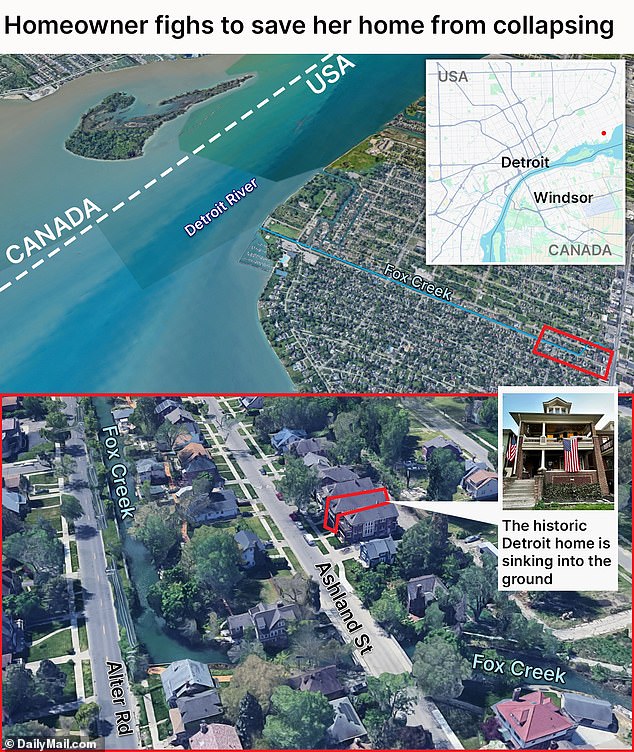
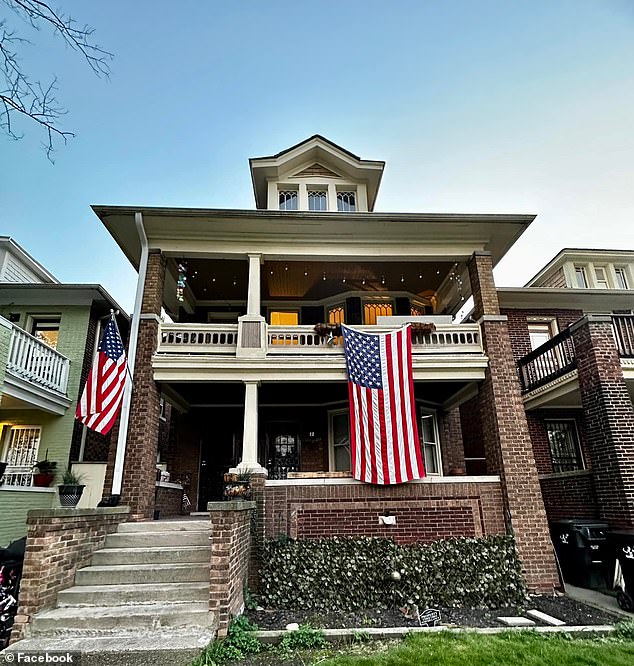
Kimberly Holt, a Detroit resident, is on a mission to save her century-old home from collapse. The 1917 Jefferson Chalmers house, located at 847 Ashland in Detroit, Michigan, was once a Prohibition-era speakeasy and has since become a symbol of the city’s rich history. However, it now faces a dire threat due to underground flood-related issues that were allegedly not disclosed when Holt purchased the property.
The home was built near Fox Creek Canal and has a storied past. According to Holt’s GoFundMe page, the house was designed for entertainment, and she often imagines which historical figures may have walked through its doors. The home even appeared on the Discovery Channel, highlighting its significance as a historic landmark.
Holt bought the home on Halloween 2022 and quickly discovered the underlying problems. Water surged into the basement, causing irreparable damage, mold growth, and uneven floors. The bathroom collapsed, forcing her to move out for nearly eight weeks. “The workload has been immense,” she told FOX 2. “If I had not stayed, many people told me just leave, file bankruptcy, lose your down payment and leave. But I couldn’t do that.”
A Community Effort
Holt did not want to abandon the home, fearing that an empty house would negatively impact her neighborhood. She knows all too well what happens in Detroit when a house is left vacant for years. “It destroys the neighborhood. It’s horrible,” she said.
Her efforts to save the property are not just for herself but also for future generations. “Detroit and its people have lost so much of our collective history already,” she wrote on Facebook. “This home was a rental for so many decades with the back part of the basement shut, I just think the speakeasy became hidden history. I’d like to share it with everyone.”
Holt invested $100,000 of her own money to hire an attorney and fight legal battles to hold those responsible accountable. A Michigan court acknowledged the seller fraudulently misrepresented the property’s condition, according to her GoFundMe. However, the awarded judgment was “unexpectedly low,” and a recent motion to postpone the payment has added to her struggles as the home’s condition continues to decline.
Restoring a Piece of History
Holt’s goal is to restore the home and convert it into a museum that will serve as a hub for artists, history enthusiasts, and tourists. “This house isn’t just mine—it’s one of the oldest in the neighborhood, part of a trio of historic sister homes on Ashland,” she wrote. “If it collapses into the sinkholes forming beneath it, the two adjacent homes may fall with it. That’s not just personal loss—it’s a cultural and architectural tragedy.”
To help with this exhausting battle, Holt created a GoFundMe campaign. The cost breakdown includes $85,000 for basement and sinkhole repairs, $275,000 for full house stabilization, and an unknown cost to restore the basement speakeasy. “I have all the paperwork, quotes, and documentation. This is real, urgent, and solvable—with your help,” she wrote. As of now, she has raised just $300.
A New Chapter
In addition to her efforts to save the home, Holt has started a new job teaching art at the College for Creative Studies, which she called a “significant step forward” in her career. She aims to save this space as “a source of inspiration, learning, and discovery for all of Detroit.”
“This home is a living archive, a symbol of resilience, and a place where history, art, and justice converge,” she wrote. “I bought this home years ago, unaware of its profound history and hidden secrets. Now, it’s in critical disrepair and desperately needs restoration to protect its historical significance.”
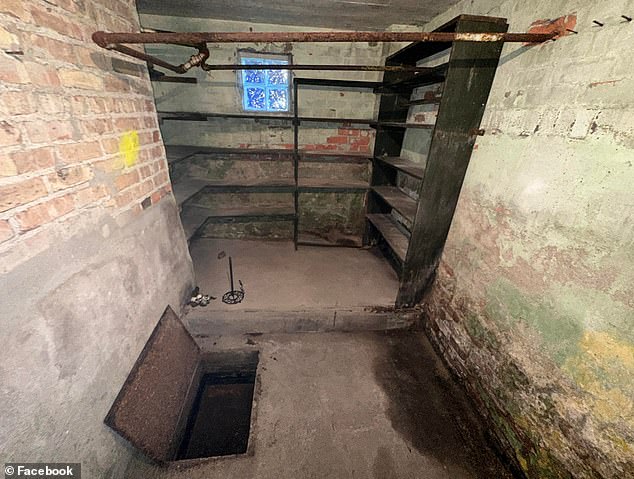
Holt has worked with historians and librarians to uncover these hidden secrets about the century-old home. In a Facebook post, she described the high-quality condition of the old speakeasy basement. The speakeasy had premium amenities for its time, including art-deco sinks and fixtures, redwood veneer arches, a highly functional kitchen and bathroom, and even a gas fireplace.





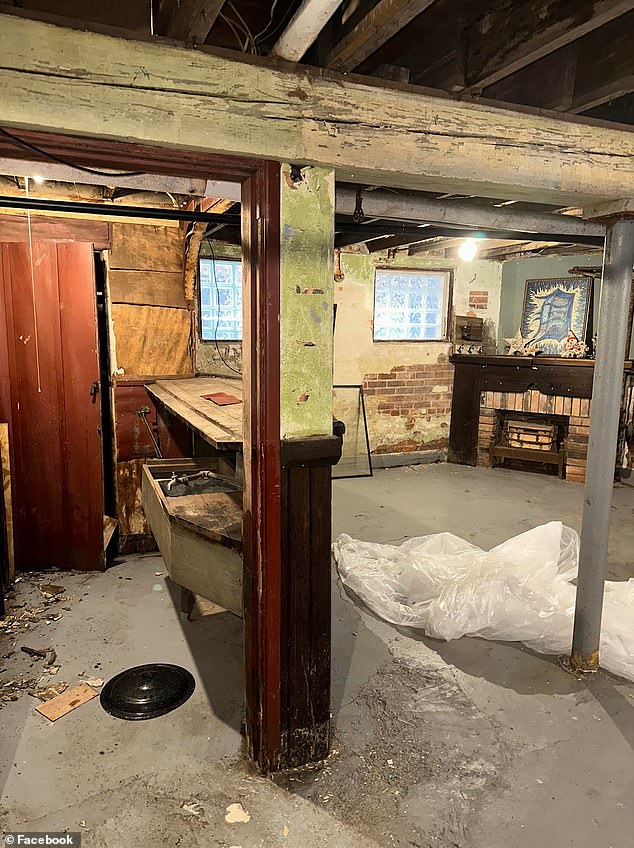


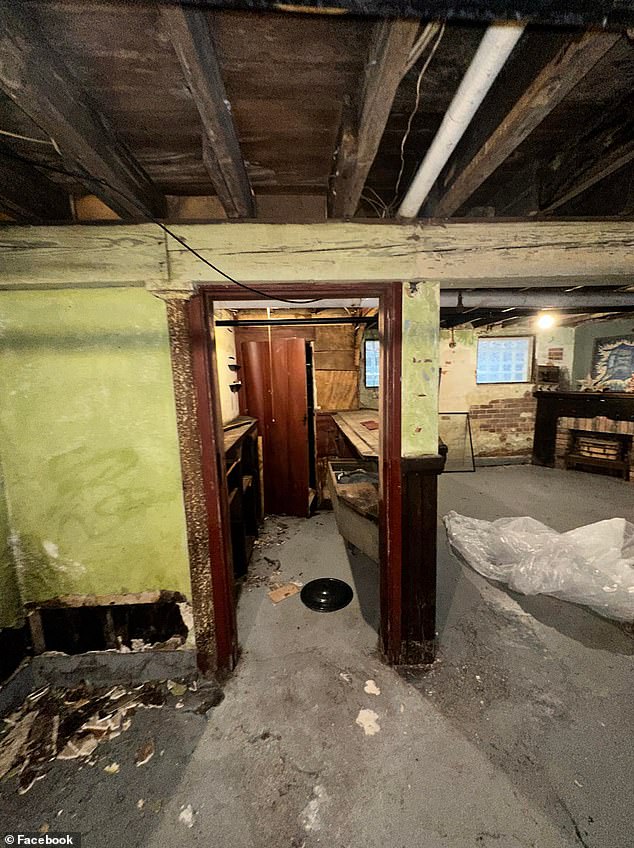


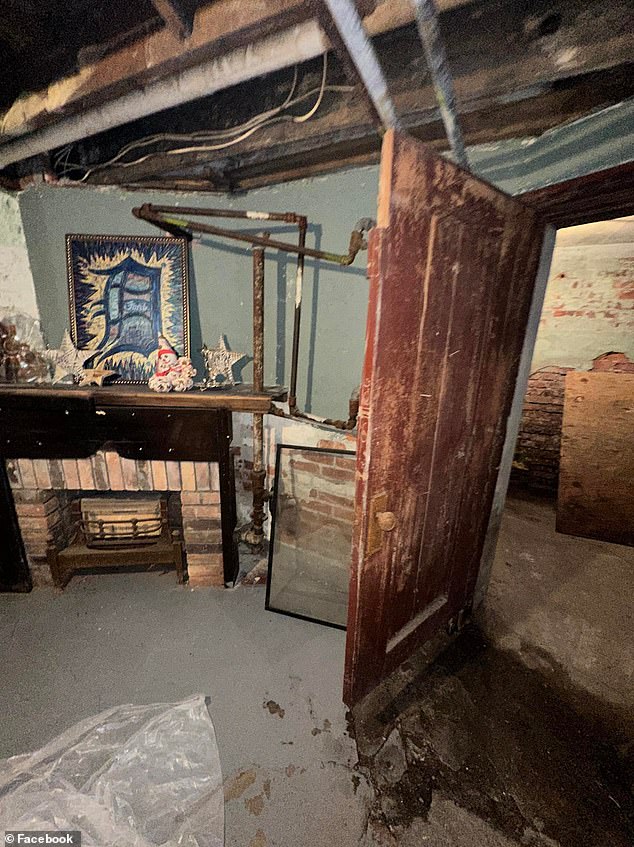
The home’s original address took Holt and the librarian a long time to find. Detroit underwent a massive house renumbering in 1921, but this house was a “ghost house.” They couldn’t find an address until after the Prohibition era ended.
Prohibition began in Michigan in 1917, the same year Holt’s monumental home was finished. Michigan started Prohibition two years earlier than the rest of the country. The law was officially revoked in 1933. Bootleggers smuggled large quantities of alcohol across the Detroit River from Canada, with some historians estimating the Detroit River crossing was responsible for 75 percent of all smuggled alcohol into the US during the time.
Holt plans to continue fighting to save her sinking historical home, so another abandoned home isn’t left vacant in the neighborhood. In the past, Detroit has had wide swaths of vacant lots, cracked sidewalks, and abandoned neighborhoods that made it an urban explorer’s paradise. The city was populated by hundreds of abandoned facilities that were stripped of their former glory: churches, ballrooms, children’s centers, schools, train stations, and hospitals.
Modest properties that were once loved family homes in a bustling city had smashed windows, grime-covered interiors, and exteriors coated in vines. They began to fall to rack and ruin in the 1940s when the US city became trapped in a cycle of residents leaving, loss of tax revenue, and cuts to city services.
It came just years after Detroit grew rapidly thanks to auto factories and industrial jobs, but when these moved to nearby states, the population went with them. This city was once in such bad shape it was forced to declare bankruptcy. Now, it is experiencing somewhat of a miracle.
Detroit once had $1 homes for sale two decades ago. Now, it’s being reborn as an affordable hotspot with booming job and housing markets. Restaurants and high-end shopping have followed, and long abandoned homes that lined the city’s streets have been demolished, with modern apartment buildings taking their place.
The major Michigan city, the birthplace of Motown, home to rapper Eminem, and the heart of the American automobile industry, is on the up.


