US Military Warns of ‘Devastating’ Response to Iranian Attacks in the Strait of Hormuz
The US military has reiterated its commitment to protecting commercial shipping from potential Iranian attacks in the Strait of Hormuz. However, officials emphasized that the ceasefire remains in place despite rising tensions in the region.
Earlier, Iran’s lead negotiator warned that the country is prepared for a standoff in the Strait of Hormuz. World leaders have criticized an Iranian attack on the Fujairah oil hub in the UAE on Monday. Notably, Iran has neither confirmed nor denied the attack.
The United Arab Emirates (UAE) reported that its air defenses are actively engaging with Iranian missiles and drones. The UAE’s Defense Ministry shared updates on social media, mentioning the sounds of interception of ballistic missiles, cruise missiles, and drones. On Monday, the UAE reported attacks from Iranian missiles and drones, including at an oil facility.
US Defense Secretary Pete Hegseth stated that the ceasefire with Iran was still in place, despite reports of strikes by both sides on Monday. He emphasized that the US is “not looking for a fight” but would not allow Iran to block shipping in an “international waterway.” If Iran were to attack US troops or innocent commercial shipping, it would face an “overwhelming and devastating” US response, according to Hegseth.
Hegseth also mentioned that the US military is in contact with hundreds of individual ships, along with shipping companies and insurers. General Dan Caine, the chairman of the Joint Chiefs of Staff, noted that Iran had fired at commercial vessels nine times and seized two container ships, along with attacking US forces, since the ceasefire. However, he added that these attacks “fell below the threshold of restarting major combat operations at this point.”
Caine further stated that US forces are ready to resume major combat operations against Iran if ordered to do so. “No adversary should mistake our current restraint with a lack of resolve,” he said.
Developments on Monday
Merchant ships in the Gulf reported explosions and fires, and an oil facility in the UAE caught fire after reports of Iranian missile strikes, officials there said. The US military claimed to have sunk six small Iranian boats and intercepted Iranian cruise missiles. These strikes were the largest reported since a ceasefire was called on April 7.
With negotiations deadlocked and shipping blocked, US President Donald Trump announced that the US Navy would escort tankers through the Strait of Hormuz in what he dubbed “Project Freedom.” Hegseth described the mission as “temporary.”
Iranian Foreign Minister to Depart for China
Iranian Foreign Minister Abbas Araghchi will travel to China on Tuesday for talks, the foreign ministry announced. During the visit, he will meet his Chinese counterpart, Wang Yi, to discuss bilateral ties and regional and international developments. Araghchi’s visit to Beijing comes amid stalled negotiations with the United States aimed at ending the war in the Middle East.
China is considered the main buyer of Iranian oil and gas.
What You Need to Know About the Iran War
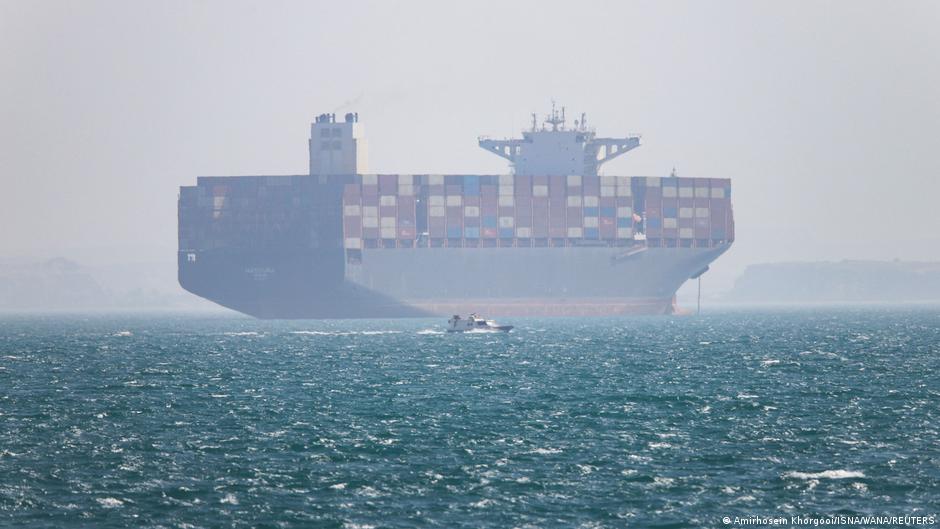
The Strait of Hormuz remains closed de facto despite Donald Trump’s “Project Freedom” initiative. The US military said two American-flagged merchant ships successfully passed through the Strait of Hormuz on Monday with the support of Navy guided-missile destroyers.
Iran’s parliament speaker and chief negotiator, Mohammad Bagher Qalibaf, accused the US of jeopardizing security in Hormuz and warned that his country had not “begun” testing the vital energy chokepoint. Iran imposed a blockade on foreign shipping using the strait soon after the war began with a US-Israeli attack on Iran at the end of February.
The US then imposed a blockade on all traffic entering and leaving Iranian ports to strangle the Islamic Republic’s main economic corridors.
Pakistan Condemns Attacks on UAE
Pakistan, a mediator between the US and Iran, condemned attacks on US-allied UAE and urged respect for the US’s ceasefire with Iran. Prime Minister Shehbaz Sharif wrote on X: “Pakistan strongly condemns the missile and drone attacks on civilian infrastructure in the United Arab Emirates last night.”
He expressed solidarity with the Emirati people and government, adding that it is essential to uphold the ceasefire to allow necessary diplomatic space for dialogue leading to enduring peace and stability in the region.
What Is ‘Project Freedom’ and Is It Working?
On Sunday, President Donald Trump announced on Truth Social that the US would help guide ships stranded due to Iran’s closure of the Strait of Hormuz. Trump described the mission as “Project Freedom,” which would begin on Monday and involve vessels belonging to “neutral and innocent bystanders.”
“The Ship movement is merely meant to free up people, companies, and Countries that have done absolutely nothing wrong — They are victims of circumstance,” Trump wrote. “This is a humanitarian gesture on behalf of the United States, Middle Eastern Countries but, in particular, the Country of Iran,” he said.
According to the US military, two American-flagged merchant ships successfully passed through the Strait of Hormuz on Monday with the support of Navy guided-missile destroyers. Iran denied that any such crossings had taken place, but Danish containership operator Maersk confirmed that its Alliance Fairfax, a US-flagged ship, exited the Gulf via the Strait of Hormuz on Monday with the help of US military.
The commander of US forces in the region also said his fleet had destroyed six small Iranian boats, as well as cruise missiles and drones. However, Iranian media quoted a military commander as saying that US forces had targeted civilian boats, killing five people.
On Monday, Iran also claimed to have fired on a US warship approaching the Strait of Hormuz, forcing it to turn around.
Iran Warns of Continued Blockade in Hormuz
Mohammad Bagher Qalibaf, Iran’s parliament speaker and chief negotiator in talks with the United States, warned that his country has “not even started” with its standoff in the Strait of Hormuz. “We know full well that the continuation of the status quo is intolerable for America; whilst we have not even started yet,” he wrote on X.
Qalibaf added that the actions of the US and its allies had put shipping security at risk, but said their “malign presence will diminish.”
South Korea Weighing Trump’s Request to Join US Efforts
South Korea’s presidential office is reviewing whether the country can participate in a new initiative announced by US President Donald Trump, named “Project Freedom,” to help stranded ships travel through the Strait of Hormuz, Reuters reported. Meanwhile, South Korea’s Defense Ministry said it would “carefully review our position” regarding Trump’s initiative but did not commit to making any changes.
The ministry said that Seoul would consider its stance based on international law, the safety of international maritime routes, its alliance with the US, and the security situation on the Korean Peninsula.
An explosion and subsequent fire were reported aboard a South Korean cargo vessel in the Strait of Hormuz on Monday. On Tuesday, South Korea’s Foreign Ministry said that all 24 crew members aboard the damaged HMM Namu, including six South Korean nationals, were unharmed.
Trump said the incident should prompt South Korea to join American efforts to guide stranded ships through the strait.
India Condemns Iranian Attack on UAE
The Indian Ministry of External Affairs condemned the “unacceptable” drone strike on an energy facility in the UAE’s Fujairah oil hub that injured three Indian nationals, without naming Iran as the instigator of the attack. “We call for immediate cessation of these hostilities and the targeting of civilian infrastructure and innocent civilians,” India’s foreign ministry spokesperson Randhir Jaiswal said in a statement on X.
Indian Prime Minister Narendra Modi also condemned the attack and expressed solidarity with the UAE. “Strongly condemn the attacks on the UAE that resulted in injuries to three Indian nationals. Targeting civilians and infrastructure is unacceptable,” he wrote on X.
“Ensuring safe and unimpeded navigation through the Strait of Hormuz is vital for enduring regional peace, stability and global energy security,” Modi added.
India relies heavily on imported energy and typically sources around half of its crude oil through the Strait of Hormuz.
Fire Breaks Out on Commercial Ships at Iran’s Dayyer Port
Several commercial vessels caught fire at the southern Iranian port of Dayyer, according to a report by Iran’s semi-official Mehr news agency. Firefighting teams are working to contain the blaze, the agency said, adding the cause of the incident is not yet known.
The fire at the Iranian port comes amid reports that the UAE was attacked by Iran on Monday morning for the first time since a fragile ceasefire took hold in early April.
European Leaders Condemn Iran for Its Missile and Drone Strikes on the UAE
European Commission President Ursula von der Leyen called the attacks “vicious” and a violation of international law. German Chancellor Friedrich Merz also condemned the attack. In contrast, US President Donald Trump sought to downplay the attack.
The UAE said it came under attack from Iran Monday morning for the first time since a fragile ceasefire took hold in early April. Iran neither confirmed nor denied the attack.
Plus, the US military said two American-flagged merchant ships had successfully transited the strait on Monday as part of a new initiative.
Hegseth to Hold News Conference, Trump Says
US Secretary of Defense Pete Hegseth and the chairman of the Joint Chiefs of Staff, General Dan Caine, are due to hold a press conference on Tuesday, according to a social media post by US President Donald Trump. Trump released no other details. The news conference will come a day after the US launched an effort to help vessels through the Strait of Hormuz.
Tehran Neither Confirms Nor Denies Attacks on Emirati Oil Port and Ships
Following reports from the UAE of a missile and drone attack by Iran, Tehran has neither confirmed nor denied the attacks. Earlier, Iranian state television quoted an anonymous military official as saying that Tehran had “no plan” to target the UAE or one of its oil fields.
“The incident resulted from US military adventurism to create an illegal passage,” the official was quoted as saying about the oil facility attack, apparently referring to Trump’s latest efforts to reopen the Strait of Hormuz.
On Sunday, President Donald Trump announced that the United States would launch an effort on Monday to “guide” ships stranded in the Gulf.
Iran: ‘No Military Solution’ to Crisis
Iranian Foreign Minister Abbas Araghchi said early on Tuesday that there was “no military solution” to the “political crisis” in the Strait of Hormuz, a day after the UAE said it moved to intercept a barrage of missiles and drones launched by Iran. Araghchi said that peace talks were “making progress” thanks to the “gracious effort” of Pakistan and that the United States should be “wary of being dragged back into quagmire by ill-wishers.”
Criticizing the ongoing US blockade on Iranian ports, he said “Project Freedom is Project Deadlock.”
Germany Condemns Iran Attacks on UAE, Urges Tehran to Return to Negotiations
German Chancellor Friedrich Merz has urged Iran’s leadership to return to negotiations after Tehran launched missile and drone attacks on the UAE on Monday. The UAE Defense Ministry said its air defenses intercepted a total of 12 ballistic missiles, three cruise missiles, and four drones in the first Iranian attacks on the Gulf state since a ceasefire began almost four weeks ago.
“Tehran must return to the negotiating table and stop holding the region and the world hostage: The blockade of the Strait of Hormuz must end,” Merz wrote on social media. “We strongly condemn these attacks. Our solidarity is with the people of the United Arab Emirates and our partners in the region.”
Merz also reiterated his stances that “Tehran must not acquire a nuclear weapon” and that “There must be no further threats or attacks against our partners.”
British Prime Minister Keir Starmer also called for deescalation in the Middle East after the attacks. “The UK condemns the drone and missile strikes targeting the United Arab Emirates,” Starmer said. “The escalation must cease. Iran needs to engage meaningfully in negotiations to ensure the ceasefire in the Middle East endures, and a long-term diplomatic solution is achieved.”
French President Emmanuel Macron said the Iranian strikes against civilian infrastructure in the UAE are “unjustified and unacceptable.”
Talks between the United States and Iran, mediated by Pakistan, have so far failed to produce results, leaving a ceasefire agreed on April 8 appearing increasingly fragile.