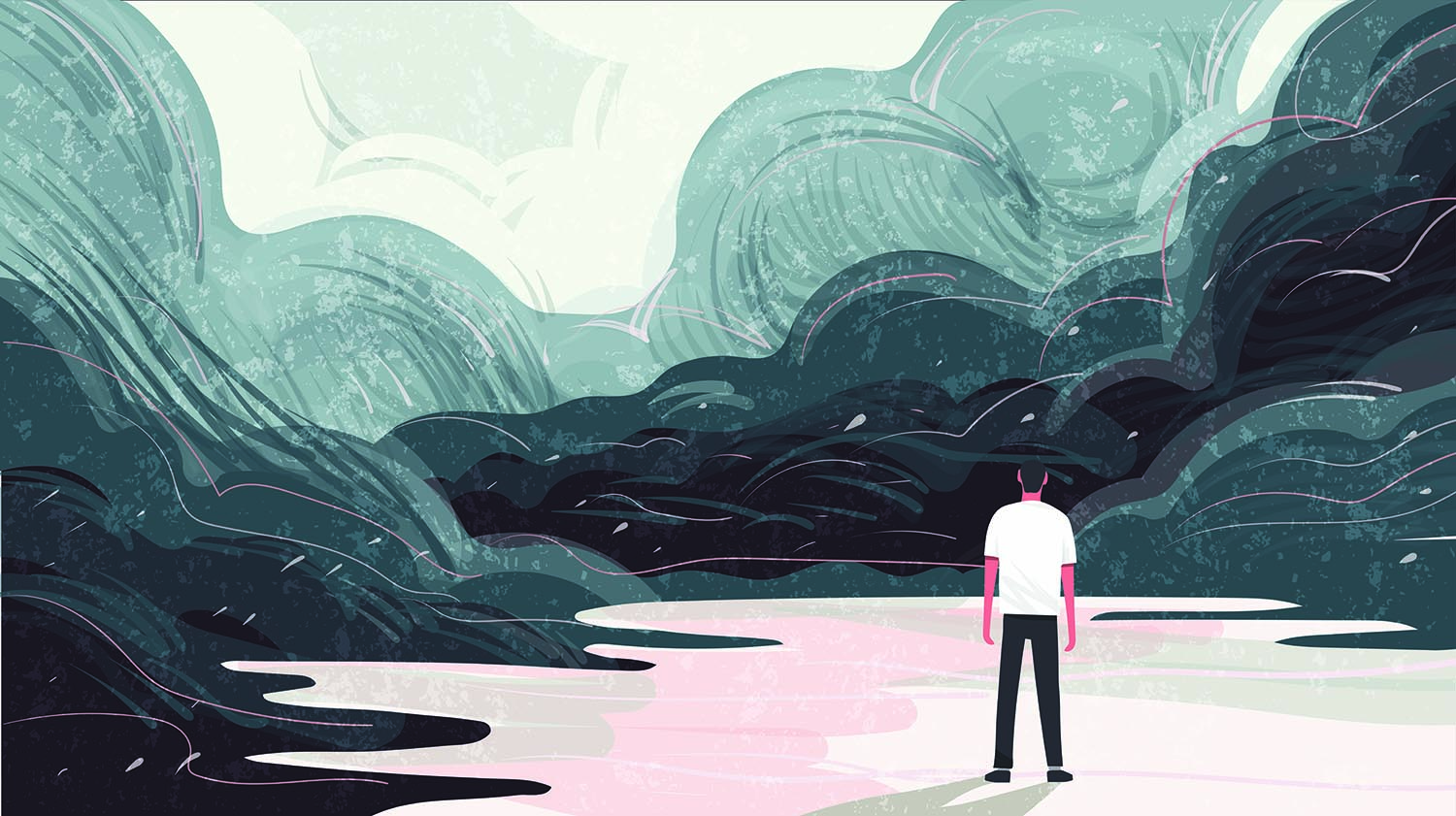
The Weight of Modern Struggles
In a quiet moment in Canada, I overheard two friends discussing their frustrations. They talked about everyday challenges, the weather, and the state of their country. To them, everything seemed to be falling apart. It wasn’t what it used to be ten years ago. They listed reasons after reasons for why things were getting worse. What struck me was that this conversation took place in one of the most developed nations in the world. And yet, the tone felt oddly familiar. It wasn’t very different from conversations I used to hear in Kathmandu when I lived there.
This kind of discussion isn’t uncommon. In many ways, it reflects a broader reality: inflation is high, the cost of living continues to rise, and the job market feels discouraging. Hope becomes harder to sustain. Many young people feel they cannot afford a home in the future. The global economy appears unstable. Wars continue to rage in different parts of the world. Political uncertainty is widespread, climate change is a looming threat, and emotionally charged, often manipulative narratives circulate endlessly.
It’s easy to get caught in this thought loop, and when we do, it often erodes our mental health and overall outlook. The anxiety, feelings of hopelessness and despair become the norm.
But after some difficult introspection, I began to question whether this feeling was entirely rooted in reality or also shaped by perspective.
Looking Back to Find Meaning
I found myself turning to history. When you look back, the question arises: how did people endure far more difficult times? How did they hold onto hope? What allowed them to maintain perspective and resilience in the face of uncertainty?
And more importantly: what can we learn from that today?
I remember reading a popular book in psychology literature: Man’s Search for Meaning by Viktor Frankl. Frankl was a survivor of the Holocaust, one of the worst acts of cruelty by man ever. It’s hard to make sense of the genocide of a certain group of people. Even with the absolute worst dehumanising conditions in the camps, Frankl observed a very notable phenomenon. Some people were able to endure better, not because they were physically stronger, but simply because they had found a way to hold on to meaning. This brought out his central idea: when we can no longer change our circumstances, we are challenged to change our attitude towards them.
This idea resonates deeply with psychological practice. In psychological counselling, one of the major interventions the therapist uses is reframing: shifting perspective. Rather than directly influencing the situation (which can be very difficult to control), we are changing how we look at it. And the effect of this can be profound.
Lessons from History
Frankl also noticed that those who survived were often not the ones with the best odds, but the ones who had something to live for. For some, it was the hope of seeing a loved one again. For others, it was a sense of responsibility to complete a piece of work, to bear witness, or even to simply endure with dignity. Even in my own moments of disillusionment, I find myself thinking of my parents: providing them with a better life enhances my sense of direction and feeling of motivation.
Similarly, reading Anne Frank’s diary (The Diary of a Young Girl) provides the same insight. Even though she was confined and under constant threat from the Nazi regime, she still reflects on beauty, human nature and hope. Her writing shows that even when external freedom is stripped away, the inner world can still remain active and resilient.
Another powerful example is Nelson Mandela during his twenty-seven years of imprisonment under Apartheid. He didn’t just endure; he used that time to develop clarity, discipline, and a long-term vision for reconciliation. His sense of purpose extended beyond his immediate suffering, which helped him psychologically outlast it.
Finding Purpose in Uncertainty
Meaning, in this sense, is not abstract. It is deeply personal and often tied to something beyond ourselves.
Frankl emphasizes that suffering, while unavoidable at times, does not automatically strip life of its meaning. Instead, meaning can be found through how we respond to the suffering. When we have the courage to take responsibility and make our choices, even in constrained circumstances, maintaining our humanity, we are dealing with adversity in the best way.
Applied to the present day, this perspective doesn’t deny the reality of economic instability, global conflict, or personal uncertainty. Rather, it reframes the question “How can we eliminate all suffering?” (which is often impossible) to “What gives my life meaning despite this?”
What we can learn from this is not blind optimism, but a more grounded form of resilience. We can see that hope is often anchored in purpose, not in circumstances improving quickly. Perspective shifts when we reconnect with what truly matters to us. Relationships, values and contribution sustain us, things beyond the self. Even when we feel hopeless and powerless in the larger world, there always remains a space, even if small, where we can choose how we respond.
Embracing Resilience
Frankl’s teachings suggest that endurance is not about denying how difficult things are. It is about refusing to let those difficulties define one’s entire inner life.
So perhaps the lesson from history, and from Frankl, Anne Frank and Nelson Mandela, is that today’s struggles are not uniquely unbearable. In fact, they suggest that while context changes, the psychological task remains similar. We just need to find a way to live meaningfully inside uncertainty, rather than waiting for certainty to arrive.