
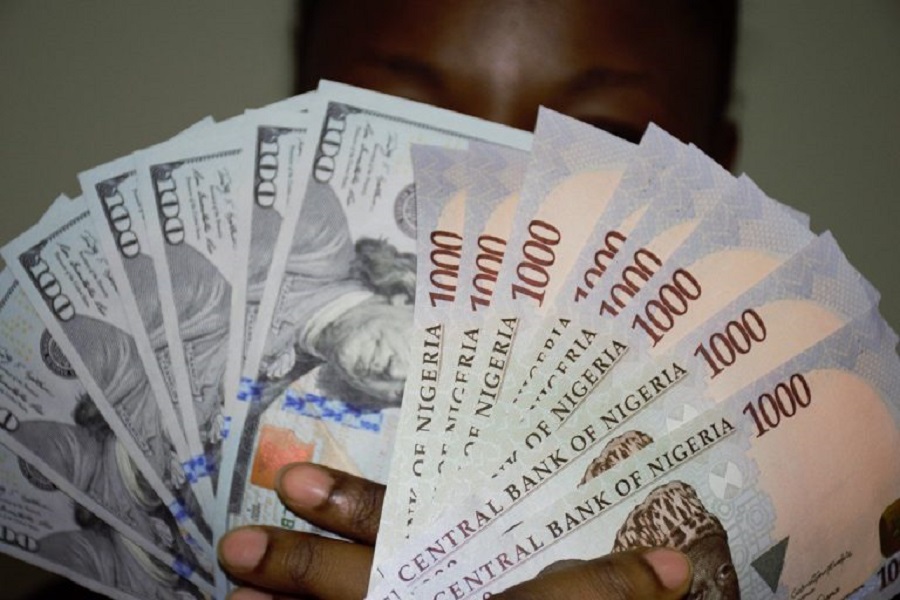
Naira’s Strongest Rally in 2025
The local currency, the naira, has continued its positive rally against the dollar, with the exchange rate settling at N1,455 to one dollar. This is accompanied by a significant decline in forex speculation, reaching an all-time low. The gap between the official and parallel market rates has also narrowed considerably.
According to the Nigeria Foreign Exchange Market (NFEM), the naira was trading at N1,455/$ as of yesterday, while the unofficial black market saw it range between N1,460 and N1,470 per dollar. Analysts attribute this strong performance to several factors, including a surge in foreign reserves to $43.05 billion and a drop in speculative FX activities. These developments are seen as a result of the Central Bank of Nigeria’s (CBN) ongoing reforms, which have helped restore confidence in the market.
Factors Driving the Naira’s Strength
The naira’s rebound is being driven by a combination of stronger demand for the currency, reduced speculative trading, and increased foreign reserves. The CBN’s reforms under the leadership of Olayemi Cardoso have been instrumental in reducing forex speculation and narrowing the gap between official and parallel market rates.
The CBN has taken major steps to ensure the naira remains stable, aligning with its objective of maintaining exchange rate stability. The bank is boosting FX supply to retail end users, reducing market distortions, and managing foreign reserves effectively. Additionally, the injection of liquidity into the market and improved compliance with FX regulations have helped prevent sharp depreciation of the naira in both official and parallel markets.
Foreign investors are showing renewed interest in the domestic economy, driven by inflows from Foreign Portfolio Investors (FPIs) and substantial contributions from International Oil Companies (IOCs). The CBN’s interventions to authorised dealers have further supported the naira’s stability.
Improved Macroeconomic Conditions
Analysts at Commercio Partners highlight that the rally and gradual narrowing of the exchange rate gap are due to stronger demand for the naira, reduced speculative trading, and improved foreign reserves. Ifeanyi Ubah, Head of Research at Commercio Partners, expressed optimism that the positive sentiment would be sustained in the near term, supported by increasing external buffers.
Nigeria’s rising external reserves reflect a healthier external position for the country. With reserves strengthening, speculative activity subsiding, and oil earnings supporting inflows, many market watchers believe the naira’s current rally has a stronger foundation compared to previous cycles of volatility.
Call for Caution
However, some experts caution that sustaining this momentum will depend on the government’s ability to maintain macroeconomic discipline, boost crude oil production, and diversify export earnings. Aminu Gwadabe, President of the Association of Bureaux De Change Operators of Nigeria (ABCON), emphasized that key policies like the Foreign Exchange (FX) Code are effectively putting FX speculators in check.
The FX Code, launched by the CBN, authorises the central bank to establish and enforce directives regarding the standards for financial institutions under which FX deals are to be conducted. It also entrenches transparency and accountability in the FX market, ensuring naira stability and rally.
Boosting Remittances Inflows
As part of its efforts to boost diaspora remittances and support naira stability, the CBN recently introduced two new financial products: the Non-Resident Nigerian Ordinary Account and the Non-Resident Nigerian Investment Account. These accounts are designed to streamline remittances, encourage investments, and foster financial inclusion among Nigerians in the diaspora.
The Non-Resident Nigerian Ordinary Account allows non-resident Nigerians to remit foreign earnings into Nigeria and manage funds in foreign currency or naira. Deposits from sources such as salaries, allowances, and dividends are supported, alongside spending on family maintenance, education, and healthcare.
On the other hand, the Non-Resident Nigerian Investment Account provides an opportunity for NRNs to invest in Nigeria’s financial markets, including foreign currency-denominated bonds, fixed deposits, and local assets like equities, government securities, and mortgage products.
The Power of Diaspora Remittances
In a report titled “Diaspora remittances: The power behind Africa’s sustainable growth,” Regional Vice President of Africa at Western Union, Mohamed Touhami el Ouazzani, highlighted the real impact of remittances. He noted that in 2023 alone, $90 billion flowed into Africa from its global diaspora, an amount that rivals the GDP of the entire region.
Remittances symbolize deep ties that keep communities connected across borders. Families with a breadwinner working abroad depend on these funds to provide vital support for day-to-day needs. They also build the foundation for broader financial stability.
For remittances to be truly transformational, it begins with understanding and meeting people’s aspirations. Ensuring individuals who strive for more can send and receive funds, regardless of their financial status, is crucial. Offering multiple channels for remittance access is key, whether through bank accounts, digital wallets, mobile money apps, or cash pickups.
Every remittance is a seed of change – a deliberate investment in a future where borders blur. The future of remittances in Africa transcends mere financial support. By strategically directing funds into sectors that need them most, Africa’s diaspora is not just sending money home; they are building resilient economies and challenging traditional models of progress.


