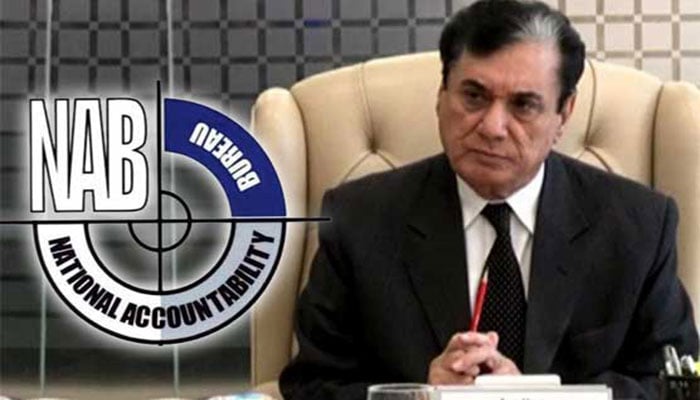
A New Era for NAB: Lt Gen (R) Nazir Ahmed Butt’s Vision
Lt Gen (R) Nazir Ahmed Butt is making a strong case for the National Accountability Bureau (NAB), redefining its role and demonstrating tangible results that are hard to ignore. During an interview at NAB headquarters, he outlined a comprehensive transformation of the agency, which has long been criticized as a tool for political vendettas. His message was clear: despite the 2022 amendments that limited NAB’s powers, the bureau has become more focused and effective.
Over the past 23 years since its inception in 1999, NAB recovered approximately Rs. 884 billion. However, under Lt Gen Butt’s leadership in just the last two and a half years, the bureau has managed to recover Rs. 8.4 trillion—equivalent to 8,400 billion rupees. For every rupee spent by the government on NAB during this period, it returned Rs. 548. The total recovery now stands at Rs. 9.28 trillion, roughly $33 billion.
The majority of these recoveries came from reclaimed state land, with staggering figures. NAB successfully reclaimed 4.53 million acres valued at Rs. 8.1 trillion. Sindh alone accounted for 3 million acres of forest land and 1.4 million acres of mangroves. Additional land was retrieved from development authorities and revenue departments. Sindh leads the recovery efforts with 3.47 million acres worth about Rs. 5 trillion, followed by Balochistan with 1.03 million acres valued at around Rs. 2.8 trillion, and Punjab recovering roughly 24,600 acres. Additionally, 922 properties worth Rs. 24 billion were handed over to provincial governments, primarily to Balochistan.
NAB has also returned Rs. 124.86 billion to 121,635 individuals who fell victim to housing and Ponzi schemes. Cases like Eden Housing, Fazaia Housing in Sargodha, and AAA Associates in Rawalpindi, which once symbolized public mistrust, are now being resolved, allowing victims to reclaim some of their lost funds.
The 2022 amendments to NAB’s law aimed to restrict its reach by raising the minimum threshold for cases to Rs. 500 million, requiring solid proof of financial gain, removing NAB’s authority over tax and regulatory decisions, and demanding at least a hundred complainants for ‘cheating public at large’ cases. Lt Gen Butt argues that these changes forced the bureau to evolve, shifting its focus from a broad approach to high-impact work.
The chairman emphasized that NAB’s purpose is not to instill fear but to uphold fairness and integrity in public service. He pointed out that while the Parliament’s decision to limit NAB’s jurisdiction to cases above Rs. 500 million was intended to prevent harassment of civil servants, it should not shield those who loot public wealth. He plans to recommend legal changes to remove this cap, ensuring that corruption through manipulation of public assets can still be pursued. “We are not here to scare people, but to protect public resources,” he said, adding that no one will be targeted without evidence and that fake or malicious complaints will no longer be entertained.
To shed its image of political witch-hunting, NAB has implemented several internal reforms. Businessmen and politicians now have protection through facilitation cells, including one for businesses in every NAB office and accountability facilitation cells working under the National Assembly Speaker, provincial assembly speakers, and chief secretaries. These measures aim to prevent arbitrary harassment.
Bogus complaints are now treated as serious offenses. Anonymous submissions can lead to charges, and every complaint must carry an affidavit. The language has also changed: “accused” is replaced with “defendant,” a subtle but deliberate effort to make the process less punitive. Cases now follow a clear priority system, with matters referred by courts, governments, or parliaments placed at the top. Cheating-the-public cases also receive priority. NAB has started using AI to analyze bank statements, record witness testimonies electronically, and switch to e-office systems.
Money laundering has become a major focus, with 21 high-profile cases involving Rs. 118 billion in assets. NAB has already attached or frozen Rs. 85.4 billion worth of those assets. It is also building international partnerships, signing cooperation agreements with counterparts in Malaysia, Saudi Arabia, Australia, Sri Lanka, Russia, China, and Tajikistan, while maintaining links with INTERPOL and other asset recovery networks.
During the question and answer session, the chairman stated that the days of using real estate for illegal profits are over. New regulatory frameworks are being developed to make such malpractices far more difficult, aiming to protect consumers and restore trust in the property market.
Lt Gen (R) Nazir Ahmed Butt’s efforts seemed nearly impossible when he took over: rehabilitating NAB’s credibility through tangible outcomes, not just rhetoric. The 2022 amendments could have been fatal, but he turned them into a framework for reform. The new facilitation cells are not cosmetic; they have created real institutional firewalls between NAB and politically driven cases that once eroded public trust.
The numbers tell one story, but the real shift is in how the bureau operates. Its focus has moved from chasing politicians over procedural missteps to recovering land, exposing frauds, and helping citizens who were robbed by scams. With digital reforms, international coordination, and internal accountability checks like public hearings, NAB seems to be rewriting its own playbook.
No one is pretending it is flawless. The chairman cannot erase decades of baggage overnight. But he has done what effective leaders do: identified what was broken, made hard choices about priorities, and backed those choices with measurable results. If NAB can sustain this trajectory, with high recoveries, visible relief for ordinary citizens, and a clear break from political targeting, it might yet evolve into a model of institutional reform.
The harder part, though, is keeping that momentum alive. In Pakistan, institutions often depend too much on the force of a single personality. Progress lasts only as long as the person driving it. The current chairman may have restored focus and credibility to NAB, but the real test will come after him. Whether the bureau’s discipline, restraint, and purpose can survive beyond his tenure will show if this is a lasting transformation or just another brief moment of order before the drift returns. For now, though, the record speaks for itself. “We have covered a lot of ground,” the chairman said, adding that under his watch, NAB has become steadier, more purposeful, and closer to what it was meant to be.

Related posts:

Mother Suffers Daily Allergic Attacks After Drinking Contaminated Coffee Syrup


Challenges of Climate Change in Africa and Lessons from China’s Green Revolution

Senate joint committee finally holds hearing on Ivanhoe deal

True measure of leadership lies not in power, privilege, pageantry – Tinubu at book presentation