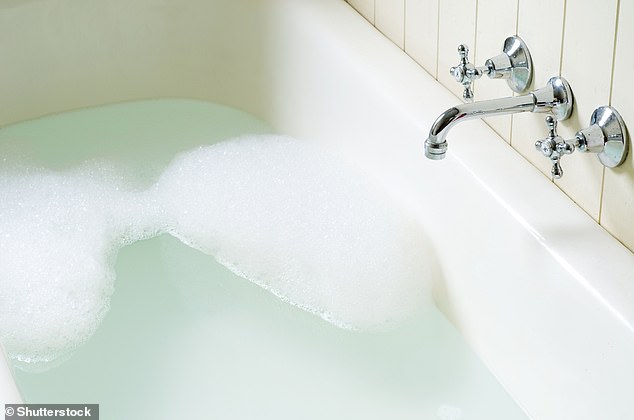
The Science Behind the Perfect Bath Bubbles
If your bath never seems to have enough bubbles, you might be making a common mistake that scientists have identified. According to experts, squirting the bottom of your tub with bubble bath before turning on the taps is a frequent error. This practice doesn’t allow you to get the most out of your product and essentially results in unused bubble bath being wasted down the drain.
Instead, you should squirt the viscous liquid directly under the tap, but only when the water has started running. High-pressure water from the taps plays an essential role in creating bubbles. Professor Leif Ristroph, an experimental physicist at New York University, explained that agitation is needed to whip air through the liquid, which helps create lots of bubbles quickly.
If this method doesn’t work, there’s another trick up your sleeve. Adding a spoon of baking soda to your bath can boost the number of bubbles. Roberto Zenit, a professor of engineering at Brown University, suggested that if commercial products don’t work, try adding some baking soda.
Bubble bath transforms from a thick liquid into voluminous white clouds of foam due to the presence of surfactants. These chemicals have molecules with a water-loving head and a water-repelling tail. Surfactant molecules push their way between water molecules, separating them and forming a thin film that creates spheres filled with air. Millions of bubbles are formed in this way, floating on the surface because the air inside is lighter than the surrounding water.
Justin C. Burton, a professor of fluid mechanics at Emory University, emphasized the importance of properly aerating the water. He advised pouring the soap in the water stream right after turning on the water. The continued flow will aerate the water and produce lots of bubbles.
Why Do Soap Bubbles Join Up?
When two bubbles meet, they share their volumes to form a single bubble. The pair will attempt to form the smallest surface area possible. When two bubbles merge, they typically do not become one enclosed sphere. Instead, they stick together and adjust their shapes to maximize overall strength.
Adding bubble bath in the right place and at the right time is not the only thing people get wrong. Ensuring that the pressure of the water is relatively high is also important. Higher pressure agitates the bubble bath solution more intensely, resulting in more bubbles and a greater chance that some remain by the time you get out.
Another tip for boosting bubbles is adding a spoon of baking soda, also known as bicarbonate of soda, into the bath. This reacts with water to produce carbon dioxide gas. Baking soda is highly alkaline and can relieve irritation and pain from certain skin conditions, but it should not be confused with baking powder, which is a mix of bicarbonate of soda and powdered acid.
Professor Ristroph, who studies soap bubbles in the lab, suggests adding a little glycerine to the mix for longer-living bubbles. Glycerine is used in the food industry and personal care products to moisturize and protect the skin. It can add strength and structure to bubbles so they don’t pop as fast.
Dr David Fairhurst, a reader in soft condensed matter physics at the University of Edinburgh, highlighted the hardness of water as a key factor. In England, hard water with a high mineral content is common in areas such as Kent, Sussex, Essex, Norfolk, and Surrey, while soft water with lower mineral content tends to be in Cumbria, Lancashire, and Yorkshire. The harder the water, the fewer the bubbles, as minerals combine with the soap-like molecules in bubble-bath liquid, locking them away and preventing them from stabilizing the bubbles.

Tips for Better Bubbles
If all else fails, Professor Ristroph suggests using an industrialized scaled-up version of children’s bubble blowers. He mentioned that using a leaf blower or compressed air could make things very bubbly very quickly.
How to Blow the Best Bubbles
Physicist Justin Burton of Emory University in Atlanta, Georgia, recommends the following recipe for blowing giant soap bubbles:
You will need:
* 2 pints of water
* 3 tablespoons of Dawn Professional Detergent
* 1/2 of a heaped teaspoon of guar powder
* 3 tablespoons of rubbing alcohol
* 1/2 of a teaspoon of baking powder
Directions:
Mix the guar powder with the alcohol and stir until there are no clumps. Combine the alcohol/guar slurry with the water and mix gently for 10 minutes. Let it sit for a bit so the guar hydrates. Then mix again. The water should thicken slightly, like thin soup or unset gelatin.
Add the baking powder and stir. Add the Dawn Professional Detergent and stir gently to avoid causing the mixture to foam. Dip a giant bubble wand with a fibrous string into the mixture until it is fully immersed and slowly pull the string out. Wave the wand slowly or blow on it to create giant soap bubbles.
Read more
Could your water temperature obsession be ruining your bathtime? Discover the scientifically ideal heat for a soothing soak!
What unexpected dangers lurk in your baby’s bubble bath that could be causing more harm than soothing?
Are daily showers overrated? See why Professor Bloomfield suggests you might not need them and how they could harm your skin!
Ever wondered why a steamy soak is so appealing? Nearly a quarter prefer bathwater hotter than a summer’s day!
Are scalding hot baths and magical concoctions key to unearthing hidden grime in your workout gear?


