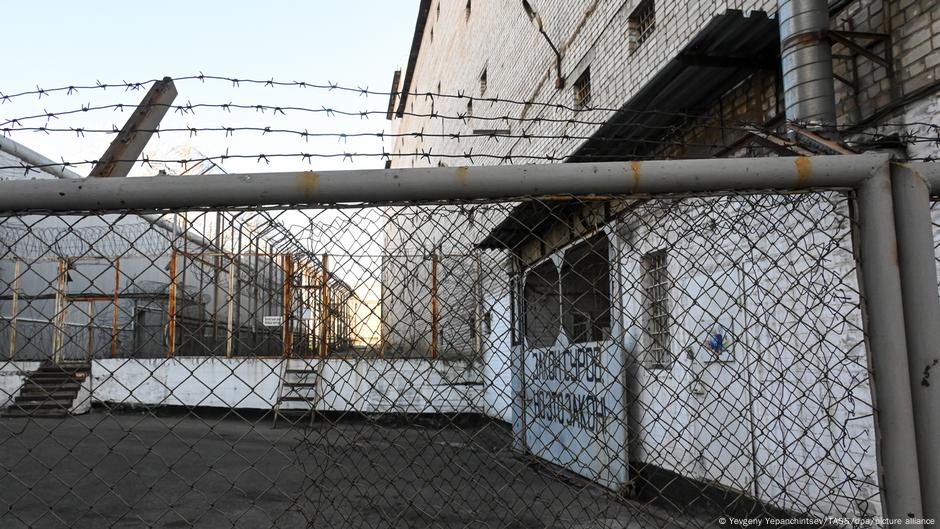
The Growing Crisis of Political Prisoners in Russia
As the number of political prisoners in Russia continues to rise, aid organizations are stepping in to provide essential support. These groups help fund daily essentials for those behind bars, cover legal costs, and assist the families of imprisoned activists. This critical work is often carried out in the face of increasing challenges, including financial constraints and the difficulty of maintaining anonymity.
Julia, an activist who prefers to remain anonymous, spent several years in prison as a political prisoner. With no family to support her, she initially received nothing from the outside world. “Think about all the things you need each day to brush your teeth, get dressed, eat,” she said. “In prison, life goes on, but you don’t get any money.”
“In the beginning, I even had to cut my fingernails with a piece of old razor blade,” Julia added. “After a while, people outside somehow became aware of my situation and I started to receive packages.” Today, she helps others by collecting basics and food for currently incarcerated dissidents. “There are prisoners everyone has heard of, and they receive aid,” she said. “But I write to the ones people haven’t heard of.”

In her letters, Julia provides a list of items that prisoners might need, such as soap, toilet paper, towels, and underwear. Some responses are positive, with prisoners saying everything is fine. Others, however, are desperate: “It’s a disaster. I have nothing at all. Please send me something.”
Despite the growing number of political prisoners, donations have decreased. “It’s because everything in Russia is getting more expensive,” Julia explained.
Covering Legal Costs
Legal fees are often the biggest expense for families of political prisoners. Relatives frequently organize fundraisers on social media to cover these costs. Activists emphasize that having a good lawyer can make a significant difference in a case.
Yevgeny Bestuzhev, a political scientist from St. Petersburg, is one example. He criticized Russia’s war in Ukraine online and was accused of “disseminating false information” about the army. However, he received a suspended sentence instead of being sent to prison, thanks to his lawyer’s tactics.
Repression in Russia affects not only the prisoners but also their families. Children grow up without parents, and elderly relatives often lack support. Initiatives like the You Are Not Alone project provide assistance to these families.

You Are Not Alone, led by former political prisoner Ksenia Fadeyeva, is an annual fundraiser for political prisoners in Russia. The project, which is often denounced by authorities as an “undesirable organization,” only accepts donations from within Russia.
“Families of political prisoners sometimes have to choose between sending a package to the prison, paying for their children’s sport, or buying medicine for their elderly parents,” Fadeyeva said.
In 2024, the project managed to raise 45 million Russian rubles. Around 80% of all requests were for packages or money transfers to the prison authority. This allowed prisoners to buy important daily essentials and food.
The project provided 14.5 million rubles for packages, 7.7 million rubles for family support, and 5.5 million rubles for other purposes, such as evacuation from Russia, support for people under house arrest, and paying off debts.
However, in 2025, the average donation per prisoner dropped from 30,000 rubles (€325/$375) to just 10,000 rubles. Project organizers believe this decline is due to public fatigue.

The Closed Nature of the State
Most fundraisers run for several months, according to Elena Skvortsova, who works with the First Department, a community of lawyers and journalists fighting against the closed nature of the state. The success of a fundraiser often depends on the prisoner’s story.
Polina Yevtushenko, who faces 22 1/2 years in prison for condemning Russia’s war in Ukraine, is an example. Her fundraiser raised sufficient funds in just a few hours. “She’s a young mother, and her 6-year-old daughter only gets to see her through a pane of glass when she visits her in prison,” Skvortsova said.
Male political prisoners are allowed only six packages a year, but this rule does not apply to women. “Yesterday, for example, I put together a package in the prison authority’s online shop for a young woman in prison in the Vologda region,” Skvortsova reported. “When she was brought there, she didn’t have even basic hygiene products.”

Donations should only be made from within Russia, according to the project Zaodno, which collects money specifically for political prisoners. Money from abroad could trigger banks to freeze accounts for monitoring, preventing further donations.
Founded in 2011, OVD-Info is now one of Russia’s largest rights organizations. It collects donations in cryptocurrency. Only a few aid organizations do this, including OVD-Info and another called Golden Key.
OVD-Info sets these donations aside for emergencies. “Should something happen to the project — this has happened before — and we suddenly can no longer accept donations or lose all our regular donors, then the crypto donations will support us and those we are helping,” the project states.
Publicizing the Case
The public generally becomes aware of political prisoners through their families, friends, human rights activists, and journalists. Denis Shedov, who works with OVD-Info, said getting the word out was not easy. “The problem is that people often don’t know who to contact,” Shedov said. “Word of mouth, internet research, our own observations, and our network of contacts are often more helpful.”
Some prisoners prefer to resolve their problems themselves and do not want the public to know about them. Collecting donations is made even more difficult by the fact that many relatives and lawyers wish to remain anonymous.
“Many prisoners fear publicity and don’t want any attention,” Skvortsova said. “But they still need help. Of course, we try to support them, but it’s a slow process. It has taken us over six months to collect 100,000 rubles in such cases.”
Fadeyeva, of You Are Not Alone, said there are about 1,500 political prisoners in Russia at the moment — and they urgently need help. “Their prison conditions are deteriorating,” Fadeyeva said. “People are constantly being put in punishment cells and are not receiving medical care.”


