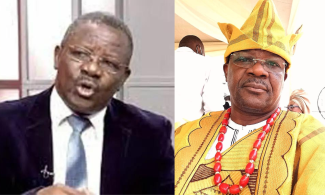
Insights from a Retired Military Officer on Nigeria’s Security and Political Challenges
Commodore Kunle Olawunmi (retd.), former Deputy Director of Defence Administration at the Defence Headquarters, has shared his perspectives on several critical issues affecting Nigeria. From the recent reported coup plot to rising insecurity and the arraignment of Nnamdi Kanu, his insights offer a deep understanding of the challenges facing the nation.
The Role of Religion and Socio-Cultural Issues in Insecurity
In 2001, Olawunmi raised concerns about the opening of military facilities for Islamic prayers on Fridays, highlighting the link between religion and socio-cultural issues as key drivers of insecurity. Four years later, he notes that these issues remain pervasive, particularly in states like Kwara and Benue. He argues that President Tinubu must act swiftly against terrorist sponsors, emphasizing that negotiation with terrorists is not an option. He warns that such actions could lead to further instability and even state collapse.
The Katsina Incident and State Collapse
Olawunmi criticizes the public negotiations between northern leaders and armed militias, calling it an aberration. He questions whether these negotiations are conducted on behalf of the Federal Government and warns that such actions could set a dangerous precedent. He suggests that if the President does not address this incident, it could lead to a breakdown of the country’s security architecture.
The Challenge of Prosecuting Terrorist Sponsors
The Federal Government has claimed to have identified those financing insurgency, yet concrete action remains elusive. Olawunmi asserts that these sponsors continue to operate freely, emboldened by their perceived immunity. He calls for a coordinated effort among intelligence agencies to identify and prosecute both domestic and foreign sponsors of terrorism, emphasizing that failure to do so will only exacerbate the problem.
Democracy and Political Sponsorship in Nigeria
Olawunmi highlights the flawed implementation of democratic norms in Nigeria, where political power is often determined by financial backing rather than merit. He points out that sponsors of terrorism can also be influential figures in politics, making it difficult to hold them accountable. This dynamic, he argues, undermines the integrity of the political system and perpetuates cycles of corruption.
Rehabilitation of Terrorists and Its Consequences
The decision to rehabilitate some terrorists has sparked debate. Olawunmi criticizes this approach, arguing that it is inappropriate for groups classified as terrorists. He contrasts this with the Niger Delta militants, who had legitimate grievances and were successfully reintegrated. He warns that rehabilitating terrorists could lead to future threats, as these individuals may return to violence and compromise national security.
Labeling Nnamdi Kanu as a Terrorist
Olawunmi questions the handling of Nnamdi Kanu’s case, noting that the operation was poorly executed. He compares it to the handling of the MEND leader, Henry Okah, and emphasizes the need for professionalism in such matters. He suggests that the case was politically motivated and that the current approach may not be effective.
The Pardon of Convicted Criminals
While acknowledging the President’s prerogative to grant pardons, Olawunmi notes that such decisions can be interpreted in various ways. He suggests that behind-the-scenes negotiations may influence these choices, adding complexity to public perceptions of justice.
The Islamisation Agenda and National Security
Olawunmi expresses concern over the perceived agenda to Islamise the country, citing his experiences with certain groups. He believes that these efforts are driven by both religious and economic motives, with the aim of controlling resources and wealth. He urges civil society to remain vigilant and engaged.
The Rumoured Coup Plot
Regarding the recent rumoured coup plot, Olawunmi dismisses its feasibility, citing the lack of proper planning. He emphasizes that successful coups require strategic execution, which he believes is absent in the current scenario. He advocates for consultation with experts to ensure national stability.
Speaking Truth to Power
Despite being a retired officer under Buhari’s administration, Olawunmi has not hesitated to speak out. He recounts instances of being declared wanted but chose to remain in Nigeria, citing safety and a commitment to truth. His decision to stay reflects a belief in the importance of accountability and transparency.
Promotion and Political Dynamics
Olawunmi addresses claims of being denied promotion during his service, attributing it to political factors rather than merit. He explains that promotions beyond the one-star rank are often influenced by loyalty and political considerations. Despite this, he maintains a sense of gratitude for his achievements and avoids holding grudges.
In conclusion, Commodore Kunle Olawunmi’s insights provide a comprehensive view of the complex challenges facing Nigeria. His experience and perspective highlight the need for decisive action, transparency, and a reevaluation of current policies to ensure national security and stability.


