A New Era of Stability in Iraq
Iraq is experiencing its longest period of stability in years, and many Iraqis are optimistic about the direction their country is heading. This sense of positivity raises an important question: will it translate into higher voter turnout in the upcoming general elections scheduled for November?
Khudair al-Ali, a young man working for an oil company and driving for Careem on weekends, expresses his enthusiasm about the current state of Iraq. “Iraq is the best it’s ever been,” he says. However, he also points out that there are still challenges to address, such as the potholes on the roads and the overwhelming number of cars in Baghdad. “We need more bike lanes,” he suggests, explaining that it takes him only 15 minutes to ride his bike to work, but over an hour to drive.
A lack of bike lanes was once the least of Iraq’s problems. The country has often been in the headlines for war and violence. But over the past few years, this situation has significantly changed, with Iraq seeing its longest period of stability since the US invasion more than 20 years ago.

Recent Gallup polling indicates that Iraqis have a record high level of confidence in political and national institutions, with 55% expressing trust in the government. This is unusual in the Middle East, where only Iranians and Jordanians are more satisfied with their leaders. Trust in institutions like the police, military, and judicial system is also at an all-time high, according to the surveys.
A Different Iraq Emerges
“Today’s Iraq is not the same as the Iraq of 20 years ago, or even five years ago,” said Mohamed al-Hassan, head of the United Nations Assistance Mission for Iraq, during a recent address to the UN Security Council. While obstacles remain, he emphasized that “Iraq today is more secure, stable, and open.”
Jon Wilks, the UK’s former ambassador to Iraq, noted in an article for the Atlantic Council that “overall the security and prosperity trends are positive.” He acknowledged that widespread corruption continues to hinder progress, but added that things are improving.

Mustafa Hussein, a civil servant, confirmed that corruption is still prevalent but expressed optimism about the improvements in daily life. “The other day I had to register my car for a new license plate and I did it online. Later two guys showed up to my house to put the license plate on. They actually came to my house,” he exclaimed. “Amazing!”
Ibrahem Ayash, a journalist, agreed, noting that “things just work better here now.”
Impact on Elections
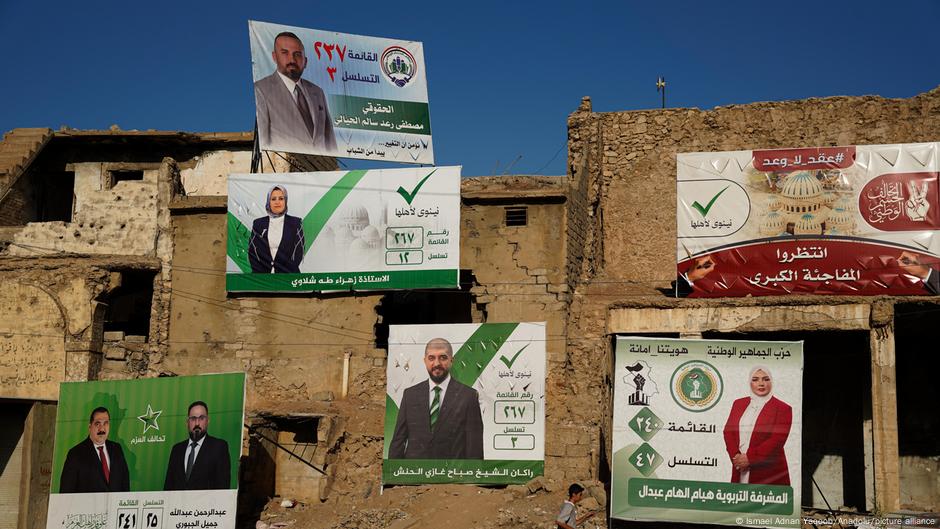
These developments have made both men more inclined to vote in Iraq’s upcoming elections on November 11, when Iraqis will choose a new 329-seat parliament.
“The last time I voted was in 2005,” Hussein noted. That election, 20 years ago, was the first time that Iraqis were able to vote after Saddam Hussein was ousted as a result of the 2003 US invasion.
Haddad hadn’t voted since 2005 because, he argued, “nothing ever changed anyway.” But this time, he plans to vote, citing Iraqi Prime Minister Mohammed Shia al-Sudani as a key factor. Many Iraqis see al-Sudani as a clever technocrat who has managed to balance competing interests in Iraqi politics and is responsible for improvements in state services and infrastructure investments.

The Question of Voter Turnout
So how will the construction, peace, and positivity translate into the upcoming elections, and perhaps more importantly, voter turnout? Back in 2005, voter turnout was huge at 80%, but it has fallen ever since, as Iraqis have grown increasingly disillusioned. In the last elections in 2021, turnout was so low that the results almost became irrelevant.
Renad Mansour, director of the Iraq Initiative at British think tank Chatham House, explains that many Iraqis see the development and building in Baghdad, along with the relative stability compared to conflicts in neighboring countries, as a reason to feel relieved. However, he argues that after two decades of voting, Iraqis know that even if al-Sudani or another candidate wins, it’s not their vote that determines the next government.

Since the end of dictatorship, the most powerful positions in Iraq’s government have been negotiated to ensure each major demographic group has a role. For example, the prime minister is always Shiite, the speaker of parliament Sunni, and the president Kurdish. Originally organized this way to prevent conflict, the system has become a handicap, leading to the perception that the same powers remain in charge.
“The seats won at the polls will serve as bargaining chips, which elites deploy alongside other levers of power — including violence and street mobilization — as parties vie for senior government positions,” Mansour explained.
Deeply Disillusioned Voters
Sajad Jiyad, a political analyst based in Baghdad, argues that the fact that Iraq has seen some stability does not necessarily translate into people wanting to vote. “Look at the polling,” he told PasarModern.com. “This prime minister has high approval, probably the highest of any prime minister going into an election. But does that mean those people are going to vote for him on the day?”
Jiyad says most ordinary Iraqis he speaks to tell him they won’t vote in November. “The people I’ve talked to who are [going to vote] are police officers, civil servants — basically people who identify with their candidate or who benefit from the system. Whereas the vast majority are not loyal to anybody and don’t see the elections as a vehicle for change.”
Munqith Dagher, head of the Al Mustakilla Group for Research in Iraq, supports this view, stating that “recent surveys show a deeply disillusioned population skeptical of the ballot box as a means of accountability.” He warns that if current trends hold, turnout in 2025 could be the lowest in Iraq’s post-2003 history.
And that could be a serious problem for Iraq’s comparative stability, he argued: “Turnout is not just a statistic — it is the foundation of electoral legitimacy. Iraq’s post-2003 political system rests on the premise that popular participation can channel conflict into ballots. Every decline in turnout chips away at that fragile foundation.”


