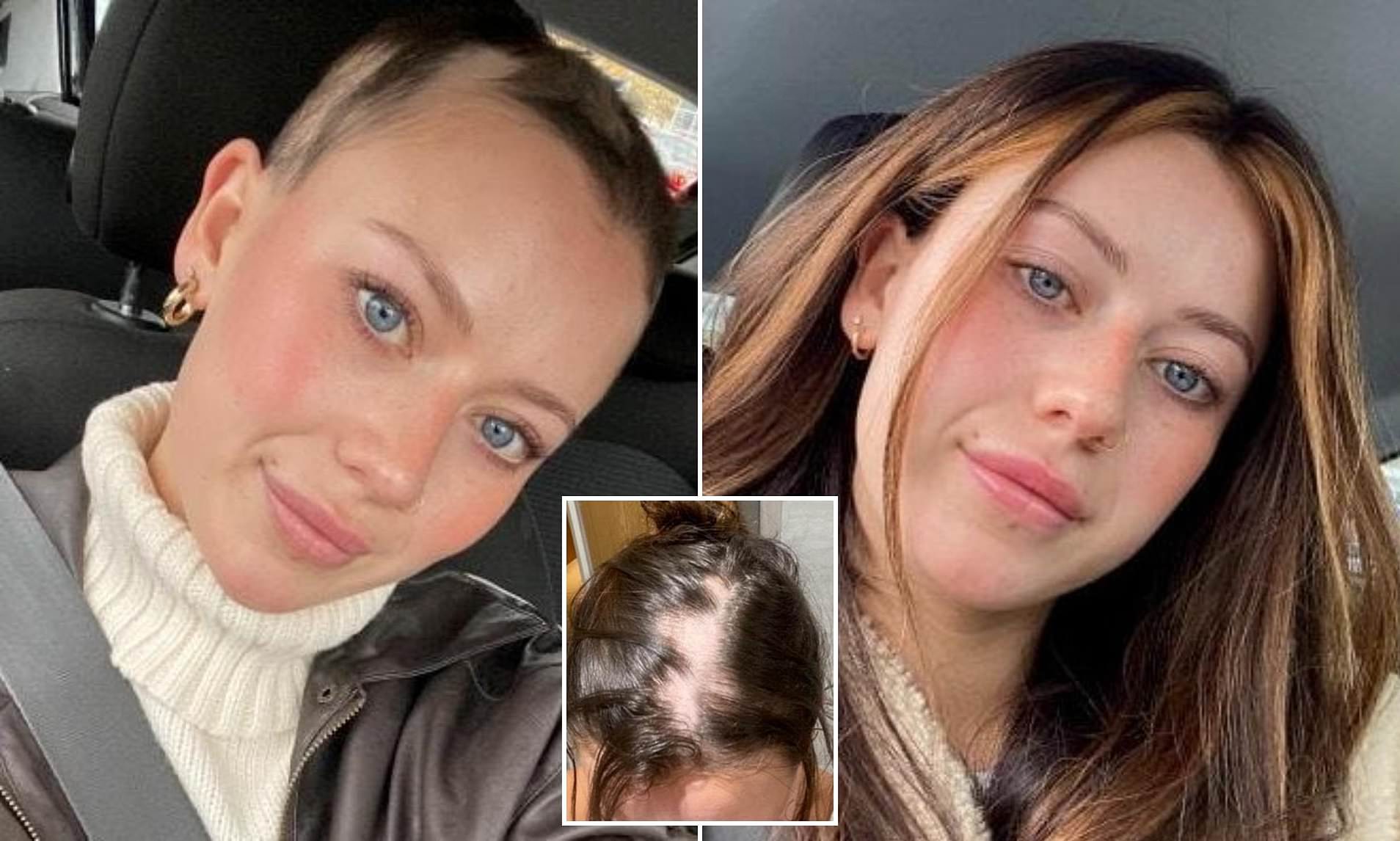
A Young Woman’s Journey with Alopecia and the Need for Workplace Support
Lauren Johnson, a 23-year-old trainee veterinary nurse from Newcastle, has become a powerful voice in the conversation about workplace stress and its impact on health. Her personal experience with alopecia, a condition that caused her to lose large clumps of hair, has led her to advocate for better support systems for workers facing similar challenges.
Johnson first noticed her hair shedding in May 2025, but she initially dismissed it as a normal occurrence, attributing it to hormonal changes. However, two months later, during a girls’ trip to Spain, her best friend Holly Probert-Darkings noticed a significant patch of hair missing from the back of her neck.
“I had my wet hair up in a claw clip, and Holly asked me if I accidentally razored the back of my hair in the shower,” Johnson recalled. “The back part of my head, where the hair is supposed to meet the back of my neck, was completely gone. But I had no other symptoms at the time or beforehand.”
She added that she had been shedding hair all over her pillow in the weeks leading up to the trip, but she thought it was due to a heavy period. When she realized she was losing her hair in clumps, she experienced a full-blown breakdown and anxiety attack.
Johnson then FaceTimed her mother, Margaret, who is a former hairdresser, for reassurance. “My mum told me: ‘Lauren, I think that’s alopecia.’ I cried in the bathroom for hours. I had no idea what was happening or what may have caused it. I came out later and said to Holly we either make jokes about it the rest of the holiday or we don’t talk about it at all.”
Upon returning home, she booked an appointment with her GP, who confirmed her mother’s suspicions and diagnosed her with alopecia. Johnson also shared that both her uncle and mother had struggled with hair loss, with her uncle being diagnosed with alopecia areata in his twenties due to workplace stress. Her mother, however, believes her patterned baldness was caused by a postpartum blood transfusion, which resulted in significant iron loss.
Until now, Johnson has received little support to navigate her hair loss journey at such a young age. She said, “Other than the diagnosis, I was given no help from the GP: No counselling, no referral to dermatology, and no non-invasive treatment options.” 


She added, “I wasn’t even given anything to do or use in the meantime. I only managed to get a dermatology referral for November because I complained for months. I’m now on a waiting list but I’m not expected to be seen until next August.”
To manage her condition, Johnson has been wearing wigs, which require her to regularly shave her head for a good fit. While she has come to terms with her hair loss, she is doing everything she can to help her hair grow back, including taking pumpkin oil supplements, using a hair serum and scalp massager, and focusing on her diet and gut health.
“Living through the crisis phase, you have no choice but to find your own way of moving forward with a new reality,” she said. “People can’t believe how well I’m handling this, and the truth is it really is fake it until you make it. There are some days I just wish I was normal, whereby my hair is a last thought.”
Understanding Alopecia Areata
Alopecia is the term used to describe hair loss, which affects roughly 40% of women and 30% of men at some point in their lives. Around 1 in every 4,000 people develops alopecia areata each year. 


Alopecia areata is a specific cause of hair loss, where the immune system attacks hair follicles for reasons not yet fully understood. It can start at any age but is most common in early adulthood, typically causing small round patches of baldness on the scalp. Hair elsewhere, such as the eyebrows and eyelashes, can also be affected.
The condition gained global attention when Jada Pinkett Smith, an actress, faced public scrutiny after comedian Chris Rock made a joke about her condition at the Oscars, which led to a slap from her husband, Will Smith.
Alopecia areata leaves people more vulnerable to infections and reduces their ability to regulate body temperature. However, hair follicles are not destroyed but lie dormant, making regrowth possible. Steroid treatments, such as creams, injections, or pills, can be prescribed, but long-term use increases the risk of serious conditions like type 2 diabetes. Doctors recommend stopping steroid use after six weeks.
Last year, the medicines watchdog approved Ritlecitinib—a drug found to reverse the condition in one in five patients—in what was described as a “monumental” move for alopecia areata sufferers.
What Is Alopecia Areata?
Alopecia areata is a patchy version of alopecia, an autoimmune condition where the immune system causes hair to fall out. It can affect hair on any part of the body and can happen to anyone at any age, often triggered by stress.
Hair usually begins to fall out in patches, leaving bald, smooth areas. Doctors cannot predict how much hair someone will lose or whether it will grow back. While there is no cure, there is an approximately 60 to 80% chance of regrowth within a year if only patches of hair are lost. However, regrowth is less likely if all hair falls out. If hair does grow back, it can take months or years, starting as sparse white hairs that eventually thicken and regain their color.


