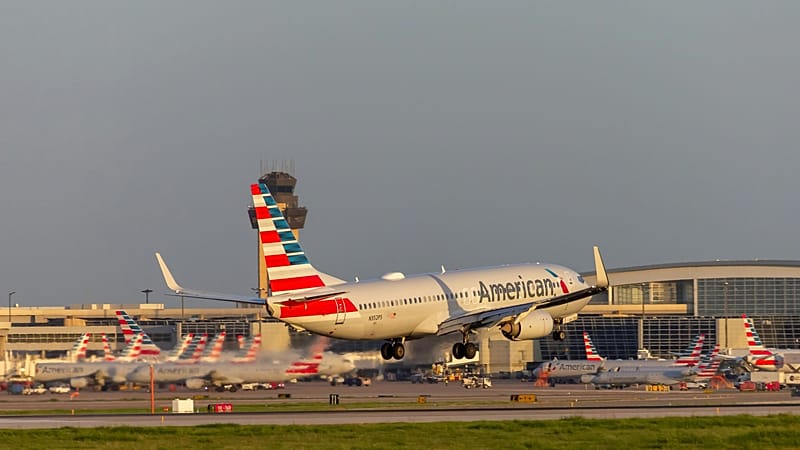
The Impact of the Government Shutdown on Air Travel
As the United States government shutdown reaches a record 37 days, its effects are becoming increasingly visible across the nation, including in the skies. Transportation Secretary Sean Duffy has raised concerns about the potential for “mass chaos” if the shutdown continues, warning that delays, cancellations, and even airspace closures could become a reality.
The Federal Aviation Administration (FAA) has announced plans to reduce air traffic by up to 10% across 40 high-volume markets starting Friday. This move aims to ensure travel safety as air traffic controllers show signs of strain due to the ongoing shutdown.
What Does This Mean for Travelers?
The restrictions will be implemented gradually, with domestic flights expected to decrease by around 4% on Friday, increasing to 5% on Saturday and 6% on Sunday. By next week, the reduction is projected to reach 10%. Experts predict that this could result in hundreds, if not thousands, of flight cancellations. According to an estimate by aviation analytics firm Cirium, the cuts could affect as many as 1,800 flights and over 268,000 seats combined.
Affected airports span more than two dozen states, including major hubs like Atlanta, Denver, Dallas, Orlando, Miami, and San Francisco. In cities such as New York, Houston, and Chicago, multiple airports will be impacted. Flights have also been delayed due to staffing shortages at airports or other FAA facilities.
Unpaid Staff and the Risk of Mass Chaos
Thousands of air traffic controllers and airport security officers are still working without pay. As the shutdown continues, some employees are beginning to call in sick to seek temporary jobs elsewhere. One air traffic controller told NPR, “I think you’re also seeing people who are just calling in sick because they’re fed up and they’re like, ‘well, I’m going to spend the holiday weekend with my kids for once.’”
The Trump administration has reported shortages of up to 3,000 air traffic controllers. Employees of the FAA have already missed one paycheck, and further financial pressure is expected if the shutdown continues. The situation has led to longer queues, missed connections, and extended waiting times at airports or on the tarmac.
Current Delays and Cancellations
Normally, airlines aim to have at least 80% of their flights depart and arrive within 15 minutes of their scheduled time. However, since the shutdown began on October 1, the total number of delays has not significantly fallen below this goal. Most disruptions so far have been comparable to those caused by major thunderstorms.
On Sunday, only about 56% of Newark’s departures were on time, and Orlando reported that only 70% of its flights were on time. Industry groups estimate that over 3.2 million passengers have been affected since the shutdown began. On Wednesday alone, 3,884 flights within, into, or out of the United States were delayed, with another 171 cancelled.
Airlines warn that the chaos could impact bookings if travelers lose confidence in the system, especially if the safety of American skies faces a public relations hit.
The Consequences of Airspace Closures
Even a partial closure of US airspace would have widespread consequences due to the interconnected nature of the country’s air traffic control system. Air traffic centers handle flights across multiple regions, meaning delays or restrictions at one facility quickly affect others. Industry analysts, including Airlines for America (A4A), have warned that staffing shortages in one region can cause nationwide ripple effects.
If a major center limits arrivals or departures, delays can cascade through other airports, creating knock-on cancellations and missed connections far from the original problem. Reroutings and reduced capacity across the US could also impact international schedules, complicating onward travel to Europe and other destinations.
In a statement following Duffy’s announcement, the US Travel Association President and CEO Geoff Freeman noted that while the decision to reduce flights is necessary for safety, it will inevitably lead to longer delays, more cancellations, and fewer flights. He argued that “the fault for this situation rests squarely at the feet of Congress.”
While a full closure isn’t yet on the table, the warning highlights how fragile the system has become after more than a month without funding.


