Political Unrest and Travel Warnings in Tanzania
Climbers should take note — Mount Kilimanjaro is no longer the biggest challenge for travelers in Tanzania. The East African nation, home to the world’s tallest freestanding mountain and the Great Migration of Wildebeest, has recently found itself under a high travel caution from several countries around the globe.
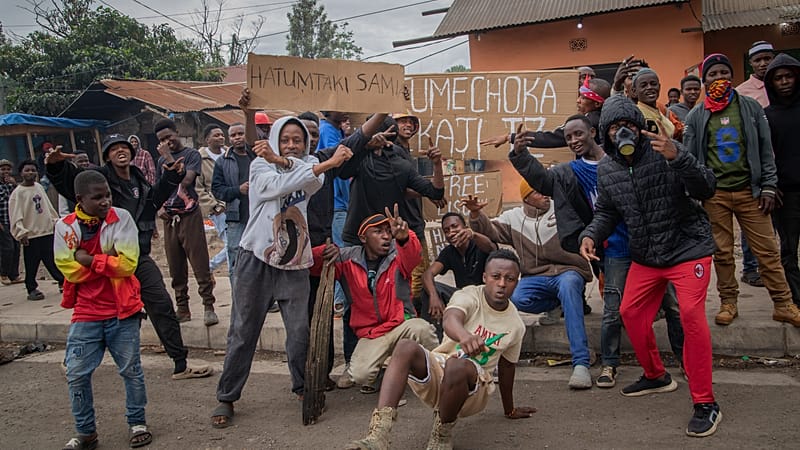
The unrest in Tanzania began before and after its presidential election on 28 October. The incumbent president, Samia Suluhu Hassan, faced significant opposition as her rivals were either imprisoned or barred from participating. According to reports by the Southern African Development Community (SADC), in many areas, “voters could not express their democratic will.” This unrest has led to widespread violence, with hundreds of deaths reported.
In response to the situation, the local government imposed a curfew from 6 pm to 6 am starting on 28 October, which remains in effect. Supermarkets are struggling with food shortages due to the closure of Dar es Salaam port, and internet services have also been disrupted. Some international and domestic flights have been canceled, and ferry services between Dar es Salaam and Zanzibar have also been affected.
As a result, multiple countries have issued travel advisories warning against non-essential travel to Tanzania.
Record Tourism Numbers in 2024
Despite the current challenges, Tanzania continues to attract millions of tourists each year. In 2024, the country saw a record high of over 5 million visitors, with 2 million being international tourists.
Tanzania’s Serengeti National Park, known for its rich wildlife including giraffes, elephants, rhinos, and wild dogs, was the most visited attraction, drawing 589,300 visitors last year.
Europeans made up the largest group of tourists visiting Tanzania in 2024. According to the 2024 International Visitors’ exit report released in May, 15 countries accounted for 80% of the visitors, with Italy, France, the United Kingdom, Spain, and Germany making up approximately 36% of those numbers.
Zanzibar, a Tanzanian archipelago off the coast of East Africa, remains a popular destination for European travelers, drawn by its crystal-clear waters and beautiful beaches.
Most visitors came for leisure or holidays, though the survey was conducted during the peak tourist season in August 2024.
EU Countries Issue Travel Alerts
Between 30 October and 3 November, several European Union countries updated their travel advice, urging citizens to avoid non-essential travel to Tanzania. Countries like Denmark, Bulgaria, and Italy advised their citizens to avoid travel, while France and Austria warned those already in the country to stay indoors.
Several countries outside the EU, including Canada, Norway, and the United Kingdom, issued joint statements regarding the situation in Tanzania. The EU emphasized the lack of a level playing field in the run-up to the elections and highlighted its relationship with Tanzania through the Samoa Agreement.
Latvia, for instance, had only four registered travelers in 2025, according to Diāna Eglīte, Press Secretary for Latvia’s Ministry of Foreign Affairs. Given that Latvia has no representation in Tanzania, travelers are advised to follow the recommendations of other EU countries.
Implications for Travelers
Travelers planning to visit Tanzania should exercise caution before booking flights. While most warnings are not restrictions, many flights in and out of the country have been canceled or delayed due to public unrest, especially in Dar es Salaam.
Governments advise passengers to check with their airlines before heading to the airport to confirm flight status. Flights that are operating are likely to be fully booked.
The UK’s Foreign, Commonwealth & Development Office (FCDO) advises against all but essential travel to Tanzania. It also warns that travel insurance may be invalid if travelers choose to visit against this advice.
The Netherlands updated its warnings on 4 November, stating that the security situation in Tanzania has improved, although its embassy remains closed until further notice. The Dutch have assigned an orange warning for the border area between Tanzania and Mozambique, and a yellow warning for the rest of the country.
Airline Adjustments and Future Plans
Czechia has sent push notifications to registered travelers and is actively monitoring the situation. Meanwhile, Brussels Airlines announced plans for a twice-weekly direct flight to Kilimanjaro starting in June 2026. Nico Cardone, Media Relations Manager for Brussels Airlines, stated that there are still eight months to determine if any adjustments to the flight schedule are necessary.
“We hope the situation will calm down soon, first and foremost for the people of Tanzania who are currently suffering from the violence. At this time, there is no need to adjust our flight schedule. However, we will continue to monitor the situation closely and will adjust our operations if necessary,” Cardone said.
Generally, Brussels Airlines determines whether to continue flights based on safety and demand. This means that travel advice from a single government may not always influence airline operations.
“Naturally, all non-essential travel comes to a standstill during such times, but air connectivity becomes more vital than ever, our flights were the only way for humanitarian aid to reach those countries,” he added.

Related posts:

Fiction park: He was the best in class. He still wasn’t good enough

Gagan Thapa takes oath as Congress president, vows to regain public trust

Inside knowledge that has locals gripped by fear after gran’s body found decomposing in cattle dip

New property purchase disclosure rule in Japan sparks fears it may curb foreign investment

Dino-mite treasures: inside Singapore’s Fort Knox storing playthings of ultra-rich