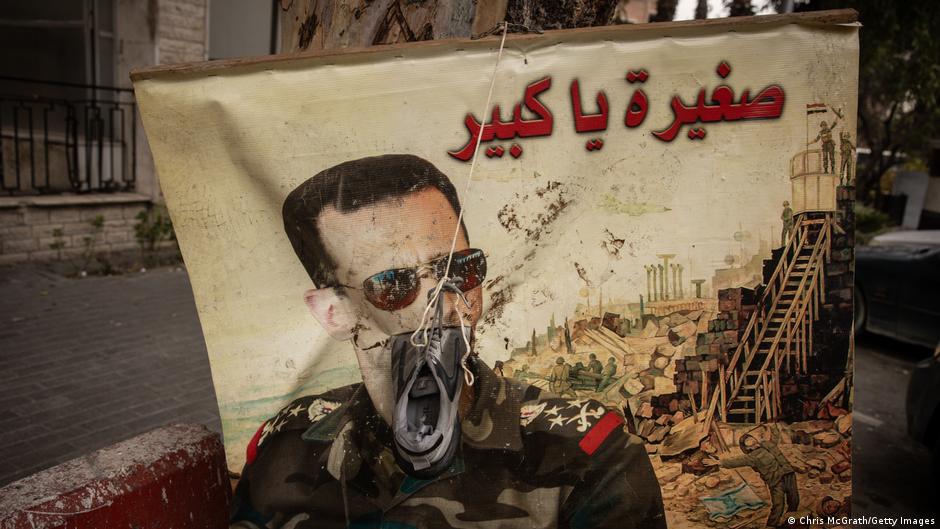
The Rise of Vigilantism in Post-Assad Syria
A year after the fall of the Assad regime, Syria remains a country marked by violence and uncertainty. While the official narrative suggests a transition towards stability, the reality on the ground is far more complex. One of the most alarming developments is the rise of vigilantism, where Syrians are taking the law into their own hands to seek justice for past atrocities.
A Disturbing Trend
The pattern of vigilante violence has become increasingly evident across various regions of Syria. In October, two men were shot dead in the Christian-majority village of Anaz in Homs province. The attackers, dressed in black and riding a motorcycle, left behind a trail of confusion and fear. Some observers speculated that the killings were motivated by sectarian hatred, while others pointed to remnants of the Assad regime trying to incite further conflict. However, deeper investigations revealed that one of the victims was linked to an Assad-affiliated militia responsible for the deaths of hundreds during the civil war.

The Growing Problem of Vigilantism
This incident is not isolated. Reports indicate that vigilantism is on the rise in Syria, with targeted killings becoming a common occurrence. Over the last two weeks of August, it was estimated that 36% of over 70 violent deaths recorded were due to targeted killings or vigilantism. In some cases, this figure has reached as high as 60%.
Unlike mass outbreaks of intercommunal violence, these attacks are usually directed at individuals. Gregory Waters, a senior fellow at the Atlantic Council, notes that the trend is increasing, driven by the lack of transitional justice. “It varies week by week,” he says, “but it’s definitely getting worse.”

The Role of Transitional Justice
Since the ousting of the Assad regime in December 2024, the new interim government has promised to bring those who collaborated with the regime to justice. Ahmad al-Sharaa, the interim president, has met with community leaders, urging patience. However, many Syrians are frustrated with the slow pace of justice. “We had a million martyrs, a million homes destroyed, millions displaced. What are you asking us to be patient for?” they ask.
The government has also offered amnesty to many former soldiers, stating that only those with “blood on their hands” would face criminal retribution. Despite these promises, efforts to arrest suspected regime criminals have been inconsistent and poorly communicated.

Social Media and Disinformation
Social media has played a significant role in fueling the cycle of violence. Arabic-language pages that post pictures of regime affiliates often incite public outrage. These posts can be interpreted as calls to violence, further escalating tensions. Additionally, the spread of disinformation and misinformation complicates the situation, making it difficult to discern truth from fabrication.
Most of the victims of vigilantism have been members of Syria’s Sunni majority. “Sunni [regime] collaborators are despised by their own communities, so it is easier to target them,” Waters explains. However, if a member of a minority group is attacked, accusations of sectarianism often follow, even if the victim is later found to have been involved in war crimes.
Addressing the Crisis
Currently, the interim government appears to be doing little to address the issue of vigilantism targeting regime collaborators. Whether this is due to a lack of will or insufficient resources remains unclear. Waters highlights the case of an established vigilante group in Aleppo that continues to assassinate regime officers. “It’s a huge struggle for the government to go after this group; it is essentially an insurgent cell,” he says.
Instead, the government seems to focus on arresting former regime soldiers before the vigilantes do. Aaron Zelin, a senior fellow at the Washington Institute, believes that greater transparency about the government’s transitional justice commission could help. “Being quiet may undermine trust and transparency since nobody has any idea of the timeline or how it’s all going to play out,” he says.
Mohammad al-Abdallah, director of the Syrian Justice and Accountability Center, argues that the increase in vigilantism reflects the failure of the current system. “The authorities didn’t detain people complicit in violations and they’re roaming the streets. People see them, and they think, ‘You detained my father or executed my brother, you killed my son.’ They end up ‘taking their rights by their own hands’ because they don’t have any further information on the state’s plan to hold these individuals accountable.”


