
The Struggle of the F-150 Lightning
The demand for Ford’s all-electric F-150 Lightning has not met expectations, according to a dealer who spoke to the Wall Street Journal. This has led some Ford executives to consider discontinuing the model, which was once projected to sell up to 150,000 units annually. However, in the last year, only 33,000 units were sold. This significant shortfall has raised questions about the future of the electric truck.
Ford initially launched the Lightning during a period of optimism regarding electric vehicles (EVs). The company, along with many others, anticipated rapid growth in EV sales. However, this vision has not materialized as expected. Despite the challenges, Ford remains committed to winning the EV truck market in the long term. There are several factors that could make stepping back from the current model a strategic move.
A Shift in Market Dynamics
The decline in EV sales has been attributed to the end of the electric tax credit. In October alone, total EV sales dropped by 24%. The F-150 Lightning has also been a costly loss leader for Ford. The company recently launched a campaign to promote the Lightning’s ability to power homes, including smart charging and returning energy to the grid. However, these efforts have not translated into increased sales.
Regulatory changes have also played a role in Ford’s decision-making process. Previously, automotive companies had to meet certain fuel economy targets, which encouraged the sale of electric vehicles. With the removal of these regulations under the Trump administration and the imposition of tariffs that increase production costs, the justification for selling electric trucks at a loss has become more difficult.
Consumer Demand and Market Competition
Despite the challenges, the F-150 Lightning remains the best-selling electric pickup truck in the U.S., even with competition from the Cybertruck, Chevy, GMC, Hummer, and Rivian. It delivered record sales in the third quarter of this year. Ford is currently focused on producing the F-150 ICE and Hybrid models while recovering from a fire at Novelis.
However, consumer demand has not matched expectations. One dealer owner told the Wall Street Journal that he no longer orders F-150 Lightnings because there is little interest in buying them. This sentiment highlights the gap between what Ford envisioned for the Lightning and what consumers are willing to purchase.
The Future of Electric Trucks
Electric trucks face significant challenges in terms of capability, range, and price competitiveness. Full-size truck buyers expect a combination of performance, space, and affordability that is difficult to achieve with current electric models. Most buyers are unwilling to pay a premium until technology becomes cheaper and more refined.
Despite these challenges, the potential for electric trucks remains high. Models like the F-150 Lightning, Chevy Silverado EV, Tesla Cybertruck, and Rivian R1T offer compelling advantages over gas trucks. However, the current products are still money-losers for manufacturers.
Strategic Considerations
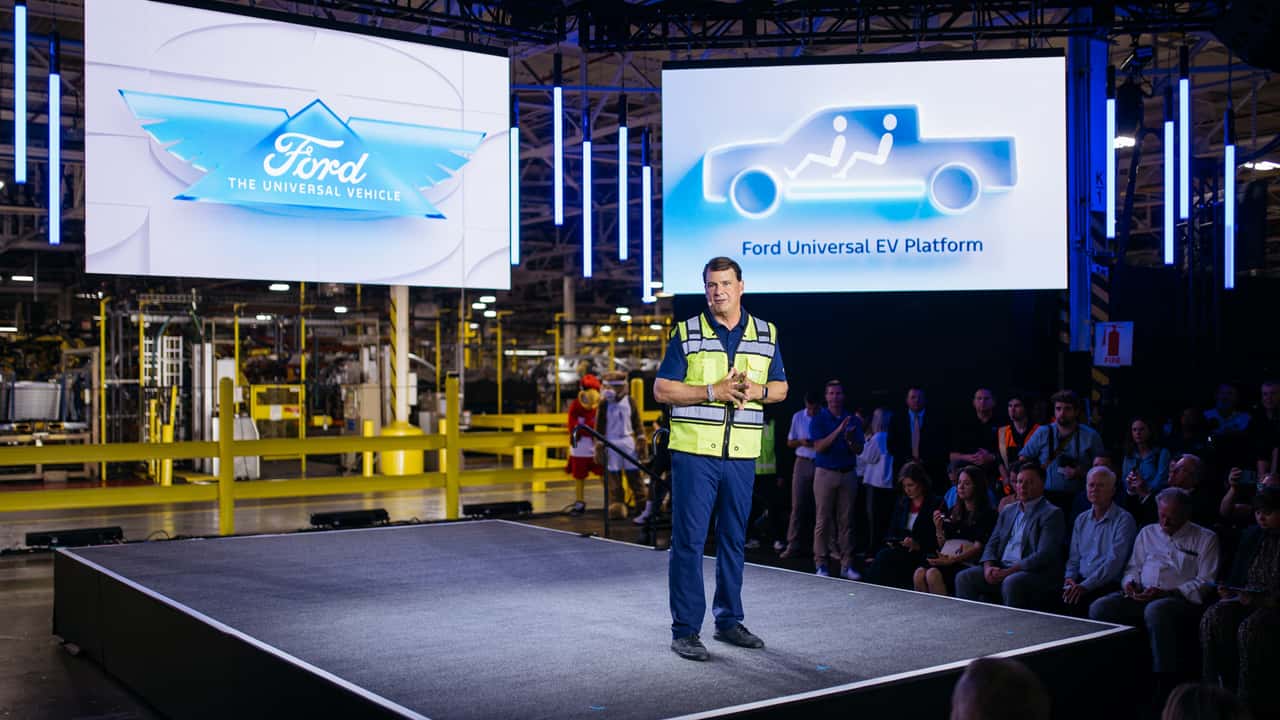
Ford’s strategy involves entering the electric truck market with the new $30,000 electric truck and “Universal EV Platform.” This platform is designed to be more efficient, with fewer parts and a new assembly process. CEO Jim Farley has highlighted this as a way to compete with advanced Chinese automakers. However, this model will not be available until 2027 at the earliest.
If the F-150 Lightning is discontinued, Ford will need to find other ways to keep EV-interested customers engaged until the new model is ready. The current plan is to reopen the Rouge Electric Vehicle Center (REVC) when the time is right, but an exact date has not been set.
The Road Ahead
The question remains whether Ford and other manufacturers should continue investing in products that are not yet economically viable or if they should scrap their current efforts and develop a fresh strategy. For now, the F-150 Lightning production remains idle due to aluminum supply constraints and a focus on more profitable gas and hybrid trucks.


