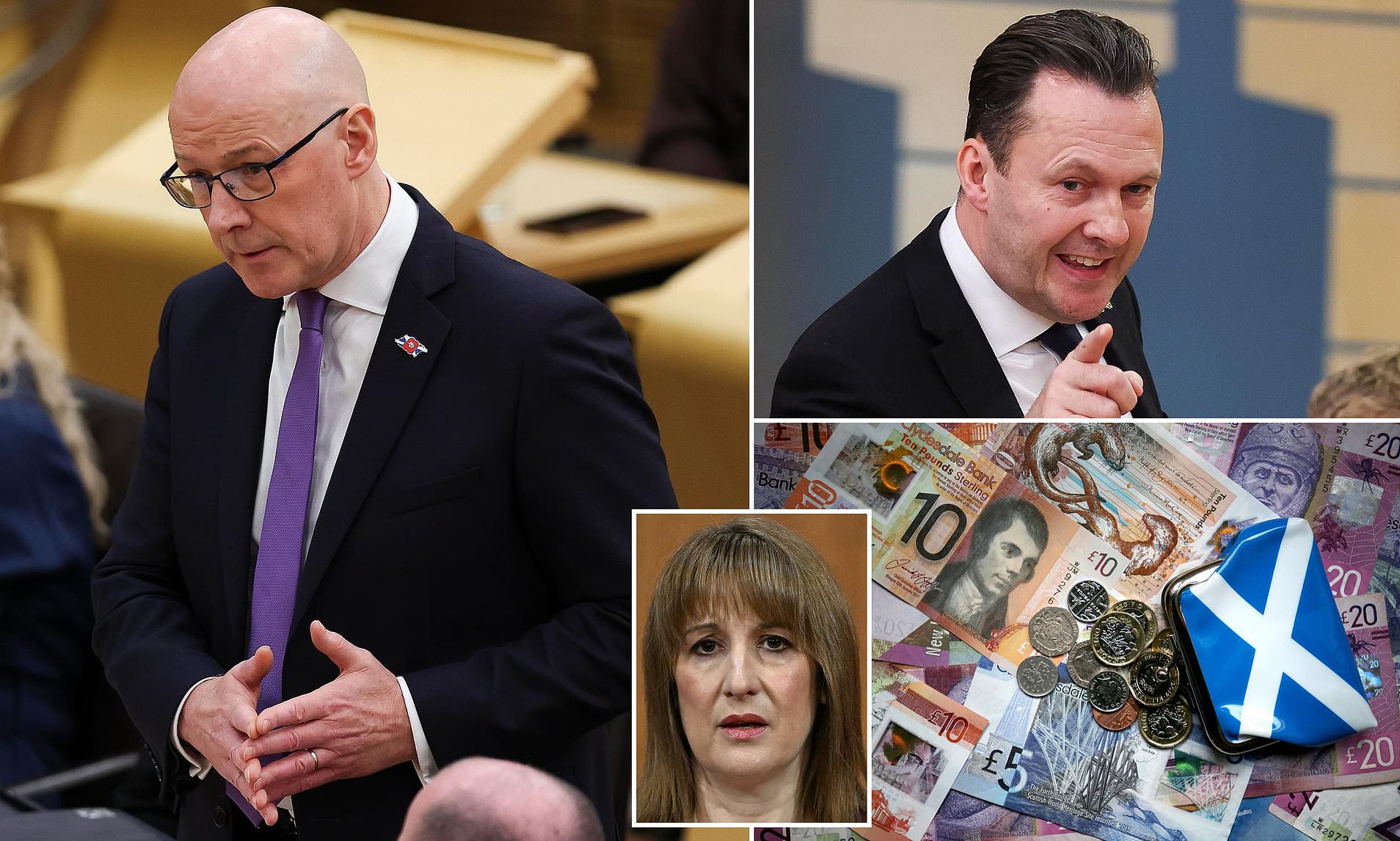
John Swinney Reverses Income Tax Pledge, Sparks Concerns Over Future Tax Hikes
John Swinney, the First Minister of Scotland, has reversed his previous commitment to not raise income tax for Scots in the next Budget. This comes just over a week after he ruled out any further increases. The decision marks a significant shift in the Scottish Government’s stance, as it now leaves the door open for potential tax hikes in the upcoming Scottish Budget scheduled for January.
Swinney had previously promised that there would be no changes to income tax during this parliament. However, he now acknowledges the “changing landscape” around the UK Government’s tax policies, particularly those set by Chancellor Rachel Reeves. He stated that the Scottish Government must respond to these developments openly and transparently with the public.
A Shift in Policy
The First Minister emphasized that while the Scottish Government’s policy remains to avoid income tax increases, there are new uncertainties arising from the UK Government’s actions. He noted that there has been a “tremendous moving of the ground” by Reeves, which has prompted the need for the Scottish Government to reassess its position.
Despite this reversal, Swinney reiterated his commitment to maintaining current income tax rates for the duration of the parliament, as outlined in the 2021 SNP manifesto. However, critics argue that the recent changes in tax policy have already deviated from the original promises made by the party.
Impact on Scottish Families
The potential for further tax increases has raised concerns among Scottish families, who are already paying more in income tax than their counterparts in England. For instance, individuals earning £45,000 pay £428 more in Scotland, with the difference increasing significantly at higher income levels. At £130,000, the gap reaches £5,363.
This situation has led to growing anxiety about the financial burden on workers, especially as both the SNP and Labour parties are seen as favoring increased taxation. Russell Findlay, the leader of the Scottish Conservatives, criticized Swinney’s latest move, stating that it will “strike fear into the hearts of workers.”
Manifesto Commitments Under Scrutiny
The SNP’s 2021 manifesto pledged to freeze income tax rates and bands, with any increases limited to inflation. However, the party has already raised the higher rate of income tax to 42p and the top rate to 47p in the 2023/24 fiscal year. Critics argue that these changes contradict the manifesto’s commitments.
Swinney attempted to defend the party’s actions, stating that the manifesto allowed for flexibility in response to changing circumstances. However, many believe that the SNP has already broken its promise, and the recent reversal of the income tax pledge further fuels this perception.
Uncertainty and Public Response
The uncertainty surrounding the future of income tax in Scotland has left many questioning whether the government will provide a clear guarantee of no further tax increases. At First Minister’s Questions, Swinney refused to comment on whether he agrees with the Chancellor’s potential tax rises, stating that the UK Government is accountable for its decisions.
The Scottish Conservatives are pushing for a “cast-iron guarantee” from Swinney regarding future tax hikes. However, the First Minister has maintained that such decisions will be outlined in the upcoming Budget, leaving the public to await further details.
Economic Implications
The potential for tax increases in England could also impact Scottish funding, according to analysis by the Fraser of Allander Institute. A 2p increase in the basic rate of income tax in England could lead to a £972 million reduction in the SNP Government’s block grant.
Swinney acknowledged the possibility of increased public expenditure if tax rises occur but stressed that the Scottish Government will respond accordingly. However, the lack of clarity on future tax policy continues to create uncertainty among voters and businesses alike.


Related posts:

Fiction park: He was the best in class. He still wasn’t good enough

Gagan Thapa takes oath as Congress president, vows to regain public trust

Inside knowledge that has locals gripped by fear after gran’s body found decomposing in cattle dip

New property purchase disclosure rule in Japan sparks fears it may curb foreign investment

Dino-mite treasures: inside Singapore’s Fort Knox storing playthings of ultra-rich