Nigeria’s Call for Action on Climate Change at COP30
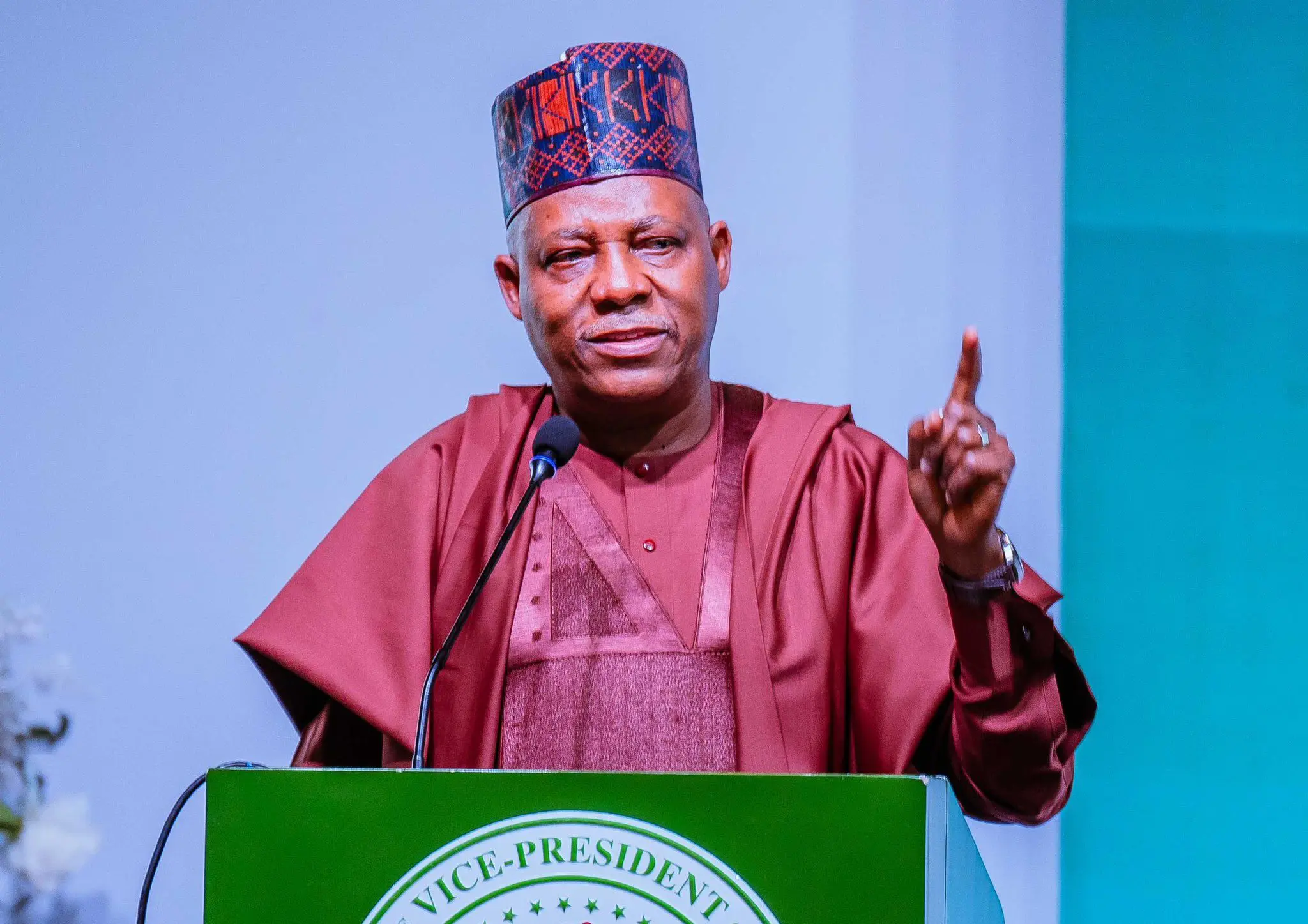
Nigeria’s Vice President, Senator Kashim Shettima, has called on world leaders to move beyond mere pledges and engage in meaningful actions to address climate change. During the Leaders’ Climate Summit at the 30th Conference of the Parties (COP30) of the UNFCCC in Belém, Brazil, he emphasized the need for a shift from dialogue to tangible delivery in combating climate-related disasters that have affected millions globally.
“Let COP30 be remembered as the moment when the world moved from pledges to performance, from ambition to action, and from dialogue to delivery,” he declared. Representing President Bola Tinubu, Senator Shettima reaffirmed Nigeria’s commitment to reducing emissions by 32% by 2035, marking a significant step in the country’s global climate leadership.
This commitment follows the unveiling of the National Carbon Market Framework and the Climate Change Fund, which form the core of Nigeria’s climate finance architecture. These initiatives aim to attract billions of dollars in clean energy and adaptation investments, creating a sustainable framework for resilience and growth.
The National Carbon Market Framework is designed to enable Nigeria to generate, trade, and retire carbon credits in alignment with Article 6 of the Paris Agreement. The proceeds will flow into the newly established Climate Change Fund, supporting communities affected by floods, droughts, and desertification. Additionally, the Nigerian government has launched a five-year Carbon Market Roadmap, laying the groundwork for an Emissions Trading System and a Carbon Tax Regime, supported by fiscal incentives to promote clean industrial innovation.
Senator Shettima highlighted the importance of a reliable and equitable architecture that recognizes the realities of developing nations. He stated, “No nation can finance climate ambition with goodwill alone. We need a system that empowers us to deliver on global commitments.”
Nigeria’s Third Nationally Determined Contribution (NDC), validated and submitted in September 2025, outlines a comprehensive strategy across energy, agriculture, transport, waste, and industry. The Decade of Gas Strategy remains pivotal in powering the transition, balancing natural gas utilization with expanded solar and off-grid electrification to drive rural energy access and sustainable development.
Global Leaders Converge for Climate Action
UN Secretary General Antonio Guterres expressed concern over the failure to remain below the 1.5-degree Celsius threshold, stating that a paradigm shift is necessary to limit the magnitude and duration of temperature overshoots. He emphasized the urgent need for speed and scale in global efforts to bring temperatures back below 1.5 degrees Celsius before the end of the century.
Guterres warned that even temporary overshoots could lead to unliveable conditions for billions, exacerbating threats to peace and security. He stressed that every fraction of a degree means more hunger, displacement, and loss, particularly for those least responsible for climate change.
Brazil’s President Lula Inacio Da Silva echoed the call for collective effort, emphasizing that fighting climate change must be a priority for all governments and individuals. He highlighted the importance of listening to indigenous communities and those most affected by climate change to develop a global approach to the challenge. The slogan “Collective Efforts” was adopted for COP30 to encourage climate action from all sectors of society.
Prince of Wales, William, who represented his father, King Charles III, urged his generation to safeguard the natural world for future generations. He called for courage, collaboration, and decisive commitment in addressing the climate crisis, using the Amazon as a symbol of inspiration and action.
A Shared Responsibility for a Sustainable Future
As global leaders gather at COP30, the message is clear: climate change requires a unified and determined response. From Nigeria’s commitment to emission reduction to the calls for collective action from international leaders, the focus is shifting from promises to performance.
The discussions at COP30 highlight the urgency of addressing climate change, not just as an environmental issue but as a matter of survival and justice. The interconnectedness of ecosystems, economies, and societies underscores the need for inclusive and equitable solutions.
With the right policies, investments, and collaborations, the world can move towards a greener, more resilient future. As the Vice President of Nigeria emphasized, “We are not the problem; we are an integral part of the solution.” This sentiment resonates across the globe, reminding us that the fight against climate change is a shared responsibility.


