Ethiopia’s Seaside Ambitions and the Rising Tensions in the Horn of Africa
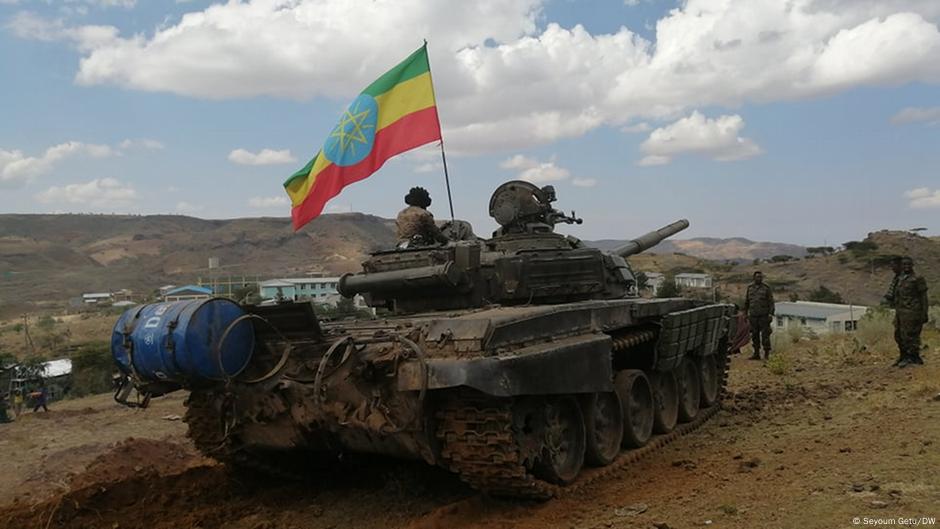
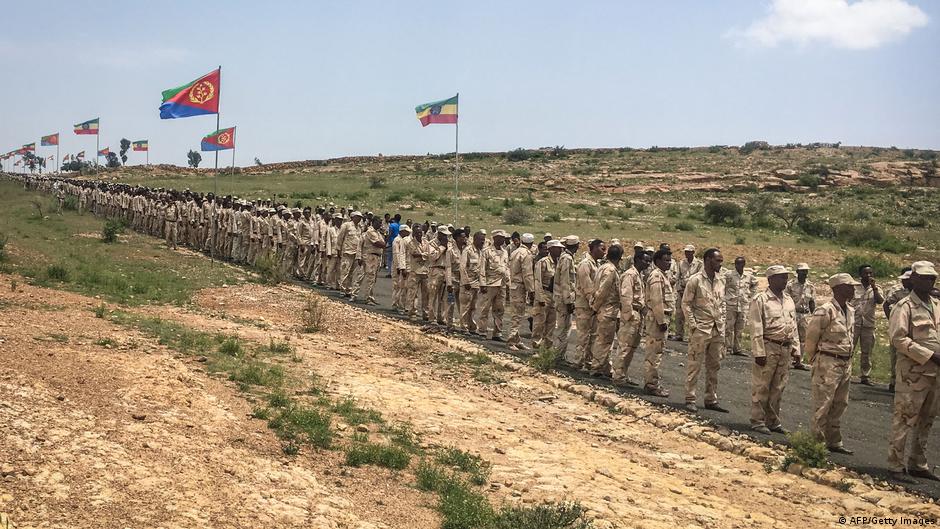
Ethiopia’s long-standing desire for a seaside port has reignited fears of war in the Horn of Africa. Some analysts are even warning of an imminent Ethiopian invasion of its neighbor, Eritrea. The situation has escalated to the point where residents living near the border are in constant fear of renewed conflict.
The history between Ethiopia and Eritrea is marked by significant events. After the end of the colonial era, Eritrea was incorporated into the Ethiopian Empire. A war of independence ended in 1993 with the secession of the former province. Since then, two more wars have occurred, during which the large landlocked Ethiopia and its small neighbor on the Red Sea encountered each other first as adversaries and later as allies.
Now, relations are so strained that many residents of the border region live in constant fear of another war. Michael Woldemariam, an associate professor at the University of Maryland School of Public Policy, states that “the risk of conflict between the two countries remains quite high.” He adds that “the tension and animosity between the two governments has become much more explicit over the last couple of months and weeks.”
Causes of Current Tensions
The governments of both countries had been allied for a brief period until three years ago. They joined forces against the Tigray People’s Liberation Front (TPLF) in Ethiopia’s northern province of Tigray. Depending on the source, between 162,000 and 600,000 people died in this extremely brutal war. The TPLF is also the common denominator in the past enmity between the two countries: Although its ethnic group constituted only around 6% of the Ethiopian population, the TPLF dominated domestic politics for decades and enforced a harsh policy against Eritrea. TPLF dominance ended in 2018 when Abiy Ahmed, who originates from the two largest ethnic groups, the Oromo and the Amhara, was elected Ethiopian prime minister. Abiy spurred reconciliation with Eritrea; later tapping him for Nobel Peace Prize in 2019.
But the improved relationship since the end of the Tigray War now lies in shambles. The main point of contention is Abiy’s increasingly vehement demands for a seaport for Ethiopia, the world’s most populous landlocked country with 120 million inhabitants. Ethiopia primarily uses the ports in its small neighbor Djibouti for imports and exports — and, according to experts, pays between $1.5 billion and $2 billion (€1.3 billion and €1.7 billion) annually to do so. Abiy argues that these costs hinder economic growth.
Eritrea fears Abiy could seize the port of Assab by force, located just 75 kilometers across the border. In mid-October, high-ranking Ethiopian officials, intelligence and military representatives visited the border town of Bure, situated on the highway to Assab. Bure saw fierce fighting during the war between 1998 and 2000, and the meeting fueled concerns of renewed fighting.
Eritrea’s Position and Concerns
Unlike Abiy’s government and the TPLF, Eritrea was not a party to the 2022 Tigray Peace Agreement in Pretoria. After the deal was closed, powerful TPLF officials came to blows over the concessions made to Abiy, ultimately leading to a split within the TPLF. A breakaway faction distanced itself from the prime minister and reportedly receives support from Eritrea. Since the spring, numerous reports about skirmishes and troop movements in northern Ethiopia have surfaced. When Ethiopia recently accused Eritrea of supporting local militias, Asmara dismissed the claim as a “false charade.”
Ethiopia’s army is currently fighting insurgents in several parts of the country. Abdurahman Sayed, a UK-based expert on the Horn of Africa, doubts Ethiopia’s military is currently in a position to capture the port of Assab. “Right now, the fight in the Amhara region has proven to be a very challenging one to the Ethiopian army. So in this kind of circumstances, I think going to war against Eritrea may not be a wise step to be taken,” Sayed told PasarModern.com.
International Reactions and Mediation Efforts
Abiy Ahmed seeks mediation, but who would get involved? He added that he had already discussed his desire for an Ethiopian port with the United States, Russia, China, the African Union, and the European Union.
Security expert Sayed argued that the African Union would be the right place for conflict resolution, but added: “The African Union has always had a chronic problem when it came to addressing issues of conflict within Africa, but also within Ethiopia, too. In 2024, when the Ethiopian prime minister signed a memorandum of understanding with Somaliland, which is a renegade region of Somalia Republic, that was a clear violation of African Union Charter, which calls on respecting boundaries inherited from colonialism.”
US-based researcher Woldemariam believes the Trump administration could pressure both sides into making concessions since both Ethiopia and Eritrea are interested in improving ties with Washington. “On the other hand, of course, I think it is difficult for countries in the Horn region to get a read on exactly what is happening in Washington. I think the Trump administration is regarded as a somewhat unpredictable actor at the current moment, not necessarily reliable,” Woldemariam said.
Eritrean President Isaias Afwerki has already sought the support of his ally Egypt: In late October, he traveled to Cairo for a five-day working visit. Egypt is already at odds with Ethiopia over the GERD dam located upstream on the Nile.
Sayed stressed Egypt’s strong domestic interests in settling the conflict. “The Red Sea for the Egyptians is as important as the River Nile, because the income they get from the Suez Canal, if there is any problems on the southern entrance of the Bab el-Mandab to the Red Sea, then their income would be affected,” Sayed said. When Yemeni Houthi rebels shelled international cargo ships in the region in what they said was support for Palestinians in Gaza, revenues temporarily fell by 40%.
Role of Ethiopia’s Upcoming Elections
What role do Ethiopia’s looming elections play? Abiy’s current term is coming to a close as Ethiopians will head to the polls sometime in 2026. Observers offer differing opinions on how much the looming elections could be influencing the escalation in tension between Ethiopia and Eritrea.
Bayisa Wak-Woya believes Abiy can expect to win reelection — and that a new term would buy him considerable time to address the port issue. The former UN diplomat told PasarModern.com: “I think the issue of Assab will never disappear from the political arena of both the government and even the most opposition groups, because, first of all, there are many, at least not the current generation, but my generation and so on, we still can’t absorb the fact that Eritrea is no more part of Ethiopia.”


Related posts:

Fiction park: He was the best in class. He still wasn’t good enough

Gagan Thapa takes oath as Congress president, vows to regain public trust

Inside knowledge that has locals gripped by fear after gran’s body found decomposing in cattle dip

New property purchase disclosure rule in Japan sparks fears it may curb foreign investment

Dino-mite treasures: inside Singapore’s Fort Knox storing playthings of ultra-rich