The Rise of K-Culture in the U.S. Through the ‘Han River Ramen Machine’
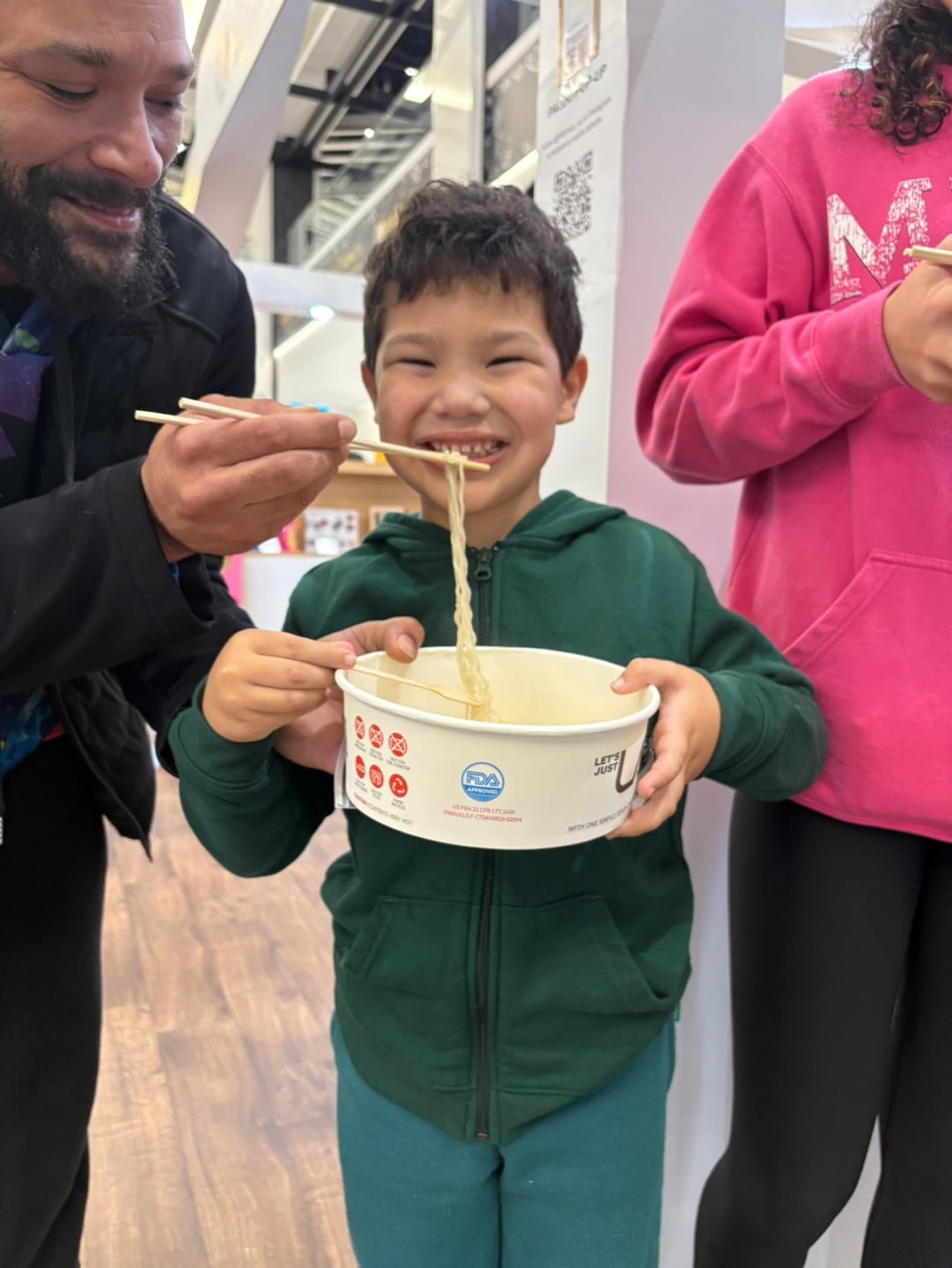
On the 7th, local time, the main plaza of the American Dream Mall in New Jersey, U.S., was filled with the aroma of ramen. This unusual scent was due to the installation of the ‘Han River Ramen Machine,’ an instant ramen cooking device that attracted a crowd of visitors. The American Dream Mall, recognized as the second-largest shopping center in the U.S., became a hub for K-Culture during the Korea Trade-Investment Promotion Agency (KOTRA)’s ‘2025 New York Hallyu (Korean Wave) Expo,’ which ran for three days starting that day.
Melanie, a 39-year-old resident of New Jersey, shared her experience at the event. She mentioned that her daughter became fascinated with Korean ramen after attending a friend’s birthday party at a ‘Korean Ramen Convenience Store.’ Melanie added that her eldest daughter has become an expert in K-pop concerts over the past few years, and now, she and her family have incorporated Korean food, dramas, and other cultural elements into their daily lives.
At the booth of the Korean small and medium-sized enterprise Beomil Industry, which promotes the Han River Ramen Machine, Americans were seen naturally boiling ramen and eating it with chopsticks. A representative from the company noted that in their school in New Jersey, it is common for children to sing the theme song of ‘KPop Demon Hunters’ and play ‘Mugunghwa (Hibiscus) Has Bloomed,’ a song featured in ‘Squid Game.’
The ‘Hallyu (Korean Wave) Expo’ Achieves ‘American Dream’ After 15 Years
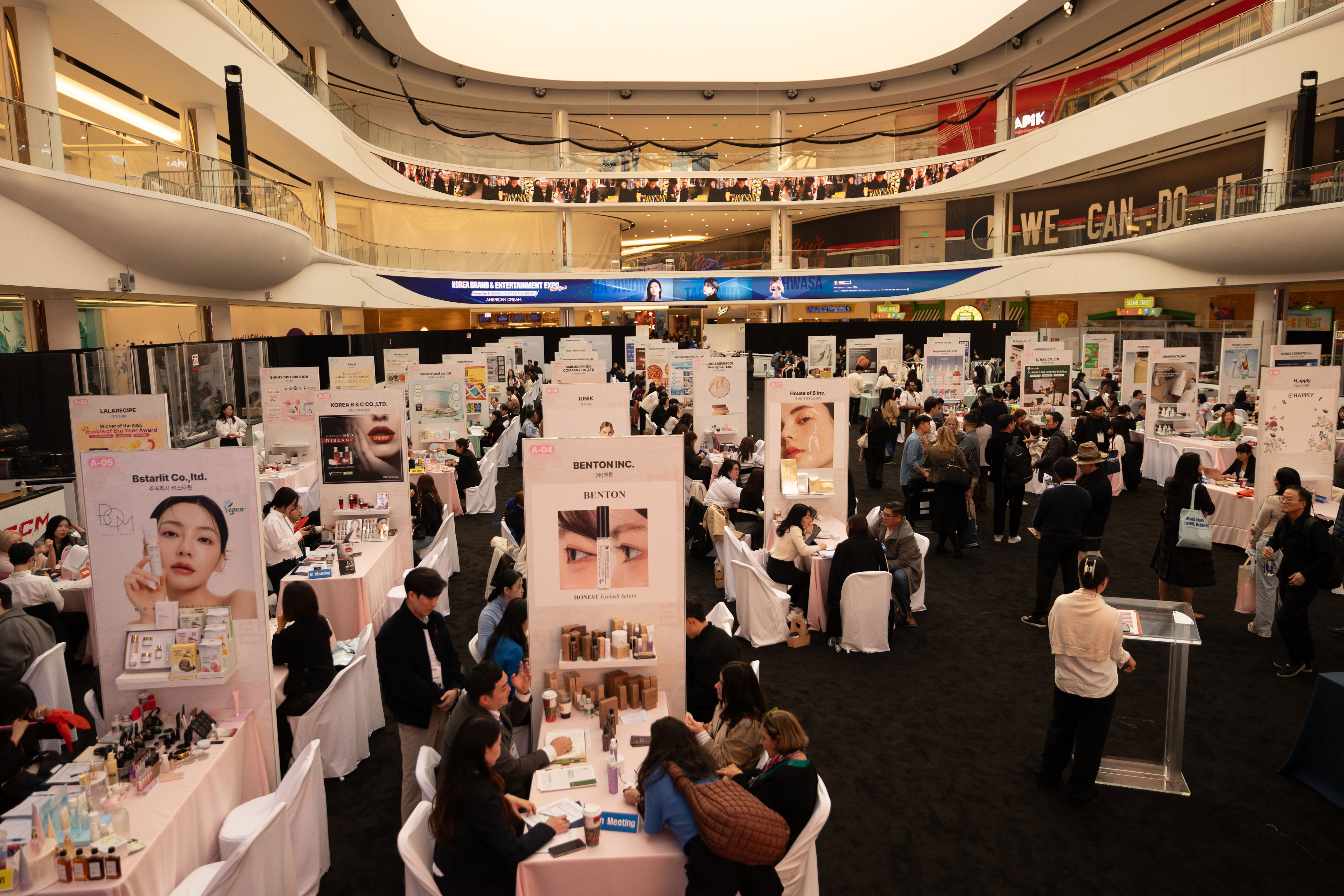
KOTRA’s Hallyu (Korean Wave) Expo is an export fair aimed at promoting consumer goods from Korean small and medium-sized enterprises (SMEs) and mid-sized companies. This event, held alongside K-pop performances, has been hosted more than once a year in various countries around the world since 2010, but this ‘2025 New York Hallyu (Korean Wave) Expo’ marked the first time it was held in the North American region. The decision to host the event in the U.S. was driven by the growing popularity of K-Culture, which includes Korean food, cosmetics, household goods, and fashion.
KOTRA President Kang Kyung-sung explained that hosting events in large cities like New York is expensive, making it challenging to gather large buyers in one place. However, the expansion of the Hallyu (Korean Wave) in the U.S. has provided the confidence to hold the event in North America.
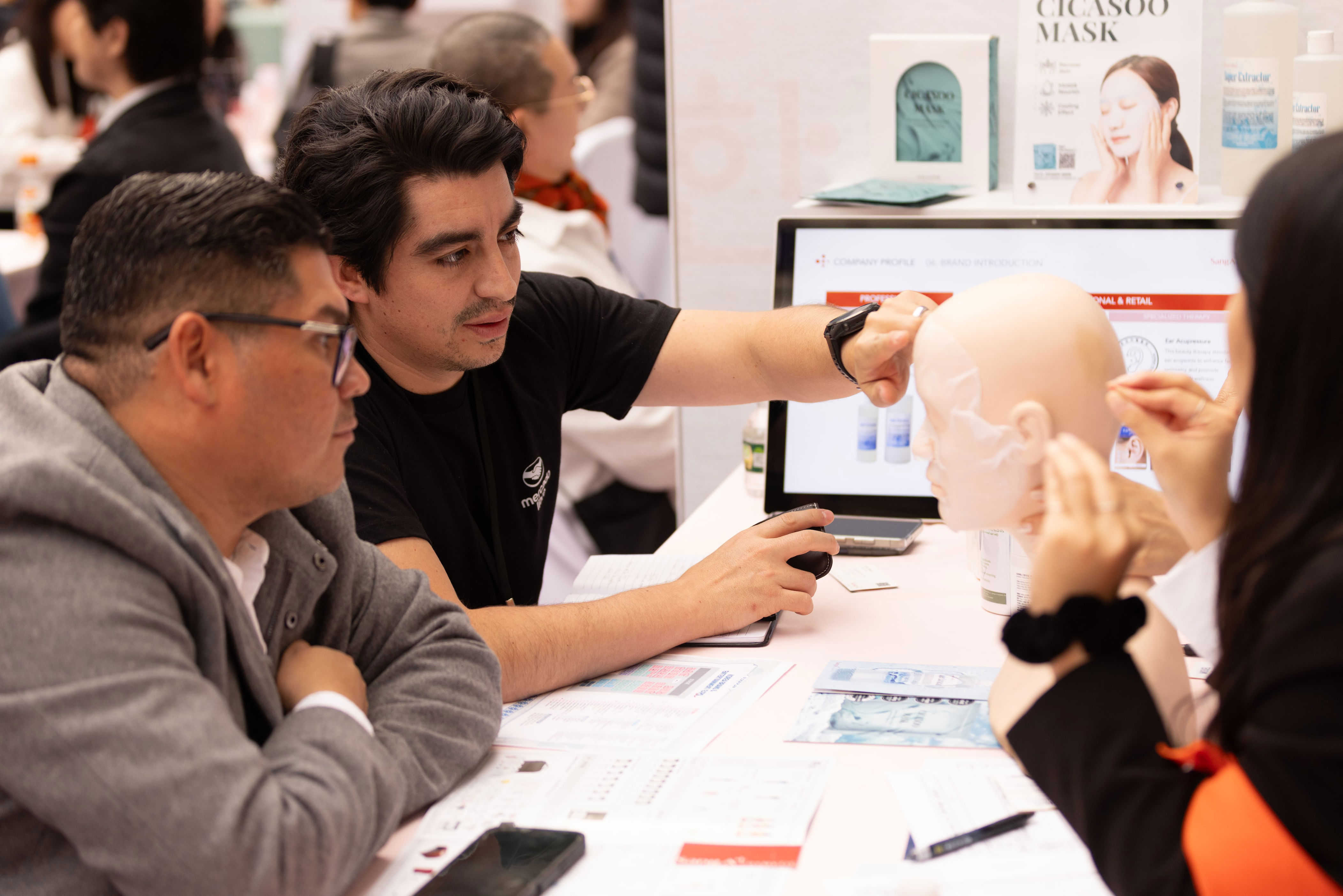
During the business-to-business (B2B) event of the ‘New York Hallyu (Korean Wave) Expo’ held on the 6th, 235 local buyer companies participated, conducting a total of 1,390 export consultations with 100 Korean consumer goods companies. Various Korean food products and items, including instant ramen cookers, Daehan Flour Mills’ ‘Kumpyo,’ Korean-grown Shine Muscat grapes, Wando abalone, and Pororo toys, captured the attention of buyers.
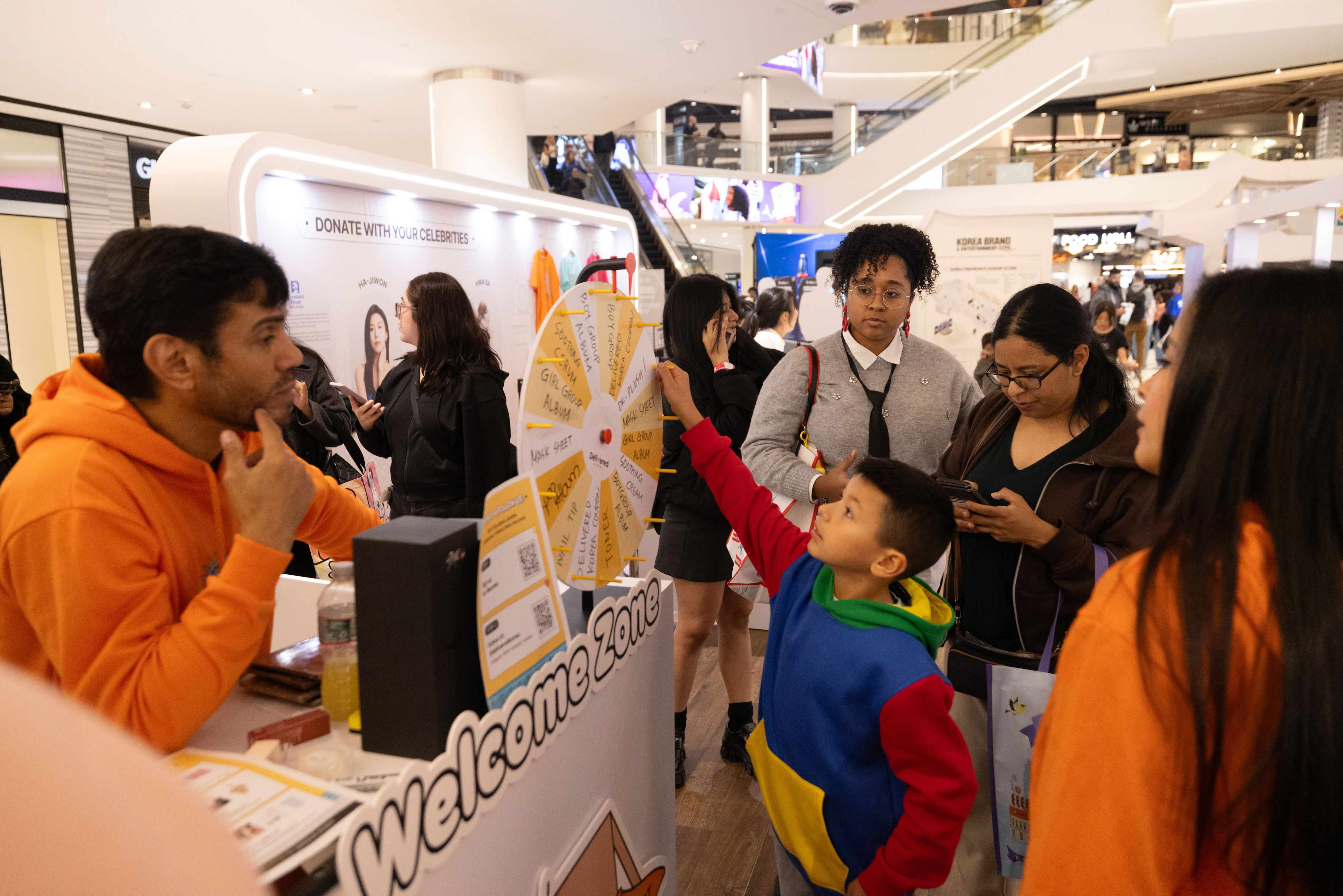
The following day’s public expo drew K-Culture fans from across the U.S. They waited in line at the Hallyu (Korean Wave) direct-purchase company ‘K-Town4U’ to participate in ‘Yut Nori’ and received K-pop photo cards and posters as prizes. As children performed cover dances to songs by idols like ‘aespa’ and ‘KATSEYE,’ people gathered around the plaza, cheering throughout the event.
Brenda, 26, and Ash, 27, said they traveled from Louisiana, a three-hour drive, to watch performances and enjoy Korean-style shopping. They mentioned that several Korean-style convenience stores and restaurants have opened in their neighborhood, and they regularly enjoy instant tteokbokki heated in a microwave and takeout beverages from Korean convenience stores.
North America Emerges as the Largest Export Market for Consumer Goods
The ‘American Dream’ of consumer goods companies in K-food, beauty, and fashion is reflected in export performance. Domestic companies, facing limitations in the domestic market and uncertainty in the Chinese market, have launched efforts to enter the U.S. market, supported by the growth of the K-wave in North America.
Kim Sook-young, a professor at UCLA’s School of Theater, Film, and Television, cited the Oscar win of ‘Parasite’ in 2019, the global success of BTS and ‘Squid Game’ in 2021, and the surge of the Netflix animation ‘KPop Demon Hunters’ this year as momentum for the growth of the Hallyu (Korean Wave) in the U.S. He stated that the lifestyles of what Koreans eat, apply, and wear are beginning to receive attention in the U.S.
Thanks to this, the North American market accounted for 26.5% of total consumer goods exports last year, surpassing China to become the largest export market. According to the Korea International Trade Association, exports of Korea’s four major consumer goods categories (cosmetics, fashion apparel, household and infant products, and agricultural and fisheries foods) to North America increased by 178%, from $380 million in 2020 to $660 million last year. In particular, cosmetics exports recorded explosive growth of nearly 300%, rising from $690 million to $2.02 billion over the same period.
A source from H-Mart, a Korean supermarket that recently succeeded in opening its 100th branch in the U.S., said that Korean content has completely taken root in the daily lives of Americans, backed by large platforms like Netflix and TikTok. Interest is gradually expanding not only to Korean food and restaurants, cosmetics, but also to Korean-style fashion accessories, cute stationery and toys, and interior items that can create a Korean mood.
A representative from ‘Farmacias Simi,’ Mexico’s equivalent of ‘Olive Young,’ who visited the event, said that the fashion and skincare of K-pop singers and Korean actors have established themselves as a ‘global trend’ that people want to follow, even if they are a bit expensive, especially after the COVID-19 pandemic. There is particular interest in Korea’s latest beauty trends utilizing ingestible collagen, glutathione, PDRN, and more.
The Ministry of Trade, Industry and Resources and KOTRA plan to continue encouraging overseas expansion of domestic SMEs and mid-sized consumer goods companies by leveraging K-Culture and more. KOTRA President Kang Kyung-sung said, “This year, we plan to hold the Hallyu (Korean Wave) Expo a total of four times, including in Kuala Lumpur, Malaysia, in December,” adding, “We will fully support ensuring that the Hallyu (Korean Wave) craze extends to the consumer goods of SMEs and mid-sized companies.”


