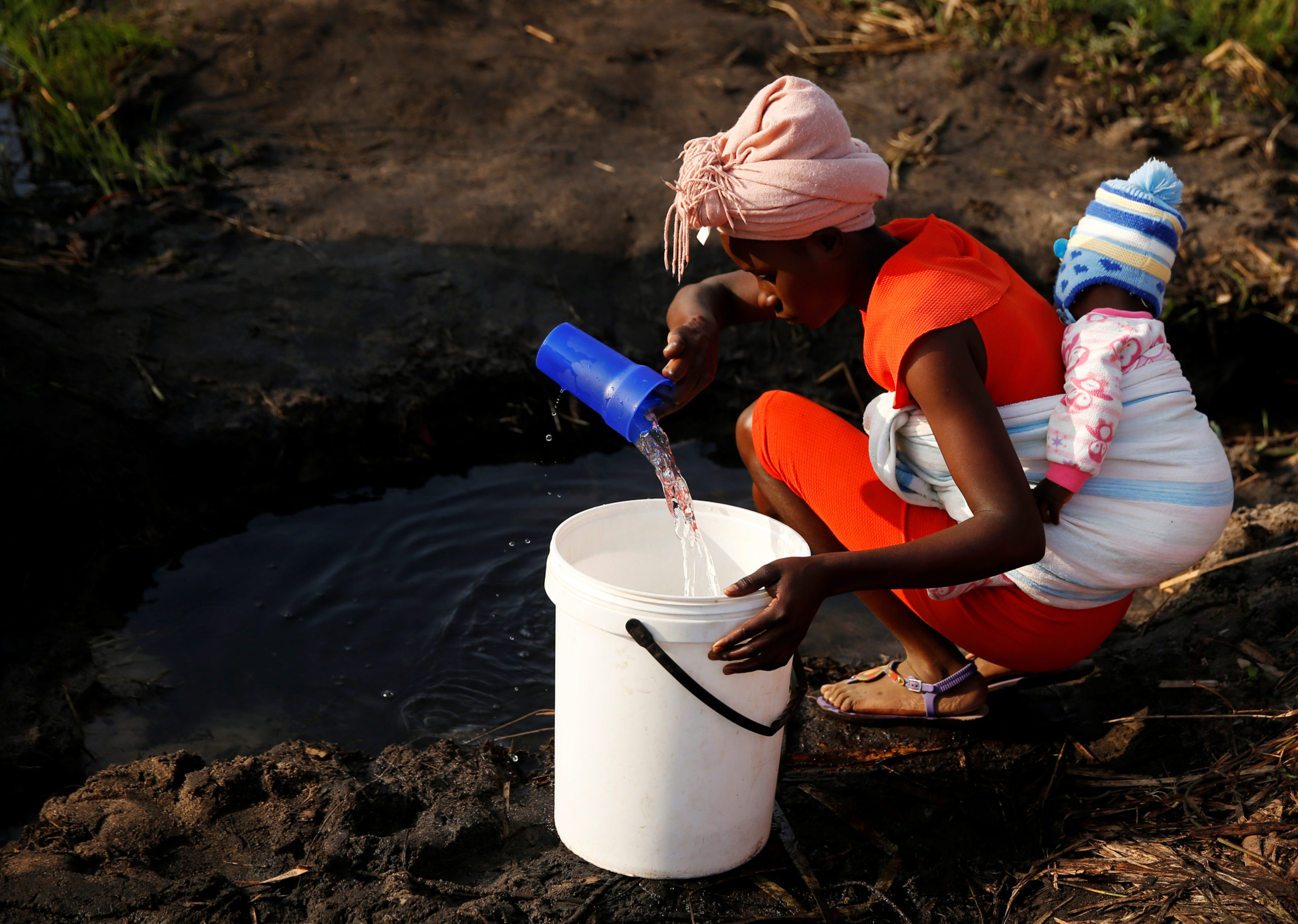
The Devastating Impact of Drought on Rural Communities
In the remote villages of Lubimbi and Gwayi, located in the Lupane district, the effects of drought extend far beyond the drying up of rivers. The region is facing a crisis that is deeply affecting the lives of its residents, particularly children and women.
Year after year, the rains have failed to arrive, leaving fields cracked and barren. This has led to an increase in hunger, which is now forcing young girls, as young as 14, into sex work to ensure their families have enough to eat. In some cases, this decision is made with the knowledge and consent of their parents, who are struggling to provide for their children.
At Gwayi growth point, where haulage trucks often park overnight along the Victoria Falls–Bulawayo highway, the trade is an open secret. Villagers like Coster Ncube have witnessed the growing number of girls involved in this dangerous activity. He explained that parents often allow their daughters to roam at night for sex work because there is no food at home. With many fathers unemployed, poverty is taking a heavy toll on the community.
Ncube shared a heartbreaking story about his 13-year-old niece, who recently became pregnant after being sexually exploited by a married man who has since disappeared. “She’s in hospital now, waiting to give birth,” he said. “It’s heartbreaking. These are children, who should be in school, not out here dying of diseases.”
The girls involved in this trade often come from distant areas such as Jotsholo, Mabale, Cross Dete, Lupote, and Lupane Centre, drawn by the opportunity to earn money through commercial sex. They are typically between 14 and 21 years old, driven only by the need to survive.
For Selina Mthupha, a 47-year-old widow and small-scale farmer in Lubimbi, climate change has turned her once productive fields into dust. She described how the land used to yield crops like maize and groundnuts, but now even millet fails to mature. The borehole water has become salty, and the riverbeds are dry.
Mthupha struggles to feed her two teenage daughters. “When I hear that girls their age are doing sex work for two dollars, I don’t judge. I cry. Because hunger can make you do things you never thought possible.” She once dreamed of sending her children to college, but now her only hope is for rain.
The situation in Lupane reflects broader findings from national research. A 2025 study titled Climate Change and the Feminisation of Poverty in Africa found that climate change in rural Zimbabwe is deepening food insecurity and pushing women and girls into survival strategies that expose them to exploitation. Failed harvests and long dry spells have left women with fewer economic options and greater vulnerability to abuse and transactional sex.
Another report published in 2021, Challenges Faced by Rural People in Mitigating the Effects of Climate Change in the Mazungunye Community, Masvingo Province, highlighted the direct impacts of climate change on communities, including failed crops, loss of livestock, and worsening poverty. It warned that most rural families lack access to climate-adaptive resources, trapping them in a cycle of vulnerability.
Ruth Bikwa, director of Hopeville, an organization focused on child protection in Hwange’s Matabeleland North province, emphasized the dangerous intersection of climate change, poverty, and neglect. “When harvests fail and there’s nothing to eat, girls start finding other means to survive,” she said. “It’s not about choice, it’s about hunger. They trade sex for one or two dollars, just enough to buy mealie-meal or soap. And once they start, they face abuse, disease, and stigma. It becomes a trap.”
At Gwayi Centre, resident Shelter Vengesai Mpofu described daily life as a survival theatre. “Our boreholes run dry by midday,” he said. “We used to harvest from our fields, but now there’s nothing. The children see others making money from truck drivers and think that’s their only chance.” He added, “We are failing our children — not because we want to, but because poverty leaves us helpless.”
At Gwayi Valley Primary School, teacher Mthulisi Ncube (name changed) noted that climate change is not only wiping out crops but also disrupting education. “We’ve lost many girls from the upper grades,” he said. “Some stop coming because they don’t have uniforms or sanitary pads. Others are lured by quick money. You can tell when hunger follows a child. They stop concentrating, then they disappear.”
Ward 24 councillor Senzeni Sibanda offered a different perspective, suggesting that some youths are unwilling to work. “Our children don’t want to go to school or do physical work,” she said. “We have a vocational training centre and detergent-making lessons for just three dollars, but they refuse. They prefer quick money.” However, her views clash with those of parents and activists, who argue that climate-induced poverty, not laziness, is driving desperation.
Human rights advocates warn that without urgent action—such as food relief, youth empowerment programs, and climate adaptation projects—the situation will continue to worsen. “It’s easy to judge,” Bikwa said, “but when the earth no longer gives, people do what they must to survive.”
For many families, this is what climate change looks like—not just cracked soil and empty dams, but lost childhoods and futures fading in the dust.
A 2024 parliamentary meeting revealed a staggering statistic: 4,557 school girls dropped out of school due to pregnancy in 2023 alone. The majority of these girls (3,942) were from rural schools, and most were in secondary school. Torerai Moyo, from the Primary and Secondary Education department, mentioned that the Education Management Information System tracks these annual figures. The government is introducing guidance, counselling in schools, and legal protections via the Education Amendment Act of 2020, allowing pregnant girls to take a two-week maternity leave and return.
Recent statistics from the National AIDS Council (NAC) show that Matabeleland North Province has an adult HIV prevalence rate of about 14.4–14.5% among people aged 15 and above, significantly higher than the national average of around 11.7%. This elevated rate is linked to factors such as increased sex work around mining sites and business centres, migration, spousal separation, and inconsistent condom use. NAC has specifically flagged Bubi District as one of the areas with high risk due to mining and business centre activity, as well as Lupane and Hwange.


