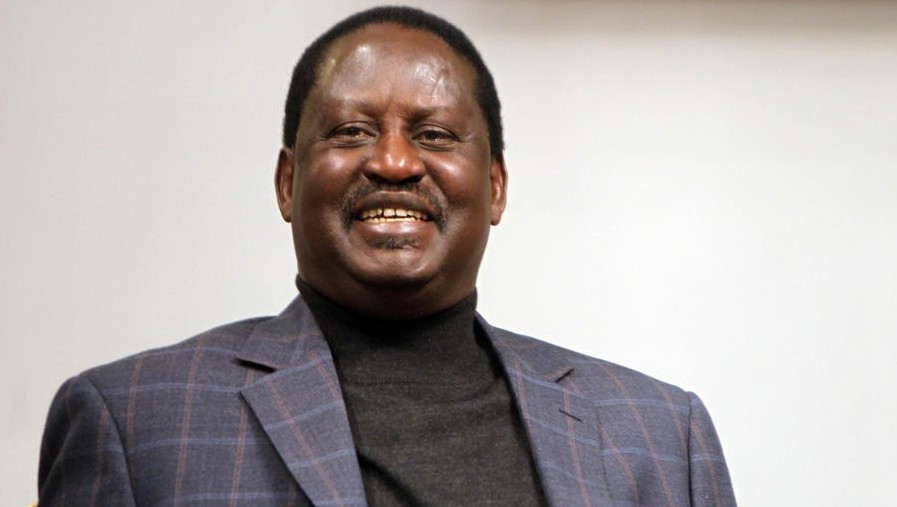
Raila Odinga was a towering figure in Kenya’s political landscape. His passing marks the end of an era for one of the nation’s most influential and revered leaders. A five-time presidential candidate, Odinga played a crucial role in shaping Kenya’s democratic journey, advocating for pro-democracy reforms and challenging authoritarian rule. His legacy is deeply intertwined with the evolution of Kenyan politics and the broader African democratic movement.
A Legacy of Pro-Democracy Advocacy
Odinga’s commitment to democracy was evident throughout his life. He was instrumental in ending years of one-party rule in Kenya, paving the way for multi-party politics and strengthening the country’s democratic foundations. His efforts were not only significant for Kenya but also served as a beacon of hope for other nations grappling with democratic backsliding.
In a time when democratic principles are under threat across Africa, Odinga’s dedication to democratic values highlights the challenges facing Kenya and neighboring countries like Tanzania and Uganda. His work underscores the importance of maintaining democratic institutions and the dangers of authoritarian tendencies that threaten the progress made in recent decades.
A Life of Political Activism
Born into a prominent left-leaning political family, Odinga received his education in mechanical engineering in East Germany before embarking on a political career during the 1980s. As a young lecturer at the University of Nairobi, he became a vocal advocate for political and democratic freedoms. His early activism led to detention following a military coup attempt in 1982, resulting in a brief exile in Uganda and later Norway.
Upon his return, Odinga joined the “Young Turks,” a group that organized political demonstrations and challenged government crackdowns. His efforts culminated in the repeal of Section 2A of Kenya’s constitution, which ended single-party rule and restored multi-party politics. This event marked a turning point in Kenya’s political history, setting the stage for a more inclusive and democratic governance structure.
Political Evolution and Leadership
Odinga’s transition from activism to electoral politics saw him become a key player in Kenya’s political arena. He initially worked within the Forum for the Restoration of Democracy (FORD) and later formed the National Democratic Party (NDP). His political journey was marked by both triumphs and setbacks, including multiple presidential campaigns that he ultimately lost.
Despite these losses, Odinga remained committed to Kenya’s democratic ideals. His tenure as Prime Minister from 2008 to 2013 saw significant reforms, including the adoption of Kenya’s 2010 constitution, which restructured the country into 47 regional counties with greater autonomy. This constitution also strengthened the bill of rights and political freedoms for Kenyans, reflecting Odinga’s belief in the importance of constitutional rule and multiparty democracy.
Challenges and Controversies
Odinga’s political career was not without its challenges. The 2007-2008 post-election violence, which resulted in over 1,200 deaths and the displacement of thousands, was a dark chapter in Kenya’s history. Although Odinga was not responsible for the violence, he played a role in negotiating a resolution and agreed to serve as Prime Minister, working to restore stability and promote reconciliation.
Throughout his career, Odinga faced criticism for his shifting alliances and political strategies. However, he maintained that coalitions and alliances were essential in reducing political conflicts and promoting power sharing. His advocacy for a more inclusive political system challenged the traditional “winner takes all” approach, emphasizing the need for fair representation and cooperation.
A Last Attempt at the Presidency
Kenya’s last presidential and parliamentary elections in August 2022 were Odinga’s final bid for the presidency. These elections were considered among Africa’s best and most transparent, with open vote tabulations and digital transmission of results. Despite losing, Odinga remained committed to democratic principles, transparent elections, and election observation.
As Kenya mourns Odinga’s unexpected passing, his enduring commitment to democracy serves as a reminder of the country’s progress and the challenges it faces. In contrast, neighboring countries like Tanzania and Uganda have seen a decline in democratic practices, with recent elections marred by irregularities and repression.
A Global Perspective on Democracy
In Tanzania, the October 2025 presidential and parliamentary elections were widely criticized as unfair and deeply flawed. The main opposition party, Chadema, was barred from participation, and its candidates faced imprisonment and exclusion. Similarly, in Uganda, the upcoming January 2026 elections are expected to be fraught with violence and repression, with opposition candidates subjected to harassment and detention.
Odinga believed in the right of citizens to select their leaders through free and fair elections. He worked tirelessly to enshrine presidential term limits in Kenya’s constitutions, advocating for a political system that prioritized democracy over personal enrichment or lifelong leadership.
A Final Reflection
Raila Odinga was not a perfect politician, but his commitment to fundamental democratic principles should be remembered as a standard for leaders across East Africa. For Odinga, democracy meant democracy—true representation, accountability, and the protection of civil liberties.


