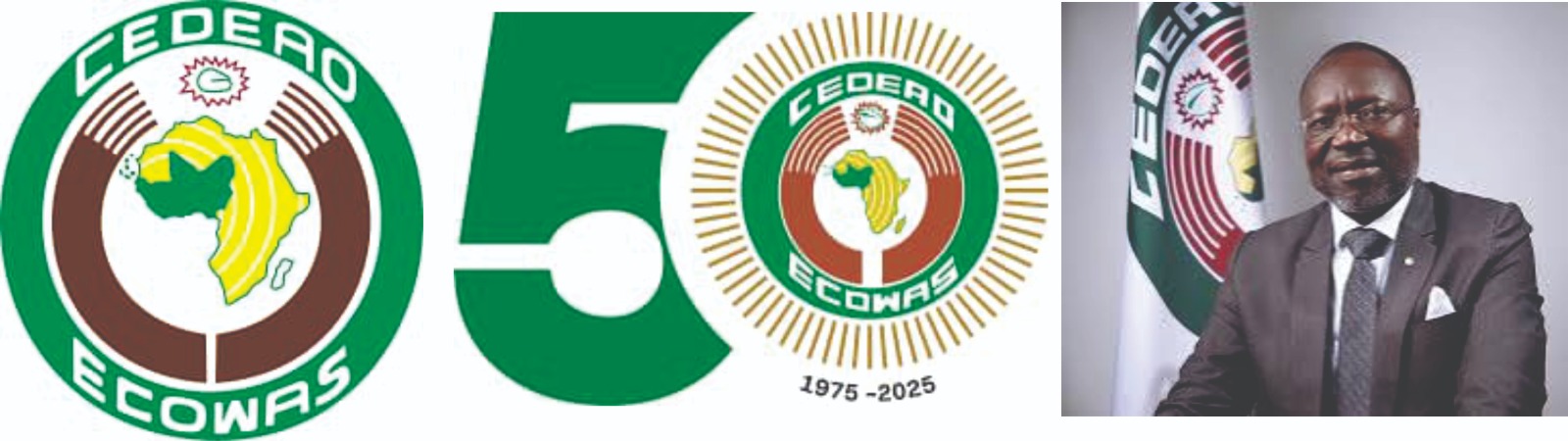
The Evolution of ECOWAS: A Half-Century of Challenges and Progress
Since its formation in 1975, the Economic Community of West African States (ECOWAS) has undergone significant transformations. Over the past 50 years, the sub-regional bloc has navigated through various political, economic, and social challenges, shaping the landscape of West Africa. As stakeholders gathered in Abuja to commemorate this milestone, discussions focused on the organization’s journey, current challenges, and future aspirations.
Early Days and Language Barriers
In the early days of ECOWAS, many member states were under military rule, creating a unique political environment. Countries like Nigeria, Ghana, Niger Republic, Burkina Faso, Benin Republic, Mali, Guinea, and Sierra Leone were all governed by military regimes. This period was marked by limited regional integration due to language barriers. While English is spoken in countries such as The Gambia, Ghana, Nigeria, Liberia, and Sierra Leone, French is predominant in Ivory Coast, Benin Republic, Guinea, Mali, Burkina Faso, Togo, Senegal, and Niger Republic. Additionally, Guinea Bissau and Cape Verde have Portuguese as their official language. These linguistic differences posed a significant challenge to seamless communication and cooperation within the region.
Key Milestones and Challenges
One of the major steps toward regional integration was the introduction of a 90-day visa-free stay for citizens of any ECOWAS country in another. However, the 1980s brought numerous challenges, including the rise of democracy across the continent and the end of the Cold War. The collapse of authoritarian regimes led to increased instability, particularly with civil wars in Liberia and Sierra Leone, which required ECOWAS to deploy peacekeeping forces.
Democracy eventually returned to most West African countries, but recent years have seen a regression, with democratic gains lost in Niger Republic, Burkina Faso, and Mali. Security challenges also persist, with Tuareg fighters controlling large areas of Mali and Burkina Faso, while Boko Haram insurgency and banditry plague Nigeria.
Reflecting on the Future
To mark the 50th anniversary, the Amadla Institute for Policy and Leadership Advancement, in collaboration with ECOWAS Commission, Africa Leadership Centre, and Kings College, London, organized a meeting of experts. The event aimed to review the journey of ECOWAS and envision a people-centric integration strategy. Discussions highlighted the need for the organization to move beyond elite-driven governance and better serve its citizens.
Dr. Kayode Fayemi emphasized the importance of deep reflection on how ECOWAS can evolve into a more inclusive institution. Dr. Emmanuel Akwetey pointed out that the departure of some member states from ECOWAS created a power vacuum, allowing jihadist groups and external actors like Russia to gain influence. He also praised the good governance of leaders such as Nigeria’s Obasanjo and Ghana’s Rawlings.
Addressing Bureaucracy and Trust
General El-Hadji Babacar Faye (rtd) criticized the current ECOWAS architecture, arguing that it is perceived as bureaucratic and disconnected from the daily lives of citizens. He advocated for a new regional social contract based on trust and accountability. Ambassador Abdullahi Shehu stressed the need for flexible, people-centered integration, focusing on resilient economies and key sectors like energy, transportation, and digital innovation.
Economic Disparities and Communication Strategies
Dr. Egghead Odewale highlighted disparities in financial systems, noting that the transfer of money in Western countries differs significantly from local African currencies. He also pointed out that the free movement of people within ECOWAS is not as straightforward as it appears. Ms. Hyeladzira James Mshelia addressed the lack of awareness among local traders and citizens about ECOWAS, emphasizing the need for improved communication strategies. She suggested leveraging youth and grassroots engagement to enhance public understanding.
Gender Inclusion and Reform
Erelu Bisi Adeleye-Fayemi, co-founder of Amandla, emphasized the importance of gender inclusion and sensitivity in ECOWAS. Her insights, along with those of her panel members, underscored the need for a total overhaul and democratization of the regional body.
As ECOWAS looks ahead, the next 50 years will be crucial in determining its role as a unifying force in West Africa. With continued efforts to address challenges and foster inclusivity, the organization has the potential to become a model for regional cooperation and development.

Related posts:

Fiction park: He was the best in class. He still wasn’t good enough

Gagan Thapa takes oath as Congress president, vows to regain public trust

Inside knowledge that has locals gripped by fear after gran’s body found decomposing in cattle dip

New property purchase disclosure rule in Japan sparks fears it may curb foreign investment

Dino-mite treasures: inside Singapore’s Fort Knox storing playthings of ultra-rich